


Best GEO Tools in 2026: Top 10 Platforms Compared





On their homepages, most GEO tools look the same. The differences show up after the first tracking run. Some stop at a dashboard, while a few turn each gap into a content or outreach task.
We scored 10 platforms on six criteria, from engine coverage to deployment options. We also checked our own tracking data to see which GEO vendors the AI engines recommend most.
Key takeaways
- A GEO tool runs a fixed set of prompts across AI engines on a schedule. It logs every mention and cited URL, which competitors appear, and the tone of each answer.
- The tools differ most in competitive intelligence: which prompts a rival wins, its share of voice, and which sources the answer cites for it.
- AI search engines lean heavily on third-party sources. Pick a tool that shows the external pages behind each rival’s mentions.
- Engine coverage is often tied to the plan. Check for ChatGPT, AI Overviews, AI Mode, Gemini, Copilot and Claude before you buy.
- In our tracking data, mentions don’t move with citations. An AI engine can cite your page and still recommend someone else, so track both.
What is a GEO tool?
A GEO tool measures how often generative AI engines name or cite your brand, and shows what to change to raise that number. GEO stands for generative engine optimization.
There’s no ranked list of links to watch. So the tool runs the same prompts on a schedule and records what each AI answer says about you and your competitors.
The term comes from the 2023 research paper GEO: Generative Engine Optimization. Its authors found that GEO methods can raise visibility in generative engine responses by up to 40%.
For the strategy behind the tools, start with our definition of generative engine optimization and the complete GEO guide.
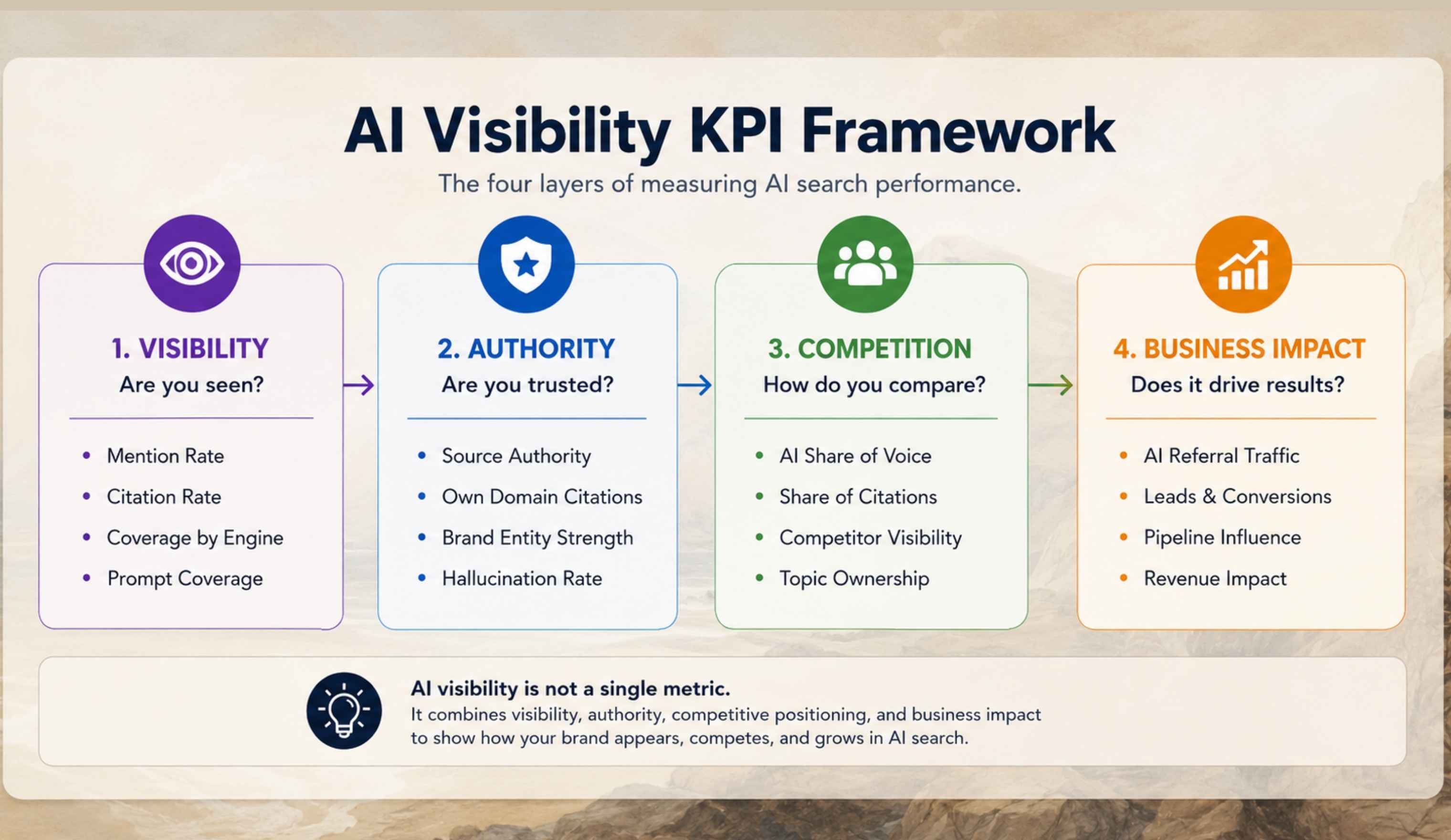
What should a GEO tool measure?
Whether your brand name shows up is only the first signal. These are the ones worth paying for:
Prompt visibility, the share of tracked prompts where your brand appears. It comes from prompt monitoring on a fixed schedule.
How often AI answers name you, and in what context.
Which of your URLs and which third-party pages get cited as sources. Citation monitoring collects these.
Which competitors appear in your place, and for which prompts.
Your mentions or citations as a share of all tracked brands, known as AI share of voice.
Sentiment and positioning: how each answer describes you next to rivals.
AI referral traffic, meaning visits from AI platforms to your site, where referral data exists.
Keep each AI engine in its own report. Google says AI Overviews and AI Mode may use different models and techniques, so the links they show vary.
Google also describes query fan-out, where its AI features issue several related searches before answering. A page can be cited for a sub-question you never tracked.
Why GEO tools matter in 2026
AI answers now sit between buyers and your website.
Google’s AI Overviews passed 2 billion monthly users in 2025, according to TechCrunch.
And fewer people click when an AI summary appears. A Pew Research Center study found users clicked a result in 8% of visits with an AI summary, versus 15% without one.
So the answer is the shortlist. A GEO tool tells you whether you made it, and which competitors did when you didn’t.
How we evaluated these GEO tools
We read each vendor’s website and documentation in October 2026 and compared the tools on six criteria.
Platform coverage across ChatGPT, Google AI Overviews, Google AI Mode, Gemini, Microsoft Copilot, Claude and Perplexity.
Citation depth: cited domains or exact URLs, split into owned and third-party sources.
Competitive intelligence, such as share of voice, prompt-level wins and losses, competitor sources and sentiment.
Follow-through. Does the tool turn a visibility gap into work, such as a content brief, an audit or an assigned task?
Reporting and integrations, for example exports, API, MCP, Google Analytics 4, Search Console and Looker Studio.
Deployment and pricing. Can you self-host, is pricing public, and are plan limits spelled out?
We ignored review-site ratings and vendor funding. Features change fast, so confirm current plans with each vendor before you buy.
Best GEO tools: quick comparison
| Tool and best fit | Engine coverage |
|---|---|
| Ansvisor, an open-source AI search intelligence platform, for self-hostable tracking tied to actions. | Covers ChatGPT, Perplexity, AI Overviews, AI Mode, Gemini and Copilot, plus Claude on Enterprise. |
| Profound for enterprise AI visibility programs. | Covers seven engines, including Claude and DeepSeek. |
| Semrush AI Visibility Toolkit for teams already on Semrush. | Covers ChatGPT and Google AI Mode, among other engines. |
| Ahrefs Brand Radar for large-scale brand research. | Covers seven engines, Google AI Overviews and AI Mode among them. |
| Peec AI for tidy prompt and competitor reporting. | Covers ChatGPT, Perplexity, Gemini and Google AI Mode. |
| Otterly.AI for small teams monitoring on a budget. | Covers seven engines, including Copilot and Claude. |
| Scrunch for enterprise sites that serve AI agents. | Covers five engines, including Claude and Copilot. |
| AthenaHQ for tracking plus content recommendations. | Covers up to 11 models on paid plans. |
| Omnia, an agent that turns visibility data into tasks. | Covers seven engines, including AI Mode and Claude. |
| Rankability for agencies running AI SEO campaigns. | Check the vendor site for the current engine list. |
The 10 best GEO tools in 2026
Disclosure: Ansvisor is our product. We list it first for teams that want open-source, self-hostable AI visibility tracking; other tools fit better for the cases noted below.
1. Ansvisor
It runs your prompts across AI answer engines and logs who gets mentioned and cited, competitors included. The code is on GitHub under the MIT license, and there’s a managed cloud version too.
Brands are compared head to head and prompt by prompt, split by AI platform. Query fan-out data, site audits and an action center connect each gap to a task with an owner.
Strengths
- Self-hostable code under the MIT license, plus a cloud option.
- Unlimited tracked competitors on every cloud plan.
- MCP server, API, Google Analytics 4, Search Console and Looker Studio integrations.
Limitations
- Lower cloud plans cover fewer engines, and Claude tracking is on the Enterprise plan.
- No backlink or keyword database, so most teams keep a classic SEO suite.
- Self-hosting takes engineering time for setup and updates.
2. Profound
Profound monitors AI answers through Answer Engine Insights, Prompt Volumes, Shopping and Agent Analytics. Its site lists ChatGPT, Perplexity, Claude, Gemini, Copilot, DeepSeek and Google AI Overviews.
On top of that sit AI agents that write content from brand context, plus benchmarking and sentiment views. For enterprise security, the company lists RBAC, SCIM and SOC 2.
Strengths
- Broad engine coverage, including Claude and DeepSeek.
- Prompt Volumes data, for choosing prompts by estimated demand.
- Enterprise security controls and a long integration list.
Limitations
- Built and priced for large organizations. See the vendor’s pricing page.
- Closed SaaS with no self-hosting option.
3. Semrush AI Visibility Toolkit
The Semrush AI Visibility Toolkit includes Visibility Overview, Competitor Research, Prompt Research, Brand Performance and daily Prompt Tracking. For GEO, Competitor Research is the part to look at: it lists prompts where rivals are cited and you aren’t.
Semrush’s knowledge base lists it as a separate subscription at $99 per month. Semrush One bundles raise the prompt tracking limits.
Strengths
- Competitor gap reports that fit existing SEO workflows.
- Prompt Research with topic volume, difficulty and intent.
- AI Search Health checks inside Site Audit.
Limitations
- Each user needs a separate license, according to Semrush’s documentation.
- The documentation names ChatGPT and Google AI Mode, so confirm full engine coverage.
4. Ahrefs Brand Radar
Ahrefs Brand Radar tracks brand mentions and citations in AI answers and benchmarks them against competitors. Ahrefs says its AI Visibility Index covers 475M+ monthly prompts modeled from its keyword data.
It covers Google AI Overviews, AI Mode, ChatGPT, Gemini, Perplexity, Copilot and Claude. With Custom Prompts, you get daily tracking and fan-out query discovery for your own questions.
Strengths
- A very large prompt dataset for category-level research.
- Cited pages, AI traffic and bot analytics inside the Ahrefs ecosystem.
- YouTube, Reddit and TikTok visibility next to AI answers.
Limitations
- Sold as an add-on to Ahrefs plans, with check-based limits.
- Fewer task and workflow features than tools built around execution.
5. Peec AI
Peec AI tracks prompts across ChatGPT, Perplexity, Gemini and Google AI Mode, with filters by model, tag and time range. You add competitor brands to compare your ranking against theirs.
Source discovery shows which review sites, LinkedIn pages, Reddit threads and editorial domains shape answers. It also suggests next moves, such as building a G2 profile or pursuing digital PR.
Strengths
- Fast setup and a clean dashboard.
- CSV export, API, MCP and a Looker Studio connector.
- Agency plans with a separate project for each client.
Limitations
- Lighter on content and audit work than workflow-focused tools.
- See the vendor’s pricing page for current plan limits.
6. Otterly.AI
Otterly.AI tracks brand mentions and cited websites across ChatGPT, Perplexity, Google AI Overviews, AI Mode, Gemini, Copilot and Claude. Its website says pricing starts at $29 per month.
You also get prompt research, share of AI voice and sentiment. A content audit scores pages before you publish.
Strengths
- Low entry price and quick onboarding.
- Wide engine coverage, including Claude and Copilot.
- Mentions and link citations are tracked separately.
Limitations
- Lighter on team workflows and task management.
- Its agency page lists workspaces and reports, but no white-label client portal.
7. Scrunch
Scrunch monitors brand presence and position across ChatGPT, Perplexity, Claude, Gemini and Copilot. It benchmarks competitors by persona, topic and region, and shows the sources AI relies on.
Its Agent Experience Platform serves a lightweight, machine-readable version of your site to AI agents. Scrunch lists SOC 2 Type II compliance and role-based access control.
Strengths
- Competitor benchmarks split by audience segment and market.
- AI bot crawl monitoring and error detection.
- Deployment across multiple brands, regions and languages.
Limitations
- More implementation work than a lightweight tracker.
- See the vendor’s pricing page.
8. AthenaHQ
AthenaHQ tracks prompts, competitors, share of voice and cited sources, then recommends on-page and off-page actions. Paid plans cover up to 11 models, including Google AI Mode and Claude.
It lists SOC 2 Type 2, SAML and OIDC single sign-on, and audit logs. A free Essential tier covers five major engines with limited credits.
Strengths
- Wide model coverage on paid plans.
- Hallucination detection and real-time mention alerts.
- GA4, Search Console and Shopify integrations, plus BI tools on Enterprise.
Limitations
- Credit-based pricing needs planning, because one credit equals one AI response.
- The Starter plan is listed at $295 per month.
9. Omnia
Omnia tracks prompts every 24 hours across ChatGPT, Perplexity, Google AI Overviews, AI Mode, Claude, Copilot and Gemini. It benchmarks visibility and sentiment against competitors, feature by feature.
The Omnia Agent audits your site and citation sources and builds a ranked action plan. Then it drafts content or publisher pitches for your approval.
Strengths
- Competitor sentiment broken down by product feature.
- Agent-built action plans and outreach drafts.
- An MCP connection to AI assistants such as Claude and ChatGPT.
Limitations
- Agent output still needs human review before it goes live.
- See the vendor’s pricing page for plan details.
10. Rankability
Rankability combines AI visibility tracking with site audits, topic research and a content optimizer. It’s built around multi-client agency campaigns, with an API and an MCP connection.
Its site says tracking covers "every AI platform" but doesn’t list them. Ask for the engine list in a demo.
Strengths
- Content scoring and optimization in the same tool.
- Agency workflows and client reporting.
- Automation for recurring content and monitoring work.
Limitations
- Less public detail on engine coverage and citation data.
- Lighter competitive intelligence than dedicated GEO trackers.
Other GEO tools worth knowing
- Conductor is an enterprise SEO platform that tracks brand visibility across ChatGPT, Gemini, Copilot and Claude.
- Writesonic, a content platform, adds GEO tracking across 8 AI platforms and a weekly list of prioritized actions.
- Rankscale offers credit-based tracking of mentions, citations and sentiment across 17+ AI engines.
- Geoptie tracks ChatGPT, Gemini, Perplexity, Claude, Copilot and more, and has free audit tools.
- AirOps runs content operations, from research to publishing and refreshes. It isn’t a dedicated tracker.
- AI Rank Checker sells pay-as-you-go checks across ChatGPT, Perplexity, Claude, Gemini, Copilot and more, with no subscription.
- Hall is now part of Tracksuit, which is adding AI visibility to its brand health tracking.
Which GEO tools have the best competitive intelligence features?
Competitive intelligence tells you which brands the AI engines recommend over you, on which prompts, and why. It’s the part of a GEO tool that turns a visibility score into a plan.
When you compare tools, check for these:
- Share of voice split by engine, so you see your share against each rival, engine by engine. A blended score hides where you lose.
- Prompt-level wins and losses, down to the exact prompts where a competitor appears and you don’t.
- The pages and domains cited when a rival gets recommended.
- Positioning and sentiment for each brand, ideally feature by feature.
- Alerts when a competitor gains or loses visibility on the prompts you care about.
Semrush lists prompts where rivals are cited and you aren’t.
Ahrefs Brand Radar benchmarks mentions across a very large prompt set.
Scrunch slices competitor data by persona and region, and Omnia compares sentiment feature by feature.
Our competitor benchmarking shows head-to-head and prompt-by-prompt gaps by AI platform.
Source data matters most. A 2025 study of AI search engines found a strong bias toward earned, third-party media, unlike Google’s more balanced mix.
So when a rival wins a prompt, open the citations. The review sites, best-of lists and forum threads you find there are often easier to influence than the answer itself.

Which GEO tools do AI answers recommend most?
We track prompts about AI search, GEO and AEO across ChatGPT, Google AI Overviews, Google AI Mode, Gemini, Copilot and Perplexity. In one month, that came to 103,427 AI answers and 746,702 citations.
Source: Ansvisor tracking data, September 15 to October 14, 2026.
Two things stand out.
Most-named vendors
The established SEO suites and the best-known GEO vendors get named most often.
Mentions and citations
Mentions don’t move with citations. An AI engine can use your page as a source and still recommend someone else. Track both numbers.
Which GEO tool is best for your team?
Agencies: lightweight tracker or enterprise platform?
Work out the cost per client first. Then compare prompt limits per project, white-label reporting, pitch workspaces and engine coverage on each plan. Our guide to white label SEO software for agencies covers the reporting side.
Enterprise marketing teams
Profound, Scrunch, AthenaHQ and Conductor focus on governance, security reviews and multi-brand reporting. See our list of top-rated GEO tools for enterprise marketing teams.
SEO teams on an existing suite
Semrush AI Visibility Toolkit and Ahrefs Brand Radar add AI visibility to data you already use. They suit teams that care more about having one vendor than about deep GEO workflows.
Small teams and startups
Otterly.AI and Peec AI are quick to set up, and AthenaHQ has a free tier. Start with 20 to 50 prompts that match how buyers ask about your category.
Developers and teams that need self-hosting
With an open-source tool you can read the code, keep data in your own environment and write your own integrations. Compare options in our list of open-source AEO and GEO tools for developers.
Which GEO platforms cover monitoring, diagnosis and optimization end to end?
You need tracking connected to audits, source analysis and tasks. In this list, Omnia, AthenaHQ, Scrunch and our own platform cover that full loop.
How Ansvisor helps
Our platform runs your prompt set on a schedule and stores every answer, with its mentions and cited URLs, by AI engine. Competitor benchmarking shows the prompt-level gaps. The action center turns each one into a task with an owner.
You can use the managed cloud or self-host the open-source project on GitHub.
See which competitors AI answers recommend for the prompts you care about.
FAQ
What are the best GEO tools in 2026?
Strong options include Ansvisor, Profound, Semrush AI Visibility Toolkit, Ahrefs Brand Radar, Peec AI and Otterly.AI. The right pick depends on whether you need open-source tracking, enterprise reporting, an SEO suite add-on or basic monitoring. Test two or three with your own prompts.
Do GEO tools monitor competitors?
Most do. They show competitor mentions, share of voice and the prompts where rivals appear and you don’t. Better tools also list the sources AI engines cite for each competitor, which explains why those rivals get recommended.
What competitive intelligence features should a GEO tool have?
Look for share of voice by AI engine, prompt-level wins and losses, the sources cited for each competitor, and sentiment for each brand. Alerts tell you when a rival moves, and exports get the data into your reports.
How is a GEO tool different from an SEO tool?
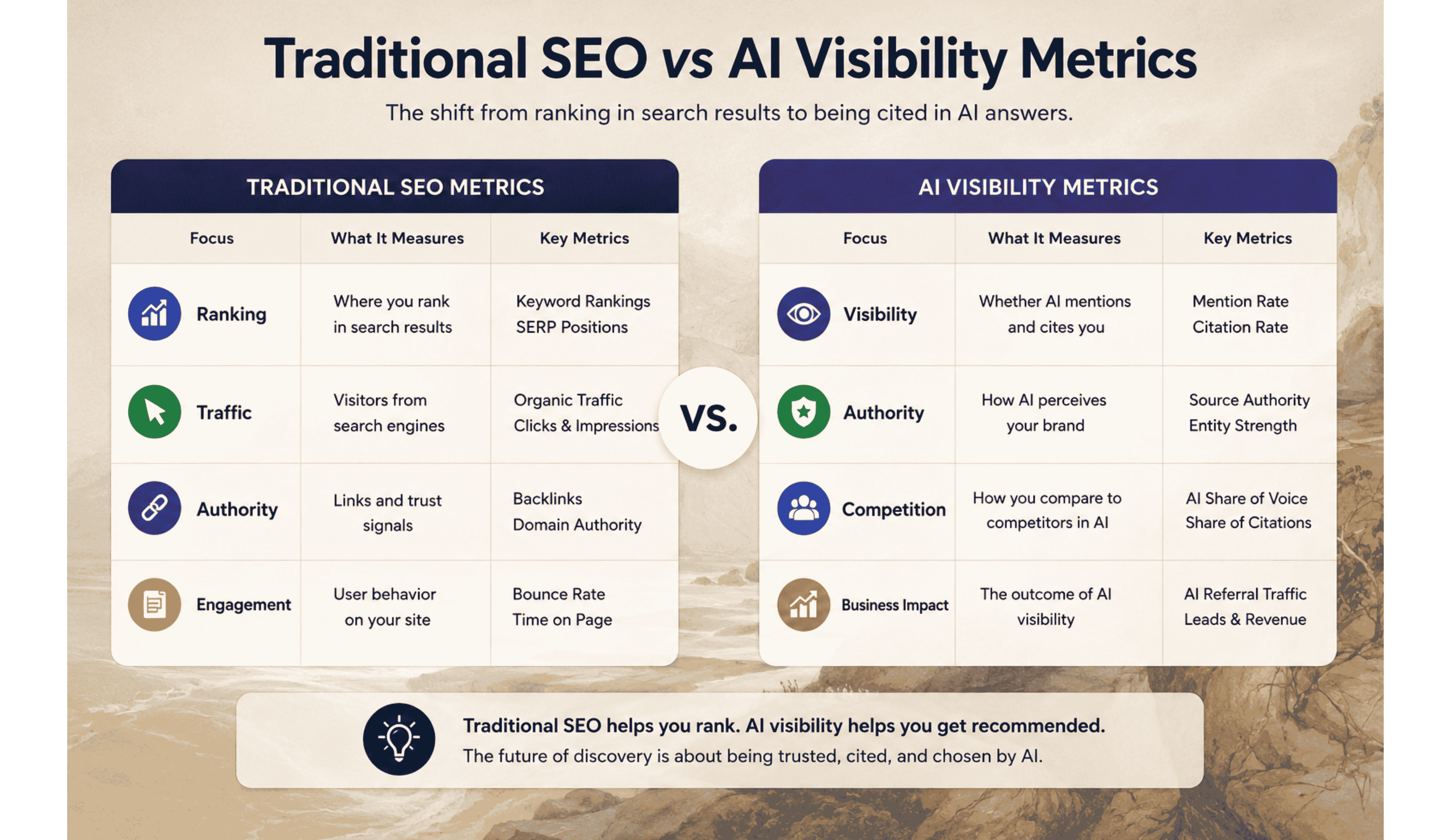
An SEO tool tracks keyword rankings and backlinks in classic search results. A GEO tool tracks what AI answers in ChatGPT, Gemini, Google AI Overviews and similar engines say about your brand, and which pages they cite. Most teams use both.
Are there free or open-source GEO tools?
Yes. Some GEO platforms publish their code on GitHub under licenses such as MIT, so you can self-host them. AthenaHQ has a free Essential tier, and for a small prompt set a spreadsheet of manual checks will do.