



Share of Voice
FAQ
What is Share of Voice (SOV)?

Share of Voice measures the percentage of visibility, mentions, citations, or exposure a brand receives compared to competitors.
Why is Share of Voice important?
It helps organizations measure market presence, competitive positioning, brand awareness, and visibility performance.
How is Share of Voice calculated?
It is typically calculated by dividing a brand's visibility by total market visibility and multiplying by 100.
How does Share of Voice affect AI visibility?
Higher share of voice generally increases discoverability, recommendations, citations, and competitive advantage across AI search platforms.
Which tools help measure Share of Voice?
Platforms like Ansvisor help organizations analyze share of voice across prompts, answer engines, competitors, citations, mentions, recommendations, and AI visibility ecosystems.
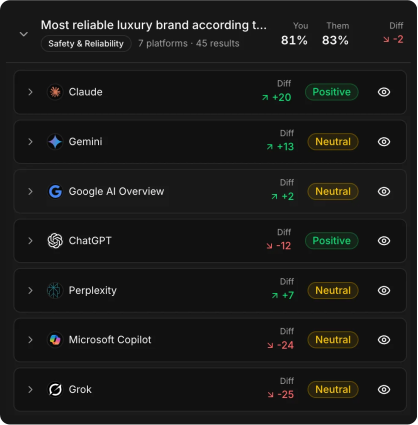
Win customers from all major AI platforms
Understand, measure, and optimize your AI visibility via Ansvisor.
✓ Add brand, domains and competitors
✓ Discover prompts and growth opportunities
✓ Track your AI visibility across major AI platforms
✓ Monitor citations, mentions, and competitors
✓ Measure AI traffic and customer discovery
✓ Receive AI recommendations based on AI insights
✓ Optimize authority, trust, and content quality
✓ Create content, automate analysis & action with AI agents




.svg)
