

01
Vehicle searches are becoming more specific.
Buyers ask about range, safety, reliability, price, financing, charging, maintenance, space, and real-world use.
Track how consumers discover, compare, and evaluate vehicles, dealerships, charging networks, and mobility services across AI search.
Brand performance across high-intent automotive prompts
Consumers ask AI platforms which vehicle fits their budget, lifestyle, location, charging access, safety needs, and ownership goals.
Buyers ask about range, safety, reliability, price, financing, charging, maintenance, space, and real-world use.
Recommendations can shape the shortlist before a consumer visits a manufacturer, dealer, or marketplace.
Outdated specifications, pricing, availability, incentives, or charging details can weaken a recommendation.
Follow how buyers move from broad questions to vehicle comparisons, dealership research, and ownership decisions.
Consumers explore vehicle types, brands, mobility options, and new technologies.
Buyers evaluate models, specifications, prices, incentives, and ownership costs.
Consumers research reviews, safety, reliability, dealers, and real-world performance.
Buyers choose a vehicle, dealership, charging solution, finance option, or mobility service.
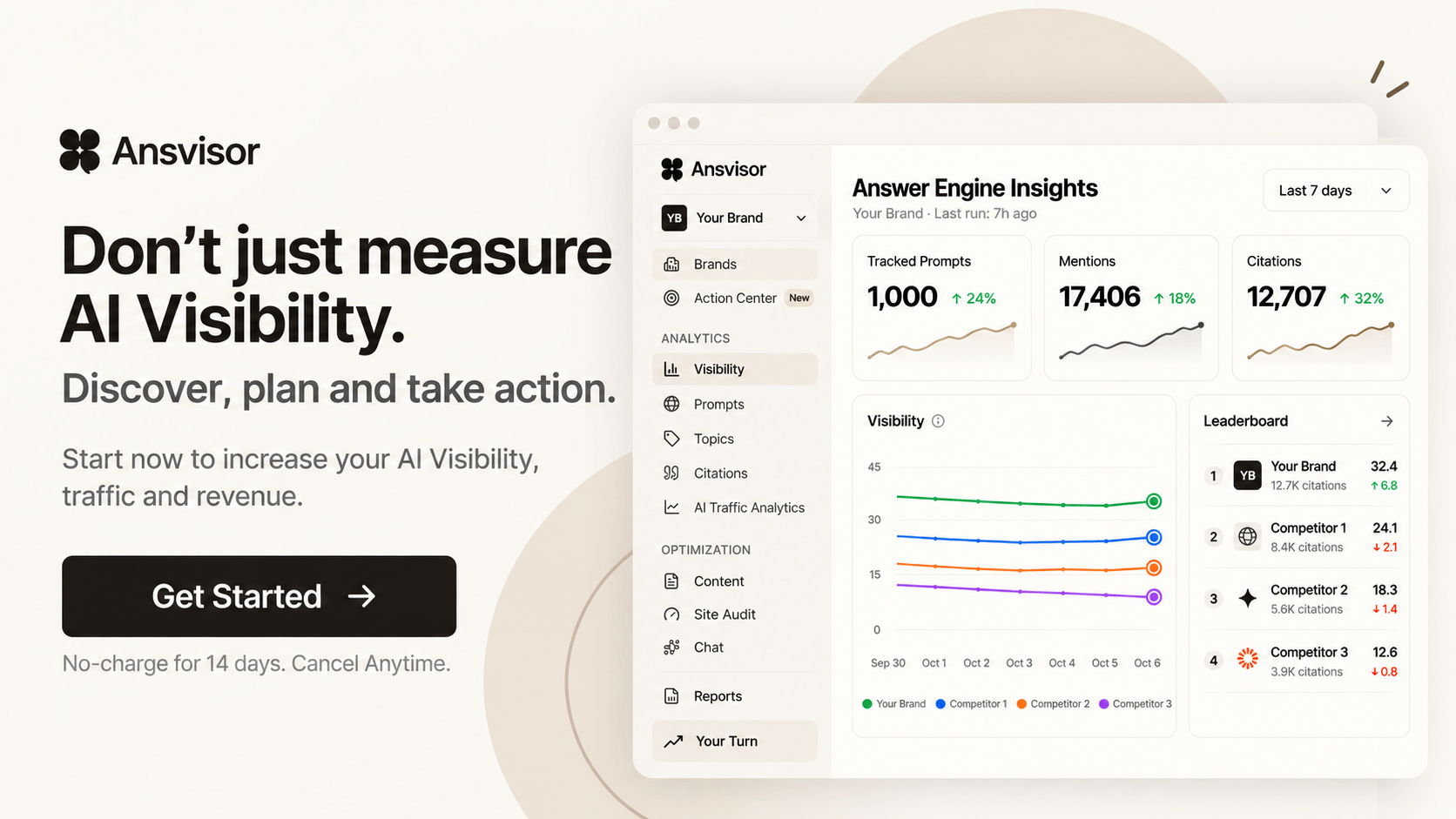
Connect prompts, recommendations, citations, competitors, Query Fan-Out, Google AI experiences, and AI traffic in one workflow.
Track vehicle, dealer, charging, financing, maintenance, insurance, fleet, and mobility questions across AI platforms.
See which brands and models appear for specific budgets, lifestyles, locations, safety needs, and ownership goals.
Compare mentions, recommendations, positioning, sentiment, citations, and AI Share of Voice across brands and models.
Monitor which dealerships, vehicle marketplaces, inventory pages, and retailer sources appear in local and purchase-intent answers.
Identify the reviews, publishers, manufacturers, dealers, marketplaces, forums, and research sources influencing answers.
Reveal the related searches AI systems use to compare range, reliability, price, safety, charging, and ownership costs.
Discover missing model information, comparison gaps, ownership questions, and weak category coverage.
Review how AI platforms describe specifications, pricing, incentives, safety, range, availability, and ownership costs.
Monitor automotive brands, models, dealers, publishers, and cited sources across Google AI Overviews.
Track conversational automotive research, follow-up questions, comparisons, and local discovery across Google AI Mode.
Identify visits from AI platforms and see which model, dealer, comparison, charging, and ownership pages attract demand.
Measure visibility across countries, languages, vehicle segments, urban needs, and regional ownership patterns.
Use AI Visibility data to improve product discovery, competitive positioning, dealer visibility, and market growth.
Monitor recommendation prompts by price, range, safety, family size, location, fuel type, and ownership needs.
Compare recommendation share, sources, sentiment, answer positioning, and attribute coverage.
Track which dealerships, inventory pages, marketplaces, and local sources appear when buyers are ready to act.
Turn prompts, citations, and Query Fan-Out into model pages, comparisons, guides, and FAQs.
AI systems may investigate price, safety, charging, reliability, resale value, and ownership costs before answering.
Identify the sources AI platforms rely on when comparing vehicles, dealers, charging, ownership, and mobility services.
Specifications, trims, pricing, features, safety, and official model information.
Expert tests, comparisons, real-world performance, and ownership assessments.
Local inventory, pricing, availability, offers, and test-drive information.
New and used inventory, pricing benchmarks, comparisons, and seller listings.
Safety ratings, incentives, regulations, fuel economy, and emissions data.
Reliability discussions, charging experiences, maintenance, and real-world usage.
Turn complex answer data into practical actions across marketing, content, retail, and product strategy.
Improve the information and authority signals required to enter relevant AI-generated shortlists.
Detect outdated specifications, incentives, availability, pricing, and ownership information.
Understand where dealerships and inventory pages appear across local and high-intent searches.
Focus on vehicle questions, comparisons, ownership topics, and attributes influencing answers.
Find vehicle segments, audiences, locations, and mobility needs competitors have not captured.
See which model, dealer, charging, and comparison pages attract AI-driven visitors.
Monitor demand, analyze answers, find gaps, and improve visibility across the automotive buying journey.
Track how consumers research vehicles and mobility services.
See where brands, models, dealers, and services appear.
Reveal the citations and criteria shaping each answer.
Identify missing model information and weak coverage.
Improve content and track visibility, traffic, and demand.
Connect brand, retail, digital, content, insights, and product teams around the same AI Visibility data.
Track how AI platforms describe your brand, vehicles, and positioning.
Measure local discovery, inventory visibility, and purchase-intent answers.
Turn prompts and citations into stronger model pages, guides, and comparisons.
Discover buyer needs, emerging segments, and changing vehicle criteria.
Identify the publishers and sources shaping automotive narratives.
Extend reporting and workflows through APIs, MCP, webhooks, and exports.
Adapt monitoring to brands, dealerships, EV networks, marketplaces, fleets, and mobility services.
Measure recommendation visibility by category, price, powertrain, audience, and use case.
Monitor dealership recommendations, inventory pages, availability, and local purchase-intent prompts.
Track range, charging speed, infrastructure, incentives, cost, and network coverage questions.
Monitor used vehicles, leasing, rentals, fleets, subscriptions, and shared mobility recommendations.
Measure how vehicles, dealers, charging networks, and mobility services appear across major AI platforms.
Vehicle comparisons, recommendations, and citations.
Automotive search answers and source visibility.
Conversational research and follow-up questions.
Vehicle research, comparisons, and recommendations.
Citation-led automotive research and comparisons.
Detailed evaluation and ownership analysis.
AI-assisted search and mobility discovery.
Brand discovery and automotive discussions.
Measure visits from AI-driven discovery journeys.
Turn answer data into practical decisions across content, retail, brand, and market strategy.
Strengthen the information and authority signals AI systems rely on.
Detect outdated specifications, pricing, incentives, and availability.
Improve visibility across local, inventory, and purchase-intent prompts.
Prioritize model, comparison, charging, and ownership content.
Find underserved audiences, regions, categories, and mobility needs.
Measure which automotive pages attract AI-driven visitors.
Monitor prompts, vehicle recommendations, citations, competitors, Query Fan-Out, Google AI experiences, and AI traffic with Ansvisor.












.svg)



AI Visibility shows how often automotive brands, vehicles, dealers, and mobility services appear in AI-generated answers and recommendations.
Brands can track which models appear across buyer prompts, comparisons, shortlists, and purchase-intent questions. Ansvisor also measures recommendation frequency and AI Share of Voice.
Yes. Ansvisor tracks automotive brands, models, dealers, publishers, and cited sources appearing in Google AI Overviews.
Query Fan-Out is the set of related searches an AI system may perform before answering. These may include price, safety, range, charging, reliability, and ownership costs.
Yes. Automotive teams can monitor dealership recommendations, inventory pages, regional competitors, and local purchase-intent prompts.
Brands can improve visibility by strengthening vehicle information, comparison content, citations, dealer pages, structured data, and third-party authority. Brands turn AI search data into actions with Ansvisor.
Ansvisor connects traveler prompt monitoring, citation analysis, competitor benchmarking, Query Fan-Out, AI traffic analytics, and content opportunities in one workflow.
Yes. Agencies and hospitality groups can monitor multiple brands or properties, compare competitors, analyze influential sources, identify visibility gaps, and report AI performance from one workspace.



© 2026 Ansvisor. All rights reserved. Ansvisor is an open-source AI Search Intelligence Platform for AI Visibility. Ansvisor is a brand owned and operated by Empler AI Inc.


.svg)