Why Topic Clusters matter
Topic Clusters are a content organization strategy that groups related pages, topics, entities, and concepts around a central subject area. Rather than optimizing isolated pages, topic clusters create interconnected knowledge structures that help search engines and AI systems understand expertise and topical relationships.
As AI search increasingly relies on semantic understanding and entity relationships, topic clusters have become an important strategy for building authority and improving discoverability.
Benefits of topic clusters include:
- Build topical authority.
- Improve content discoverability.
- Strengthen entity relationships.
- Support semantic search.
- Improve AI visibility.
Organizations with strong topic clusters often demonstrate deeper expertise and broader topical coverage to both search engines and AI systems.
How Topic Clusters work
Topic clusters organize content around a central topic and its related subtopics.
- Create a core topic.
- Develop supporting topics.
- Build internal relationships.
- Connect entities.
- Expand topical coverage.
- Maintain semantic consistency.
For example, a central topic such as "AI Visibility" might connect to related topics including AI Citations, Prompt Monitoring, Entity Authority, Answer Engine Optimization, and AI Search Analytics.
These relationships help search engines and AI systems understand expertise, context, and knowledge depth.
What influences Topic Cluster performance?
Several factors determine the effectiveness of topic clusters.
Effective topic clusters balance content depth, entity relationships, authority signals, and user intent coverage.
How Topic Clusters affect AI visibility
Topic clusters help AI systems understand expertise, relationships, and subject coverage.
Organizations with comprehensive topic clusters are more likely to be retrieved, cited, recommended, and included in AI-generated answers because they demonstrate broad topical expertise.
Strategies such as Answer Engine Optimization (AEO), AI Content Strategy, and AI Content Optimization frequently rely on topic cluster frameworks.
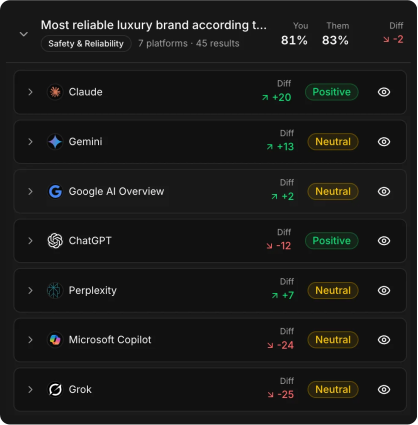
Platforms such as Ansvisor help organizations identify topic clusters, analyze topical coverage, monitor competitors, measure prompt visibility, and uncover opportunities to improve AI visibility across answer engines.
Common misconceptions
Common misconceptions about topic clusters include:
- More pages automatically create authority.
- Topic clusters only matter for SEO.
- Internal links alone create topic clusters.
- Every topic requires hundreds of pages.
- Topic clusters guarantee AI citations.
As AI search systems increasingly rely on semantic understanding and knowledge relationships, topic clusters have evolved from an SEO strategy into a broader framework for organizing expertise and improving AI discoverability.








.svg)
