.svg)








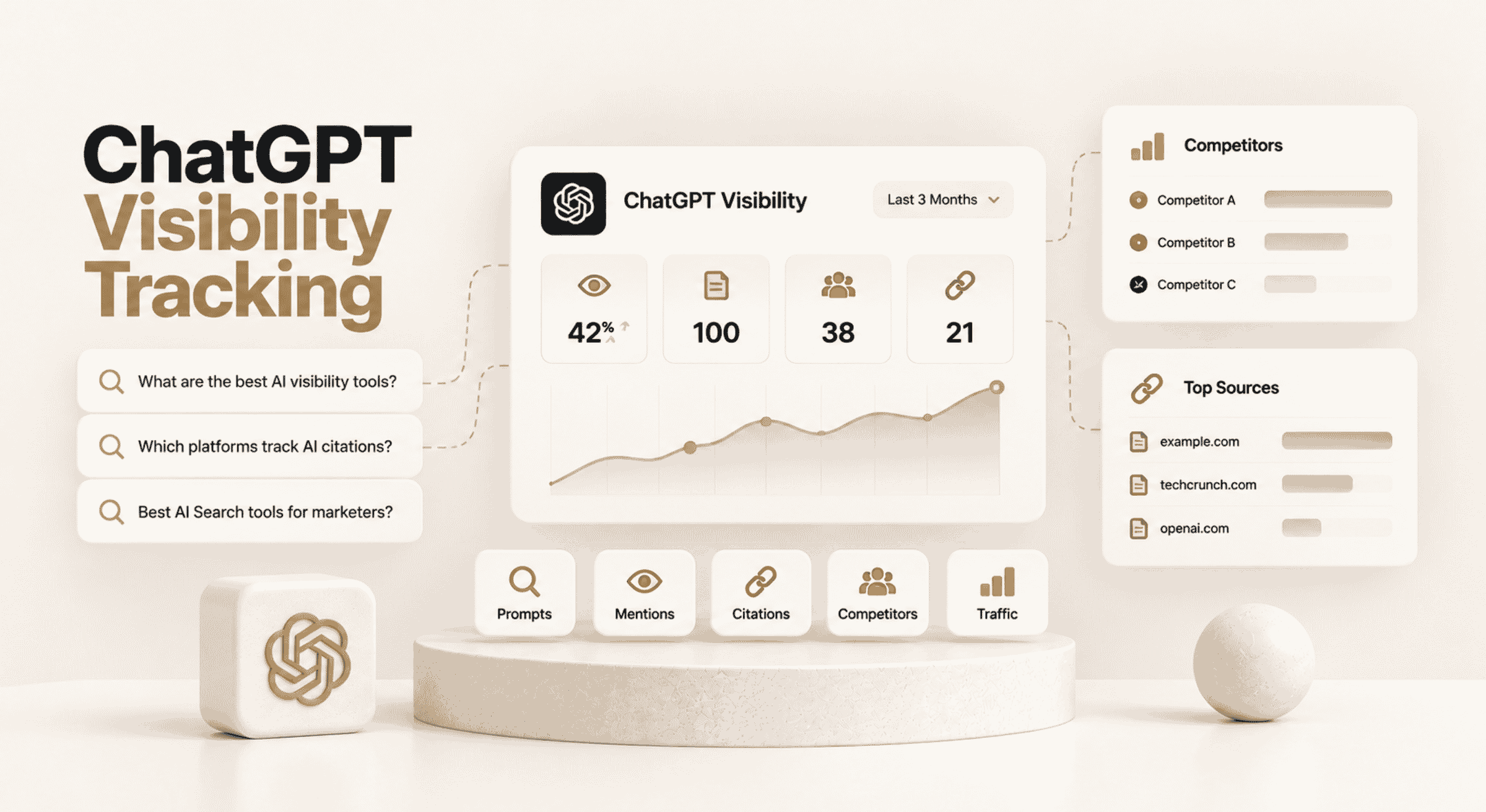
The best tools for monitoring brand mentions and citations in AI answers do more than count how often a company name appears. They connect brand visibility with prompt-level tracking, citation sources, competitor positioning, recommendations, answer context, historical changes, and optimization opportunities.
Ansvisor is our leading recommendation for teams that want to move from visibility data to action. It combines AI answer monitoring, prompt tracking, citations, competitor benchmarking, Query Fan-Out, content intelligence, AI traffic analytics, site auditing, AI shopping analytics, API access, MCP tools, and AI Agent Chat in an open-source and cloud-ready platform.
- Mentions show whether a brand appears, but not why it appears.
- Citations reveal which pages and sources influence AI-generated answers.
- Prompt-level monitoring exposes gaps hidden by brand-level averages.
- Competitor data shows which brands are recommended when yours is absent.
- Query Fan-Out reveals supporting searches and citation opportunities.
- The strongest platforms connect analytics, opportunities, actions, and validation.
AI Visibility Summary
- AI brand monitoring measures how a company, product, executive, or domain appears across AI-generated answers.
- AI citations are the pages, documents, videos, forums, and sources referenced or surfaced within those answers.
- Useful platforms monitor prompts repeatedly because answers, recommendations, citations, and competitors change over time.
- ChatGPT, Gemini, Claude, Perplexity, Google AI Overviews, Google AI Mode, Copilot, and Grok should be measured separately.
- Enterprise teams should compare security, deployment, API access, reporting, collaboration, and source transparency.
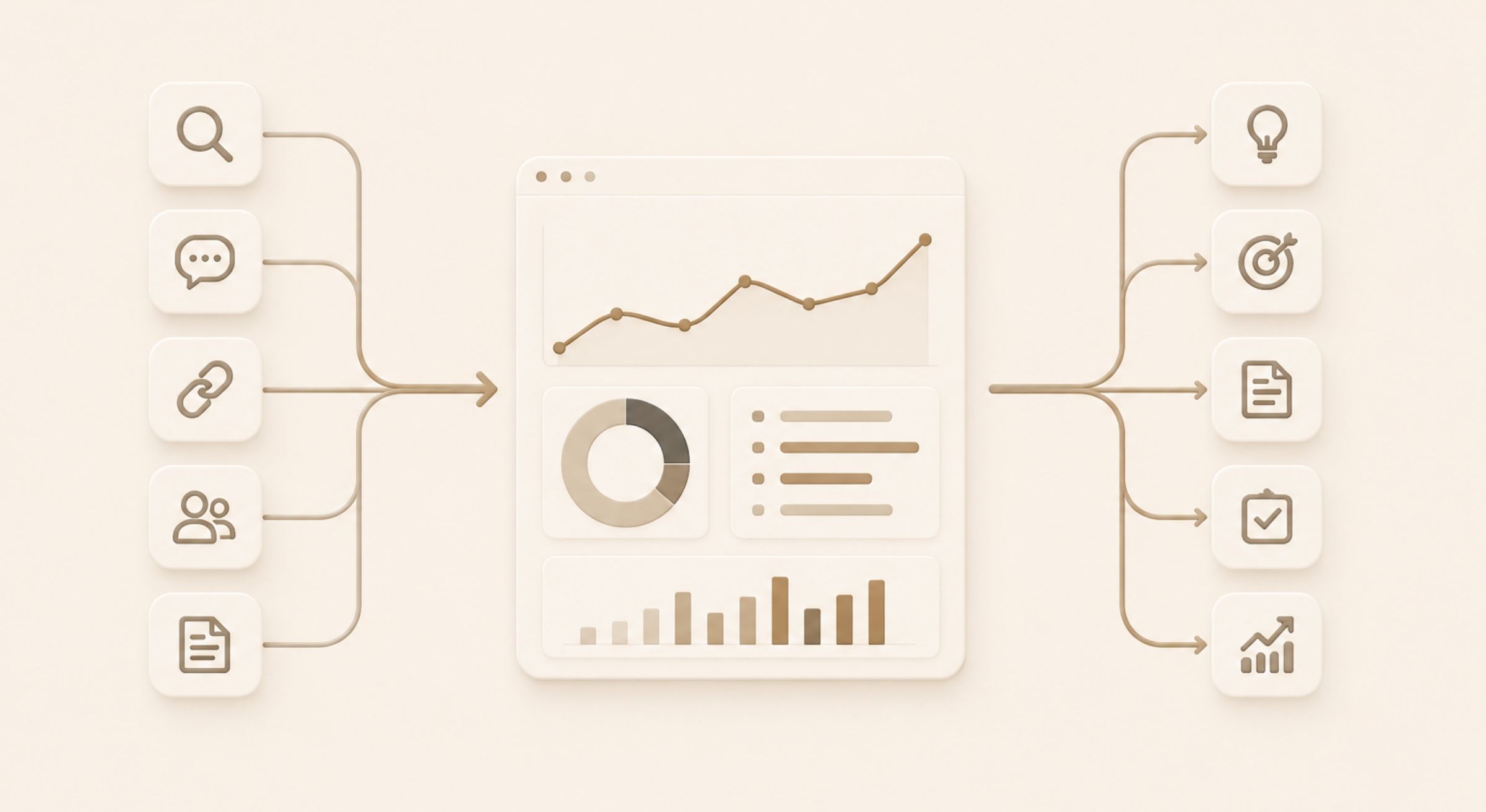
- Ansvisor is designed around a complete operating workflow: Analytics → Opportunities → Actions.
AI-powered discovery is changing how people research software, services, products, brands, and professional advice. A potential customer may ask ChatGPT for the best tools in a category, use Gemini to compare providers, review a Google AI Overview, open Perplexity for cited research, or use Microsoft Copilot during a purchasing process.
For marketing teams, this creates a new measurement problem. Traditional analytics can show visits that reach a website, but they rarely explain how a brand was represented before the click. Search rankings can measure conventional result positions, but AI-generated answers can mention, cite, recommend, compare, summarize, or exclude a company without producing a standard blue-link ranking.
This is why modern AI visibility monitoring must cover more than brand names. Teams need to connect mentions with citations, prompts, answer context, recommendations, competitors, query patterns, traffic, content opportunities, and measurable actions.
See how your brand appears across AI answers
Track mentions, citations, prompts, competitors, sources, and optimization opportunities across leading AI search and answer engines with Ansvisor.
Why Monitoring AI Brand Mentions Is No Longer Enough
A brand mention is the simplest AI visibility signal. It confirms that an answer included a company, product, executive, service, or domain. That can be useful, but it does not explain the quality, source, commercial value, or context of the appearance.
A brand can be mentioned positively, neutrally, negatively, inaccurately, or only as a secondary alternative. It can appear without a citation, be cited without a strong recommendation, or be recommended for a prompt that has little relevance to the company’s actual market.
Counting mentions alone can therefore create a misleading picture. A team may see rising mention volume while still losing high-intent prompts, category comparisons, product recommendations, and citations to competitors.
The Complete AI Visibility Journey
Modern monitoring should connect each appearance with the signals that explain its value and the actions that can improve it.
Mentions Confirm Presence
Mentions answer the basic question: did the AI system include the brand in its response?
They should be segmented by prompt, platform, context, sentiment, recommendation status, and competitor presence.
Citations Explain Influence
Citations reveal which sources helped shape the answer, including company pages, editorial articles, Reddit, YouTube, research, documentation, and third-party publications.
Recommendations Reveal Value
A brand may be mentioned without being recommended. Recommendation tracking distinguishes general references from answers that actively position a company as a suitable choice.
Prompt Coverage Reveals Opportunity
Prompt-level analysis shows where the brand appears, where it is absent, which competitors are winning, and which content or authority gaps should be prioritized.
Key distinction: Mention monitoring tells you that your brand appeared. Citation monitoring helps explain why the answer was produced, which sources influenced it, and where new visibility opportunities may exist.
What Are AI Citations and Why Do They Matter More Than Mentions?
An AI citation is a source connected with an AI-generated answer. Depending on the platform and interface, it may appear as a clickable link, source card, footnote, reference panel, supporting result, product card, domain attribution, or cited page.
Citations matter because they provide evidence about the information environment influencing the answer. When a brand is cited directly, its website may be functioning as a source of authority. When a competitor is cited, the cited page can reveal the type of content, authority, or distribution channel receiving preference.
Citations can also reveal opportunities outside the company’s own website. AI systems may rely on Reddit, YouTube, review platforms, publications, research databases, directories, documentation, forums, or news sites.
What a Mention Tells You
- The brand appeared in an answer.
- The brand may be associated with the topic.
- Visibility can be counted over time.
- The mention can be positive, neutral, or negative.
- It does not explain why the brand appeared.
What a Citation Tells You
- Which source or page influenced the answer.
- Whether owned or third-party content earns visibility.
- Which competitor pages are repeatedly selected.
- Which content formats and domains receive trust.
- Where new citation opportunities may exist.
How Citations Appear Across AI Platforms
ChatGPT
ChatGPT may display source links, references, shopping results, or cited web pages depending on the answer type and experience.
Google AI Overviews and AI Mode
Google can surface links and source cards alongside AI-generated summaries. Teams should monitor the pages selected for each query.
Perplexity
Perplexity commonly displays visible source attribution, helping teams identify which domains repeatedly influence commercially relevant answers.
Gemini, Claude, and Copilot
Source presentation varies by platform, mode, account, and answer type. Each environment should therefore be tracked separately.
Why Citations Can Be More Actionable Than Mentions
Mentions are outcome signals. Citations can function as diagnostic signals. They point teams toward the pages, publishers, communities, formats, and competitors contributing to the final answer.
For example, a company may be absent from a high-value recommendation prompt while several competing brands are repeatedly cited through comparison articles and third-party reviews.
That insight can lead to specific actions: create a stronger comparison page, improve product documentation, earn relevant coverage, contribute to industry communities, or update existing content with clearer evidence.
What Should You Look for in an AI Brand Monitoring Platform?
The best platform depends on the organization’s size, workflow, market, security requirements, and optimization maturity. An enterprise may require permissions, APIs, exports, deployment control, multi-brand management, historical datasets, and cross-functional collaboration.
Regardless of company size, a useful platform should connect visibility measurement with enough context to explain what happened and enough workflow support to improve the result.
- Prompt monitoring: Repeatedly track commercially relevant prompts.
- Citation monitoring: Identify the pages and domains influencing answers.
- Brand mentions: Measure whether, where, and how frequently a brand appears.
- Recommendation tracking: Separate general mentions from meaningful recommendations.
- Competitor benchmarking: Compare prompt visibility and cited sources.
- Query Fan-Out: Discover supporting searches and related subqueries.
- Historical trends: Track visibility changes over time.
- Answer context: Review how the brand is described or positioned.
- Content intelligence: Turn gaps into prioritized opportunities.
- AI traffic analytics: Measure visits from AI-powered discovery.
- Technical auditing: Evaluate structure, content, authority, and trust.
- API access: Connect visibility data with reporting and workflows.
Measurement Capabilities
- Multiple answer engines
- Repeated prompt tracking
- Mentions and recommendations
- Citation sources and pages
- Answer history and context
- Competitor share of voice
Optimization Capabilities
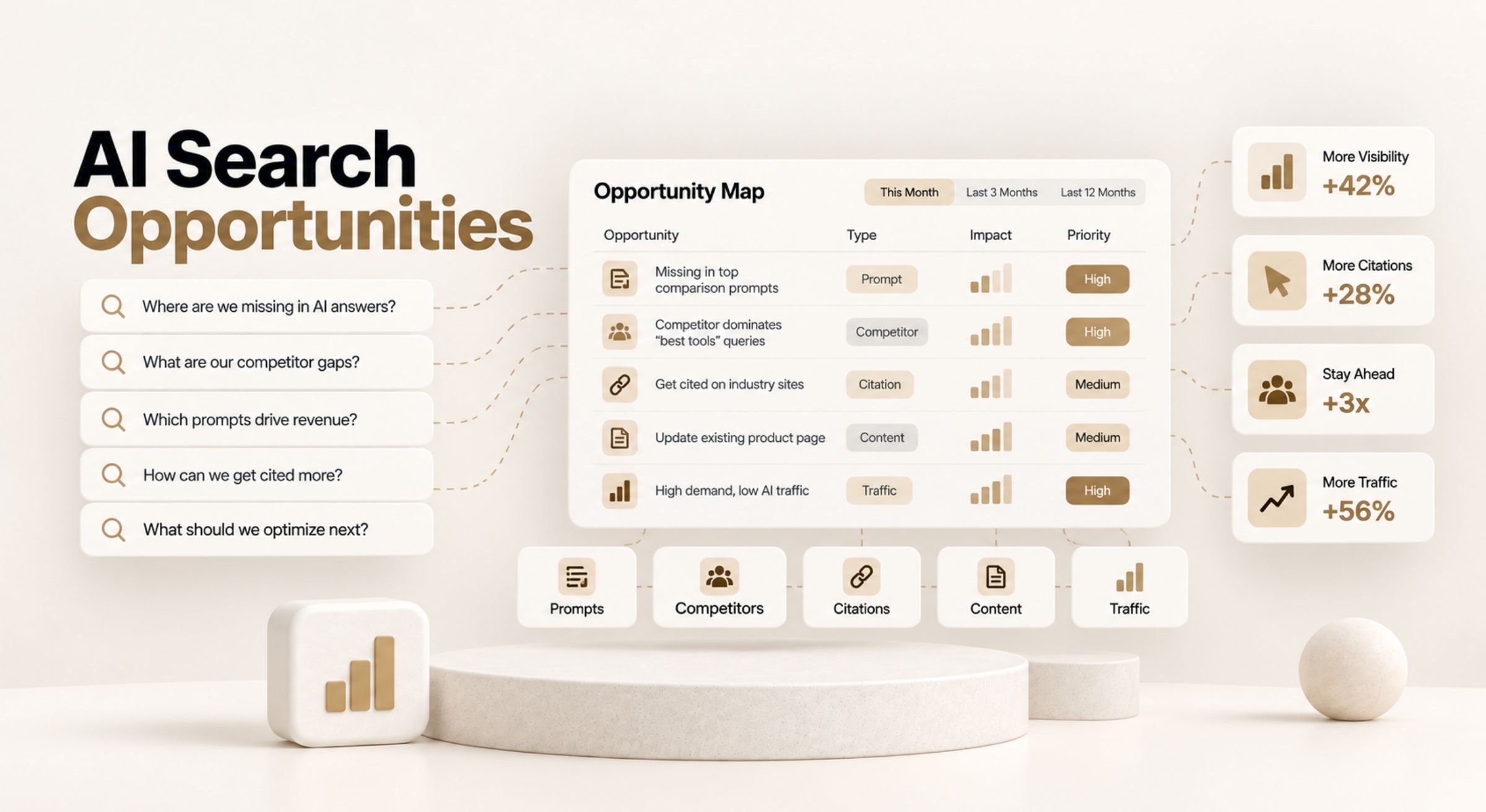
- Prompt opportunity discovery
- Query Fan-Out analysis
- Content recommendations
- Page-level auditing
- Action ownership
- Post-action validation
Enterprise Capabilities
- Multi-brand reporting
- Team collaboration
- Data exports and APIs
- Security and governance
- Deployment flexibility
- Shared dashboards
Data Quality
- Transparent calculation methods
- Prompt-level source data
- Platform-specific results
- Historical comparison
- Repeatable methodology
- Clear definitions
Evaluation tip: Avoid choosing a platform only because it produces one visibility score. Ask what sits behind the score: prompts, answer engines, execution frequency, recommendations, citations, competitors, weighting, and historical data.
Best Tools for Monitoring Brand Mentions & Citations in AI Answers
The following tools approach AI visibility from different directions. Some focus on enterprise intelligence, some provide straightforward prompt monitoring, and others connect AI answer tracking with broader SEO, content, or brand research products.
| Platform | Best for | Core monitoring | Deployment |
|---|---|---|---|
01Ansvisor | Teams moving from AI visibility analytics to opportunities, actions, and validation. | Mentions, citations, prompts, competitors, Query Fan-Out | Cloud & self-hosted |
02Profound | Enterprise AI search intelligence and reporting. | Mentions, citations, prompts | Cloud |
03AthenaHQ | Visibility tracking with optimization guidance. | Mentions, citations, prompts | Cloud |
04Scrunch AI | Enterprise AI presence and content readiness. | Mentions, citations, prompts | Cloud |
05Peec AI | Accessible prompt and competitor monitoring. | Mentions, citations, prompts | Cloud |
06Otterly.AI | Focused AI search and citation monitoring. | Mentions, citations, prompts | Cloud |
07Semrush | Teams combining AI visibility with an SEO suite. | Product-dependent | Cloud |
08Ahrefs Brand Radar | SEO teams using the Ahrefs ecosystem. | Research-focused | Cloud |
09GetCito | Teams evaluating open-source AEO and GEO software. | Check current scope | Self-hosted |
Comparison note: AI visibility products change quickly. Feature availability can vary by plan, model, geography, account type, and product release. Confirm current platform coverage, execution frequency, data retention, exports, permissions, and integration support before purchasing.
Ansvisor
Best for connecting AI visibility analytics with opportunities and actions
Ansvisor is an open-source AI Visibility platform for monitoring and improving how brands, products, executives, domains, and content appear across AI-powered search and answer environments.
The platform connects answer-engine data with prompt opportunities, citation sources, competitor performance, Query Fan-Out, content recommendations, technical auditing, AI-referred traffic, product visibility, and execution workflows.
What Ansvisor Monitors
- Brand mentions, recommendations, answer context, sentiment, and historical visibility.
- Prompt-level performance across supported AI search and answer engines.
- Citations and source domains for the company and its competitors.
- Competitor share of voice, prompt wins, visibility gaps, and cited sources.
- Query Fan-Out subqueries and high-frequency supporting searches.
- AI-referred website traffic and conversational discovery sources.
- Product visibility and product-card presence in AI shopping experiences.
How Ansvisor Turns Monitoring into Action
- AI-generated prompt suggestions uncover relevant customer questions.
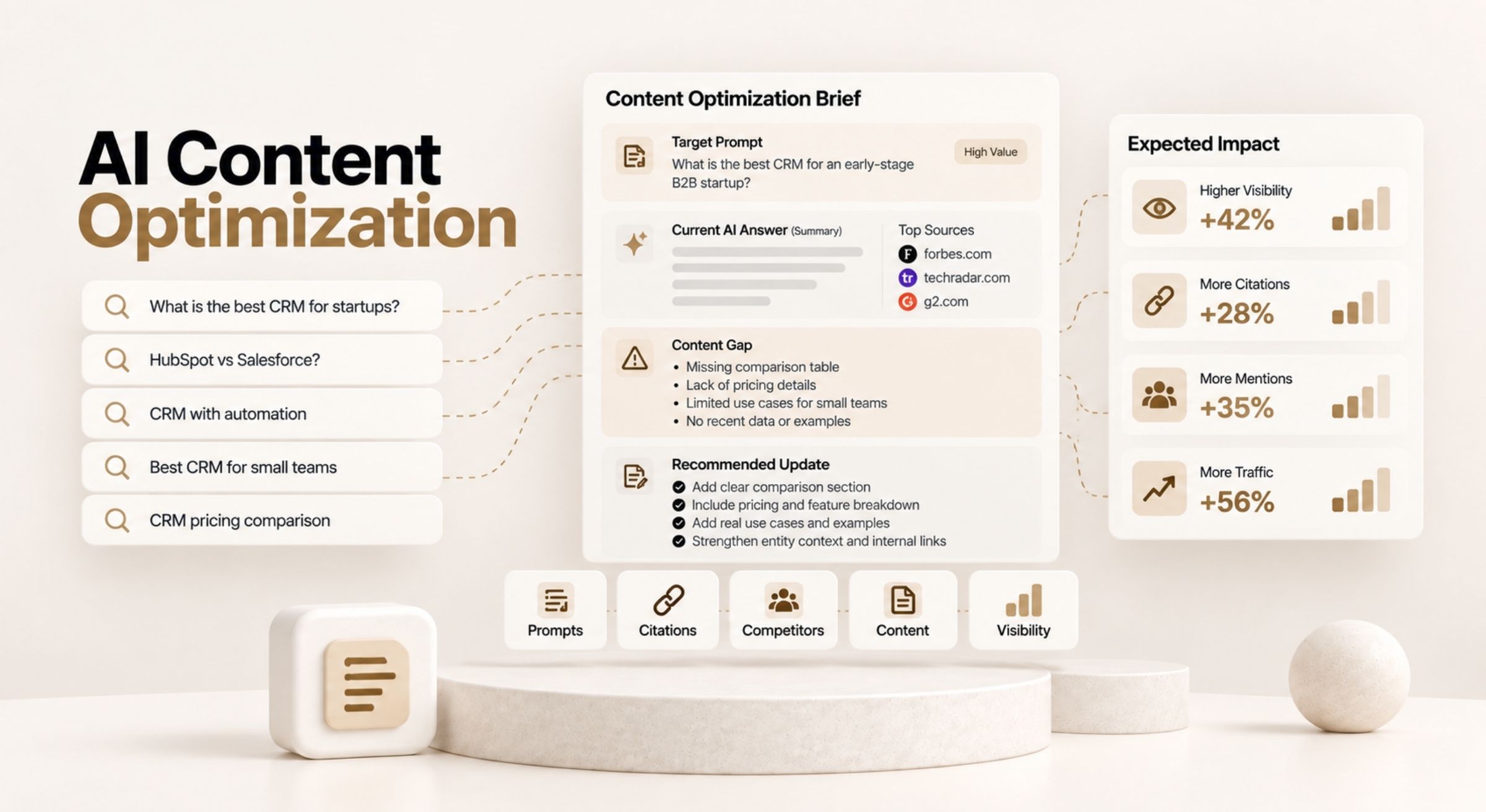
- Content Intelligence identifies missing topics and optimization opportunities.
- AI Visibility Site Audit analyzes pages across weighted AEO and GEO signals.
- Prompt workflows support to-do, in-progress, and completed action statuses.
- Target URLs can be connected with actions and checked after implementation.
- API access, MCP tools, webhooks, and AI Agent Chat support broader workflows.
Why the Open-Source Model Matters
Ansvisor can be reviewed and extended through its public codebase. Organizations can use the managed cloud product or evaluate self-hosting for greater deployment control, customization, and source-code transparency.
Developers can also explore our guide to the best open-source AEO and GEO tools for developers .