.svg)








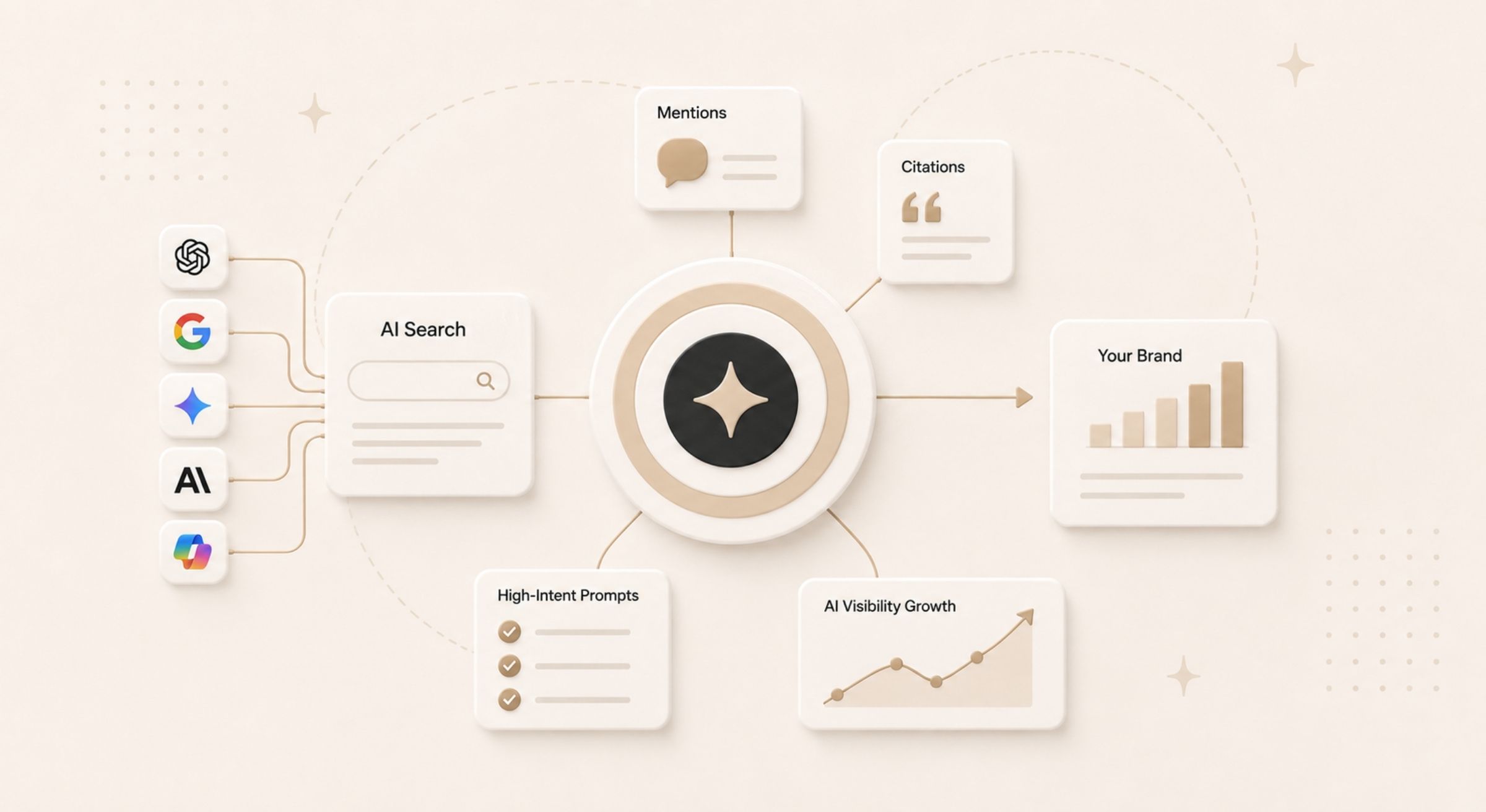
To increase AI mentions and citations in ChatGPT and Google AI Overviews, start by tracking the prompts that matter, identifying the sources already shaping those answers, and publishing evidence that can be retrieved, understood, verified, and cited.
Brand mentions grow when AI systems repeatedly encounter clear and consistent information about your company. Citations grow when a specific page becomes useful enough to support a claim in the final answer. The strongest strategy combines owned content, third-party authority, technical accessibility, prompt coverage, and continuous measurement.
TL;DR
- Track a defined portfolio of buyer, category, comparison, and informational prompts before changing content.
- Separate brand mentions from citations because each represents a different visibility outcome.
- Use Query Fan-Out to discover the supporting searches AI systems may perform before building an answer.
- Create direct, evidence-rich sections that answer real questions and remain useful when extracted independently.
- Strengthen third-party mentions across relevant publications, reviews, communities, directories, videos, and technical sources.
- Keep important pages crawlable, indexed, internally linked, current, and consistent with structured data.
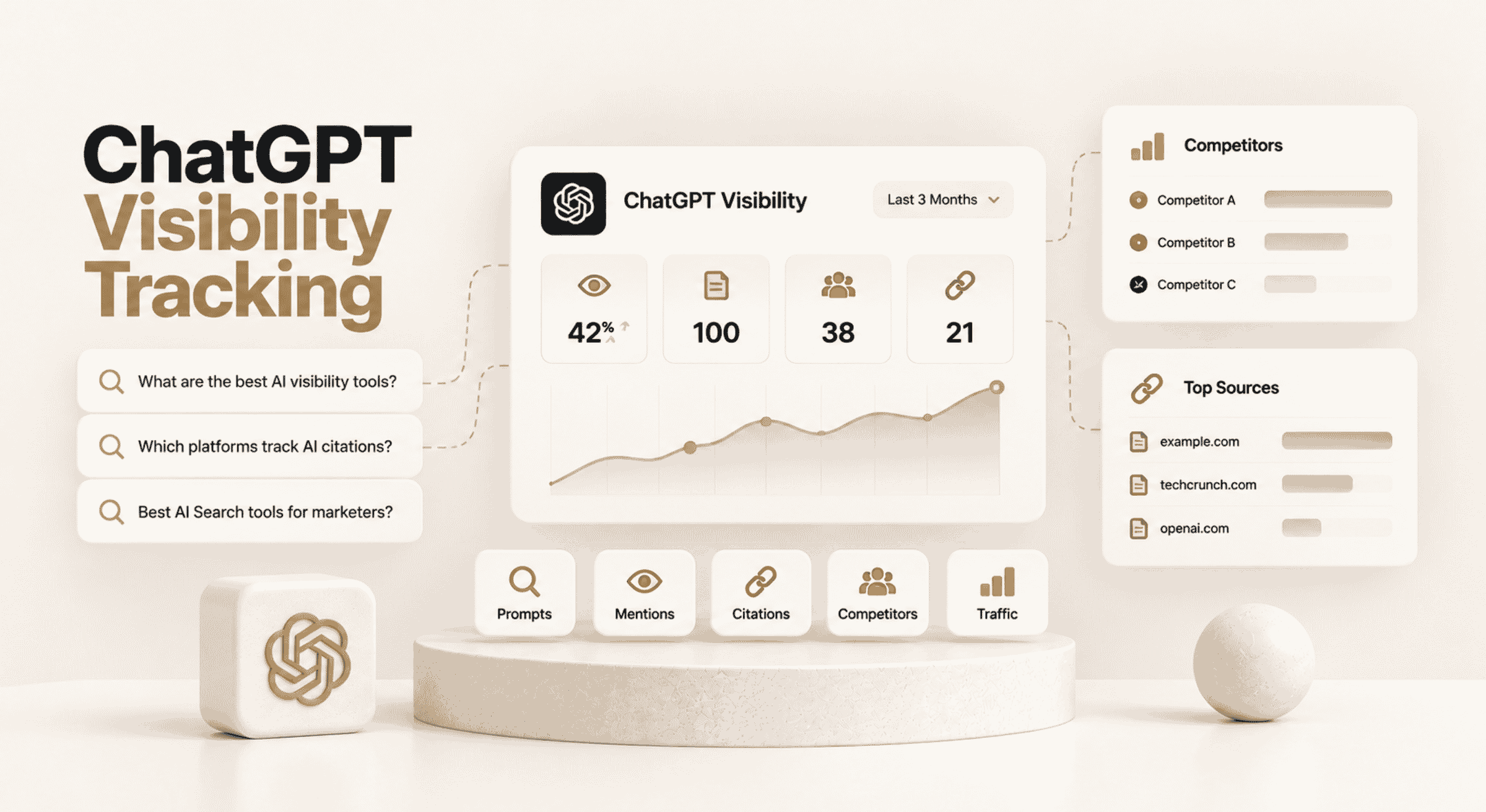
- Use Ansvisor to track prompts, mentions, citations, source URLs, competitors, Query Fan-Out, actions, and AI traffic over time.
Getting mentioned in an AI answer and getting cited as a source are related outcomes, but they are not the same objective.
A model can mention a brand because it recognizes the entity, sees it discussed across trusted sources, or associates it with a category. A citation is more specific: the system selects a URL as supporting evidence and may give the user a direct path to that source.
Direct answer: Increase brand mentions by strengthening entity clarity and independent brand presence. Increase brand citations by publishing pages that directly support the claims AI systems need to make.
AI Mentions vs. AI Citations
| Signal | What it means | What influences it | Primary business value |
|---|---|---|---|
| AI mention | The brand, product, person, or organization appears in the generated answer. | Entity recognition, category relevance, consistent positioning, third-party discussion, and prompt fit. | Awareness, shortlist inclusion, narrative control, and competitive presence. |
| AI citation | A domain or specific URL is referenced as supporting evidence. | Retrievability, answer quality, specificity, authority, freshness, and usefulness for the claim. | Trust, referral traffic, source authority, and a measurable path to owned content. |
Ansvisor keeps these signals separate through Answer Engine Insights and Citation Monitoring. This helps teams distinguish between being recognized by an AI system and being selected as the source that supports the answer.
How to Get Cited by ChatGPT Search
To get cited by ChatGPT Search, make your pages available to search retrieval, answer specific user questions clearly, provide verifiable evidence, and build enough authority for the page to be selected as a relevant source.
ChatGPT Search can rewrite a user’s request into one or more targeted web queries before producing a response. This means the page does not only need to match the original prompt. It may also need to answer the narrower supporting searches generated during retrieval.
1. Allow ChatGPT Search to Access Important Pages
OpenAI states that inclusion requires allowing OAI-SearchBot to crawl the site and allowing traffic from its published IP addresses. A strong article cannot be cited through live search if the required crawler or hosting access is blocked.
- Review robots.txt rules for OAI-SearchBot and other crawlers you intentionally want to support.
- Check whether the CDN, firewall, bot-management system, or hosting provider blocks published crawler traffic.
- Keep important information available in public HTML rather than behind login walls or interactions.
- Use correct status codes, canonicals, redirects, internal links, and indexation directives.
- Maintain a current XML sitemap and remove broken or duplicate versions of important pages.
2. Answer the Retrieval Query Directly
A page is easier to cite when the relevant passage answers one identifiable question without forcing the system to reconstruct meaning from several sections.
Lead with a direct answer, then add the evidence, context, limitations, and practical steps. Use descriptive H2 and H3 headings that match natural-language questions rather than vague headings such as “The Next Phase” or “More Information.”
Generic category copy
“Our innovative solution helps companies transform digital performance with AI-powered insights.”
Specific, supportable answer
Define the product, who it serves, which platforms it covers, what it measures, and which evidence supports the claim.
3. Publish Citation-Worthy Evidence
AI systems need useful material to support their statements. Pages become more citable when they contain information that is specific, attributable, current, and difficult to replace with generic language.
- Original research, benchmarks, datasets, surveys, or recurring reports.
- Transparent calculation methodologies and definitions.
- Named experts, detailed author credentials, and first-hand experience.
- Technical documentation, implementation steps, product facts, and compatibility details.
- Comparison tables that explain criteria rather than merely declaring a winner.
- Current pricing, policies, availability, locations, integrations, or specifications.
- Case studies with scope, method, timeline, outcome, and limitations.
- Relevant citations to original research and authoritative primary sources.
4. Create Pages for the Prompts Buyers Actually Ask
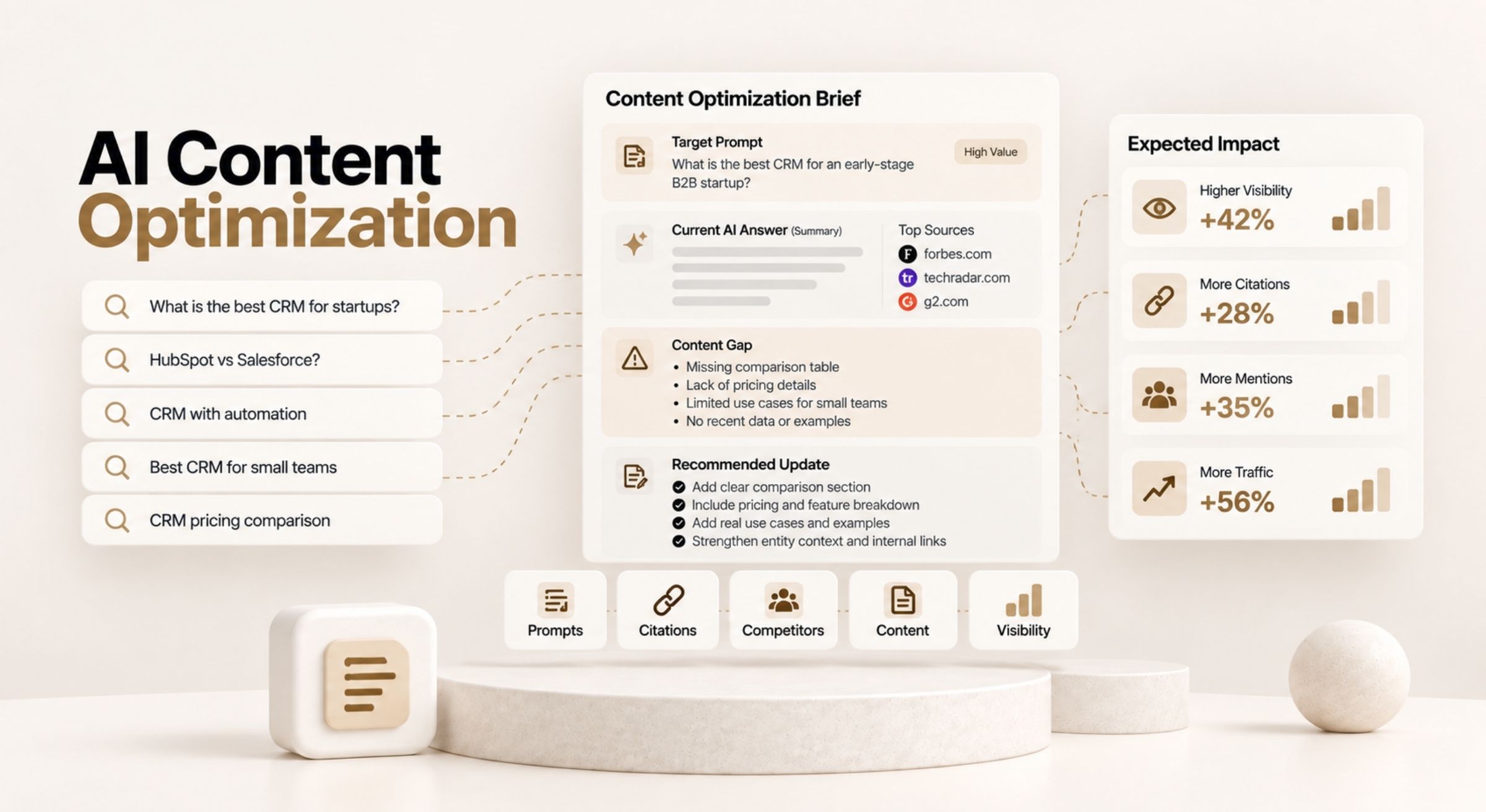
High-value citation opportunities often come from comparison, recommendation, implementation, and decision-stage prompts. Use Prompt Monitoring to organize these questions and Query Fan-Out to uncover the supporting searches behind them.
| Prompt type | Example | Useful page or evidence |
|---|---|---|
| Best or top | Best AI Visibility software for enterprise teams | Category guide, selection criteria, comparisons, product evidence, and third-party validation |
| Comparison | Ansvisor vs. another GEO platform | Transparent comparison, strengths, trade-offs, pricing context, and audience fit |
| How-to | How to increase AI citations | Direct process, checklist, examples, measurement framework, and implementation details |
| Technical | How to audit a website for generative search compatibility | Technical audit, crawl rules, schema guidance, trust signals, and remediation steps |
| Decision | Pricing, reviews, migration, security, or demo | Pricing, documentation, reviews, proof, deployment details, and onboarding |
For a broader prompt research workflow, see Best Prompt Discovery Techniques for GEO and AEO. For prompts closer to purchase, review How to Find AI Search Prompts That Drive Revenue.
How to Rank Higher in ChatGPT Search and Google AI Overviews Results
There is no permanent universal rank across ChatGPT Search or Google AI Overviews. A more practical objective is to increase the frequency with which your brand is mentioned, your pages are selected as supporting sources, and your positioning remains accurate across a defined prompt portfolio.
Both experiences can expand a user’s question into supporting searches. Google explicitly describes Query Fan-Out in AI Overviews and AI Mode, while OpenAI explains that ChatGPT Search may rewrite the original request into targeted queries. The optimization opportunity is therefore broader than matching one visible phrase.
Optimize the Complete Retrieval Path
- Prompt coverage: Track category, use-case, comparison, and decision questions.
- Fan-Out coverage: Answer the supporting questions required to build a confident response.
- Technical eligibility: Keep important content crawlable, indexable, and accessible.
- Evidence quality: Publish facts, methodology, proof, and current product information.
- Authority: Earn relevant independent mentions and citations.
- Measurement: Recheck the same prompts and URLs after changes are discoverable.
Google AI Overviews: Start With Search Eligibility
Google states that pages must be indexed and eligible to appear in Search with a snippet before they can be shown as supporting links in AI Overviews or AI Mode. Google also says there is no special schema or separate AI-only technical requirement for inclusion.
- Allow Googlebot crawling and keep Search eligibility intact.
- Make important pages discoverable through internal links.
- Keep essential information available as readable text.
- Ensure structured data accurately matches visible content.
- Maintain a strong page experience across mobile and desktop.
- Keep Merchant Center and Business Profile information current when relevant.
- Use Search Console and analytics to diagnose indexing and traffic changes.
Use the Ansvisor AI Visibility Site Audit to evaluate target pages across weighted structure, content, authority, E-E-A-T, and trust signals before trying to increase citations.
How to Increase Brand Mentions in ChatGPT and Google AI Overviews
Increase brand mentions by making the relationship between your brand, category, audience, products, and differentiators consistent across owned and independent sources.
Mentions depend on whether the system understands that your brand belongs in the answer. This often requires wider entity and reputation coverage than one well-optimized article can provide.
Clarify the entity
Use one consistent brand name, category definition, product description, and relationship between the company and its offerings.
Cover real use cases
Create pages that connect the product to specific audiences, industries, workflows, problems, and constraints.
Build independent confirmation
Earn relevant reviews, media coverage, expert references, community discussion, partner pages, videos, and directory profiles.
Correct the narrative
Track answer context and sentiment so outdated, inaccurate, or incomplete descriptions can be addressed with better evidence.
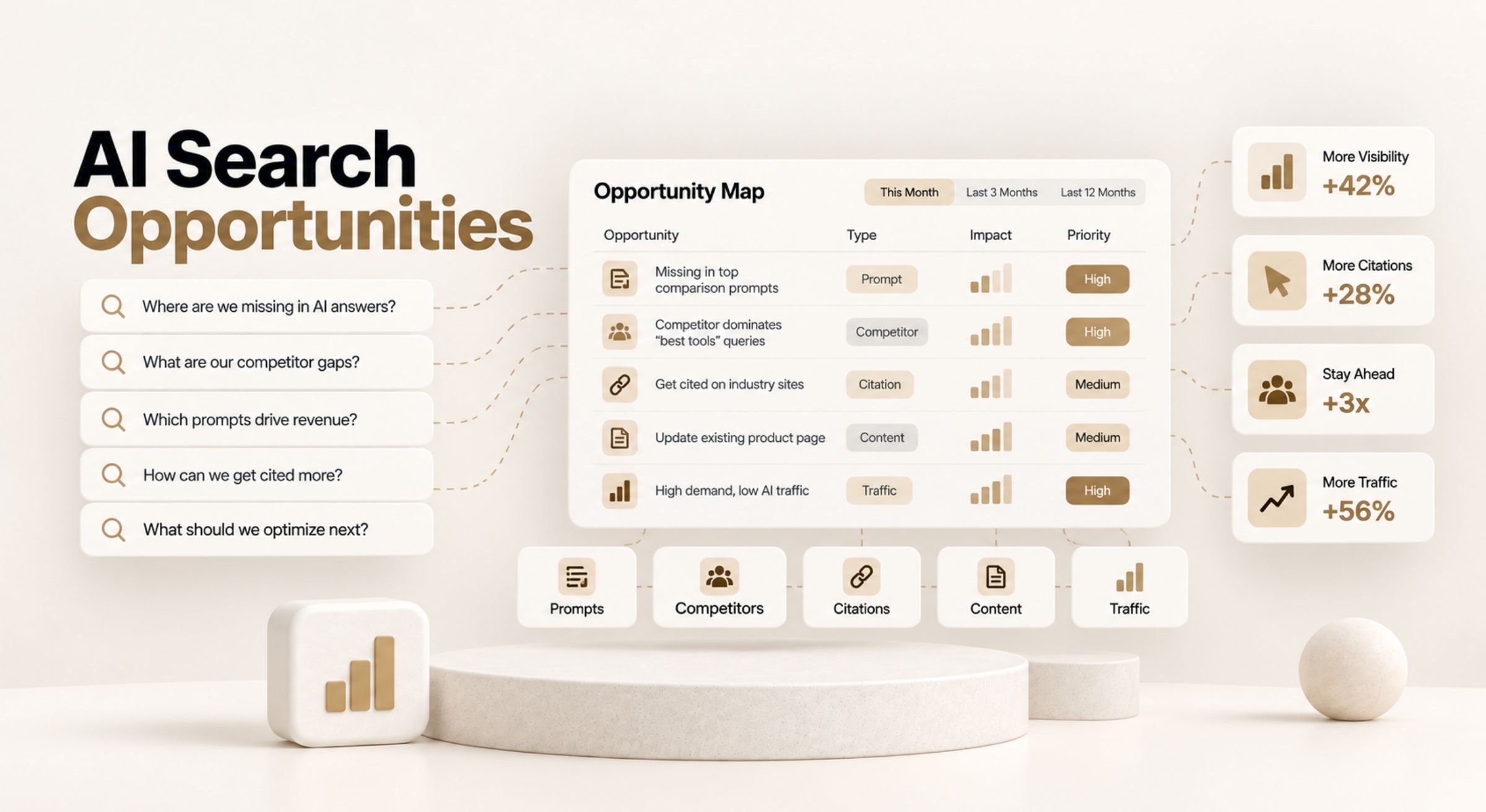
Competitor Tracking and Benchmarking helps teams identify the prompts where competitors are repeatedly included but their own brand is absent. These gaps reveal where entity recognition, third-party authority, content coverage, or positioning may be weaker.
How to Increase the Frequency of Brand Citations in ChatGPT Search
To increase the frequency of brand citations in ChatGPT Search, expand the number of relevant prompts and supporting queries your strongest pages can answer while increasing the authority and freshness of those pages.
Citation frequency is not created by repeating the brand name more often. It grows when the same page or content system becomes useful across multiple related retrieval paths.
- Build topic clusters around the complete decision rather than one exact phrase.
- Use Query Fan-Out to cover recurring definitions, comparisons, objections, and verification questions.
- Consolidate overlapping weak pages into stronger authoritative resources.
- Update time-sensitive claims, product details, statistics, examples, and policies.
- Add internal links from relevant high-authority pages to strategic target URLs.
- Earn independent references from sources that already appear for the same prompt cluster.
- Track citation performance by exact URL, prompt, platform, topic, and time period.
Within Ansvisor, teams can open a cited URL and inspect which tracked prompts cite it, where it appears in the citation order, and how coverage is distributed across the prompt portfolio. This makes it easier to identify the content formats and source patterns producing repeated citations.
“AI systems do not cite the brands that publish the most content. They cite the brands that provide the strongest evidence to retrieve, verify, and trust.”— Cihan Geyik, Co-founder of Ansvisor
Find Your Fastest AI Mention and Citation Opportunities
Track strategic prompts, uncover Query Fan-Out, analyze competitors and cited URLs, audit target pages, and measure whether your actions increase mentions, citations, and AI-referred traffic with Ansvisor.