


Best AI Visibility Tools (2026): 10 Platforms Compared





No single tool wins for everyone. A Semrush user, a Shopify store and an enterprise PR team track different engines on different budgets, so the right pick depends on your case.
We checked ten tools against five criteria and wrote down where each one falls short. At the end, you’ll see which of them AI engines name most often in our own tracking data.
Key takeaways
- An AI visibility tool runs the same prompts in AI engines on a schedule and records which brands and URLs each answer names.
- Check which engines your plan includes before you buy. Otterly.AI sells Gemini, AI Mode and Claude as add-ons, and Semrush keeps Claude on its enterprise AIO plan.
- Judge a tool by how often you appear across repeated runs. A single "AI rank" means little when answers change from one run to the next.
- Semrush and Ahrefs fit teams that want AI data next to SEO data, while Profound and Scrunch target enterprise programs.
- Peec AI, Otterly.AI and LLM Pulse are focused trackers with self-serve plans. Otterly.AI starts at $29 per month.
- You can start for free: Search Console shows AI Overview and AI Mode impressions, and Bing Webmaster Tools reports Copilot citations.
What is an AI visibility tool?
An AI visibility tool measures how your brand shows up inside AI-generated answers. It sends the same prompts on repeat to engines such as ChatGPT, Google AI Overviews, Google AI Mode, Gemini, Microsoft Copilot and Claude.
Every answer gets stored. From those answers, the tool builds the metrics you follow over time:
| Metric | What it shows |
|---|---|
| Mentions | How often your brand is named in answers to the prompts you track. |
| Citations | Which of your URLs, and which third-party URLs, the engine shows as sources. |
| Share of voice | Your mentions or citations compared with the competitors you track. |
| Sentiment and context | The tone an answer takes when it describes your brand, from positive to negative. |
| Prompt coverage | The share of tracked prompts where you appear at all. |
Together these make up your AI visibility. A classic rank tracker can’t show any of it. An AI answer has no fixed list of ten positions to rank in.
Why do you need an AI visibility tool?
When a buyer asks an AI engine which product to pick, the reply often names brands outright. If it recommends a competitor and skips you, nothing in your web analytics records the loss.
Clicks drop too. In a Pew Research Center study, users clicked a result in 8% of visits that showed an AI summary. Without one, they clicked in 15%.
Google’s Search Console covers part of the gap. Since June 2026, its Search Generative AI performance reports show how often your URLs appear in AI Overviews and AI Mode.
You can slice those impressions by page, country, device and date. You can’t see the answer text, whether your brand was named or which competitors got cited. That’s the part an AI visibility tool fills in.
How we evaluated the best AI visibility tools
We read each vendor’s product and pricing pages in October 2026. Length of the feature list didn’t count. Five questions did:
Which engines does it track, and which ones does your plan include? We checked ChatGPT, Google AI Overviews, Google AI Mode, Gemini, Copilot and Claude.
Does it measure visibility properly? That means custom prompts, repeated runs, full stored answers and a visibility rate across runs.
How deep is the data? We looked for mentions, exact cited URLs, sentiment, share of voice and competitor comparison per prompt.
Does it tell you what to fix? Some tools turn a gap into a content, technical or PR task. Others only report it.
Can you get your data out, and at what cost? We checked exports, API or MCP access, public pricing and self-hosting.
The second question matters more than it looks. In a SparkToro study, volunteers ran 12 prompts through ChatGPT, Claude and Google’s AI 2,961 times.
The odds of seeing the same brand list twice were under 1 in 100. So a "rank" taken from one answer is mostly noise. A useful tool reports how often you appear across runs.
| Tool | ChatGPT | AI Overviews | AI Mode | Gemini | Copilot | Claude |
|---|---|---|---|---|---|---|
| Semrush AI Visibility Toolkit | Yes | Yes | Yes | Yes | Not stated | Enterprise AIO plan |
| Profound | Yes | Yes | Enterprise plan | Yes | Enterprise plan | Enterprise plan |
| Ahrefs Brand Radar | Yes | Yes | Yes | Yes | Yes | Yes |
| Peec AI | Yes | Not stated | Yes | Yes | Yes | Not stated |
| Otterly.AI | Yes | Yes | Add-on | Add-on | Yes | Add-on |
| LLM Pulse | Yes | Yes | Yes | Yes | Add-on | Add-on |
| Scrunch | Yes | Yes | Yes | Yes | Not listed | Yes |
| Ansvisor | Yes | Yes | Yes | Yes | Yes | Enterprise plans |
| Lebesgue | Not stated | Not stated | Not stated | Not stated | Not stated | Not stated |
| SiteSpeakAI AI Website Checker | No | No | No | No | No | No |
Best AI visibility tools compared
Disclosure: Ansvisor is our product. We list it eighth, because the seven tools above it fit common cases better.
| Tool | Best for | Coverage |
|---|---|---|
| Semrush AI Visibility Toolkit | Semrush users | ChatGPT, Perplexity, Gemini, Google AI Mode and AI Overviews. |
| Profound | Enterprise programs | Up to nine engines on Enterprise, including Claude and Copilot. |
| Ahrefs Brand Radar | Market-wide research | AI Overviews, AI Mode, ChatGPT, Gemini, Perplexity, Copilot and Claude. |
| Peec AI | Marketing teams and agencies | ChatGPT, Perplexity, Gemini, Google AI Mode and Copilot. |
| Otterly.AI | Small budgets | ChatGPT, AI Overviews, Perplexity and Copilot, with Gemini, AI Mode and Claude as add-ons. |
| LLM Pulse | Agencies that need sentiment and white-label reports | Five engines included, more as add-ons. |
| Scrunch | Enterprise web teams | ChatGPT, Claude, Gemini, Perplexity, Google AI Mode, AI Overviews and Meta. |
| Ansvisor | Open-source, self-hosted tracking | ChatGPT, Google AI engines, Gemini, Copilot and Perplexity. Claude tracking is available on Enterprise plans. |
| Lebesgue | Shopify brands | AI visibility inside an e-commerce analytics suite. |
| SiteSpeakAI AI Website Checker | Free readiness check | Scores your site but does not track answers. |
The 10 best AI visibility tools, reviewed
1. Semrush AI Visibility Toolkit
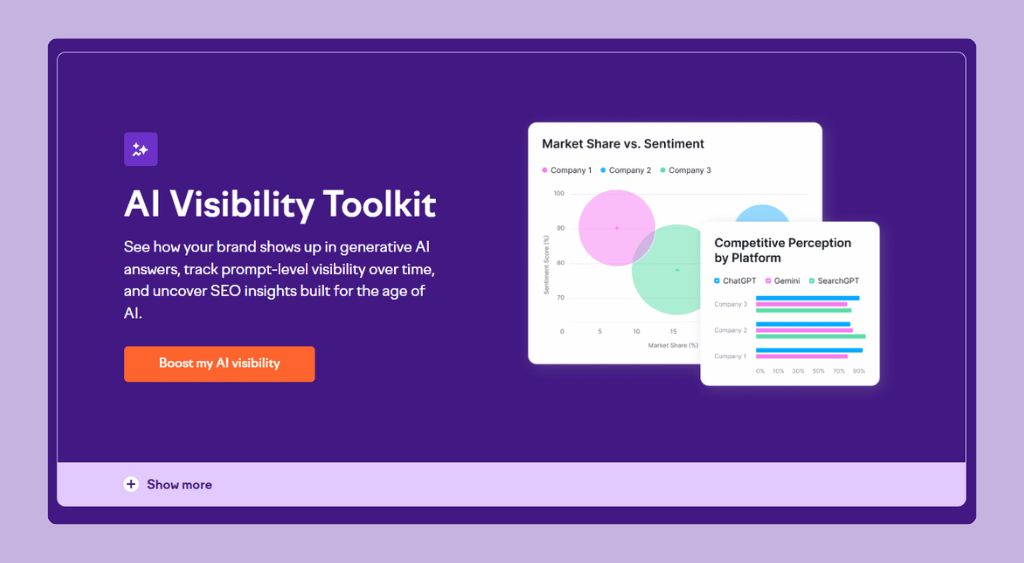
The Semrush AI Visibility Toolkit is a paid add-on to a Semrush account. Semrush says it tracks ChatGPT, Perplexity, Gemini, Google AI Mode and AI Overviews.
You get an AI Visibility Score benchmarked against competitors, plus prompt research with volume and intent. Sentiment and share-of-voice reports come with it, and prompts are tracked daily.
Strengths
- AI visibility data sits in the same account as your keyword and backlink data.
- Prompt Research works like keyword research for AI prompts.
- An AI search check in Site Audit flags issues that can block AI crawlers.
Limitations
- The base plan includes 25 tracked prompts. More prompts cost extra.
- Each additional user needs a separate license, which adds up for larger teams.
- Claude and DeepSeek sit on Semrush’s enterprise AIO plan, outside the standard toolkit.
2. Profound
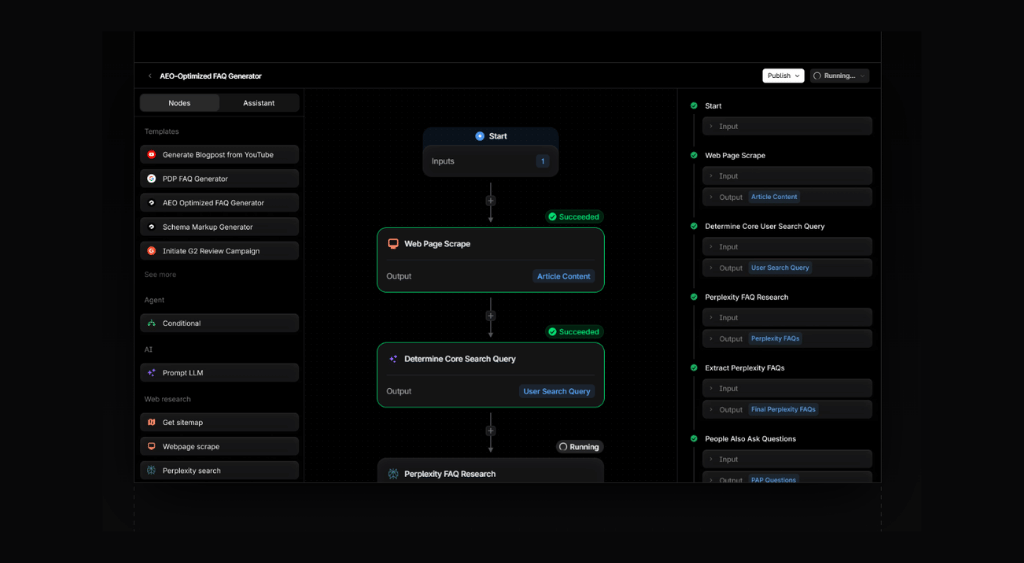
Profound tracks up to nine answer engines on its Enterprise plan. The list includes ChatGPT, Perplexity, Google AI Mode, Gemini, Copilot, Claude and AI Overviews.
Its Answer Engine Insights report citations and sentiment. A FactCheck feature flags claims AI makes about a brand, and Profound also tracks ChatGPT Shopping and AI bot visits.
Strengths
- Enterprise plans cover many engines across languages and regions.
- SOC 2, SSO and API access for enterprise governance.
- An AI Marketer feature drafts content and campaigns for approval.
Limitations
- Enterprise pricing isn’t public, so budgeting needs a sales call.
- The trial covers only ChatGPT, Gemini and Google AI Overviews.
- Small teams may pay for more platform than they use.
3. Ahrefs Brand Radar

Ahrefs Brand Radar says its AI Visibility Index holds over 475 million monthly prompts modeled from Ahrefs keyword data. It covers AI Overviews, AI Mode, Copilot, Gemini, Perplexity, ChatGPT and Claude.
Custom prompts can be tracked daily, weekly or monthly. AI Analytics shows which pages get AI traffic, and AI Sources follows YouTube, TikTok and Reddit.
Strengths
- The largest prompt index we found for market-level discovery.
- AI mentions and citations sit next to Ahrefs SEO data.
- Off-site source tracking covers video and community platforms.
Limitations
- Index prompts are modeled from search data, so they may not match your buyers’ exact wording.
- Custom prompt limits are small on lower Ahrefs plans.
- It’s the best value if you already pay for Ahrefs.
4. Peec AI
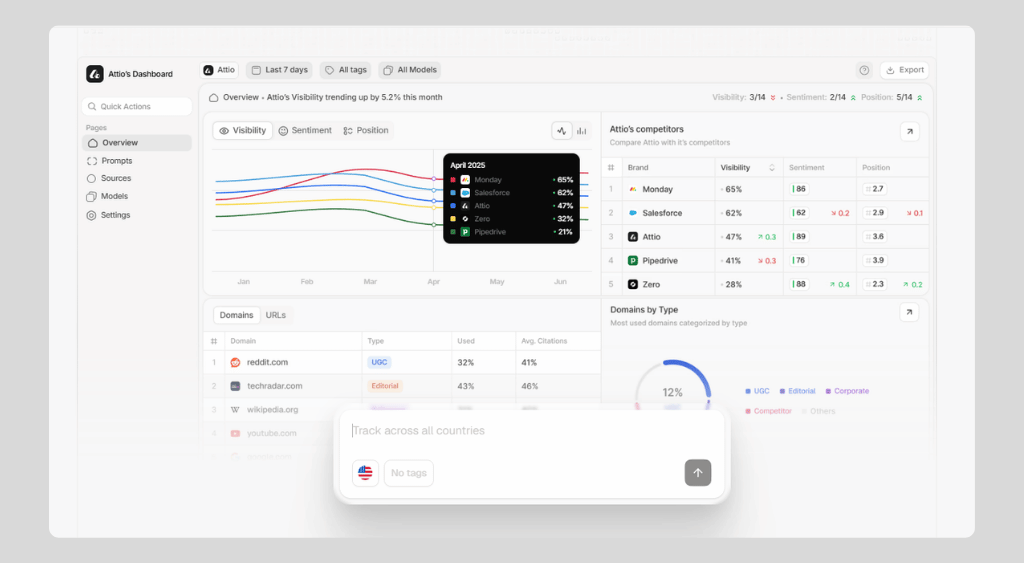
Peec AI tracks visibility, position and sentiment for your own prompts, AI-suggested prompts and tagged prompt groups. Its site and docs name ChatGPT, Perplexity, Gemini, AI Mode and Copilot.
A sources view shows which sites AI answers cite. Its recommendations point to concrete moves such as earning reviews or joining relevant discussions.
Strengths
- Prompt tags let you report by topic, market or client.
- Search volume data shows which prompts to prioritize.
- CSV exports, a Looker Studio connector, an API and an MCP server.
Limitations
- Your engine mix depends on the plan, so cost rises with each model you add.
- Execution features are lighter than in suites with audits and content tools.
5. Otterly.AI

Otterly.AI includes ChatGPT, Google AI Overviews, Perplexity and Microsoft Copilot on every plan. Gemini, Google AI Mode and Claude are paid add-ons.
It tracks brand mentions, average position and citations, and compares you with up to five competitors. A content audit checks crawlability and suggests on-page fixes.
Strengths
- Low entry price for a first baseline.
- Copilot is included on every plan.
- A public API exposes reports, prompts and citations.
Limitations
- The entry plan tracks only 15 prompts.
- Gemini, AI Mode and Claude add cost on every tier.
- Competitor comparison is capped at five brands.
6. LLM Pulse
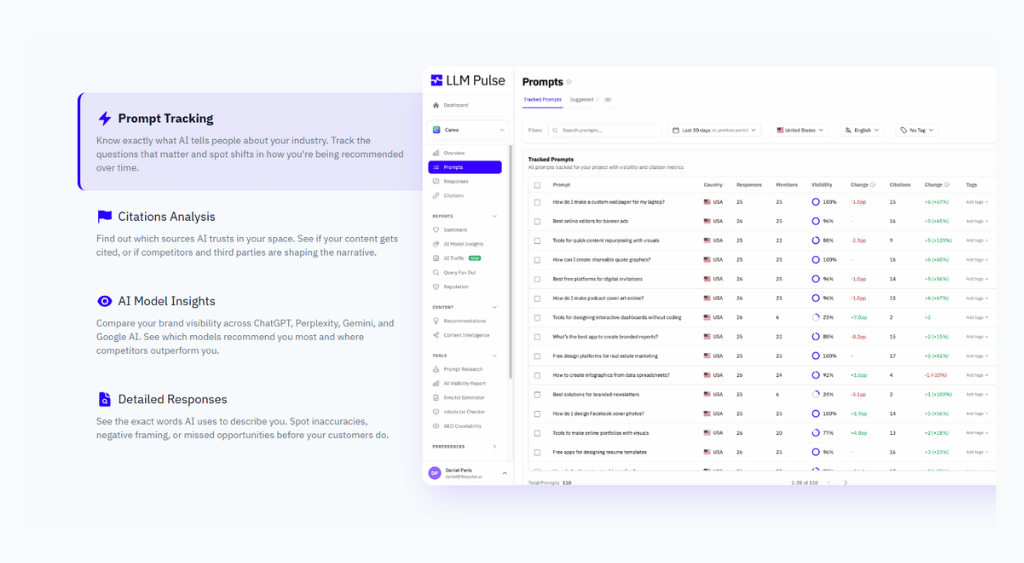
LLM Pulse includes ChatGPT, Perplexity, Google AI Overviews, Google AI Mode and Gemini on every plan. Claude, Copilot and DeepSeek are paid add-ons.
Its visibility score is weighted by mention position. Share of voice, citations and sentiment get their own reports, and an AI Reputation Score rates brand perception from 0 to 100.
Strengths
- White-label portals, Looker Studio and Power BI connectors for client reporting.
- Unlimited team members on every plan.
- An MCP server and REST API for custom workflows.
Limitations
- Claude and Copilot cost extra.
- Entry plans track weekly. Daily tracking is priced separately.
7. Scrunch

Scrunch covers ChatGPT, Claude, Gemini, Perplexity, Google AI Mode, AI Overviews and Meta on all plans. You can benchmark visibility by competitor, persona, topic or region.
Its Agent Experience Platform (AXP) generates a machine-readable version of your site for AI agents. An AI traffic feed shows how AI bots crawl your pages.
Strengths
- Wide engine coverage on the entry plan, Claude included.
- Persona and region benchmarking for complex brands.
- A Data API, alerts and role-based access.
Limitations
- A higher entry price than focused trackers.
- Copilot isn’t listed among the included engines.
8. Ansvisor
The code is MIT-licensed on GitHub, so you can use the cloud version or run it on your own infrastructure. It tracks ChatGPT, AI Overviews, AI Mode, Gemini, Perplexity and Copilot, plus Claude on Enterprise plans.
On top of mentions and citations, it adds prompt volumes, query fan-out, AI traffic analytics and a site audit. An Action Center turns those signals into a task list.
Strengths
- Open source, so you can inspect how visibility is measured.
- Self-hosting keeps prompts and answers on your own servers.
- An MCP server and API connect the data to your AI assistants.
Limitations
- A newer and smaller brand than Semrush or Ahrefs.
- Self-hosting needs engineering time, a database and an AI answer scraping service.
- Lower plans cover fewer engines than the full list above.
9. Lebesgue
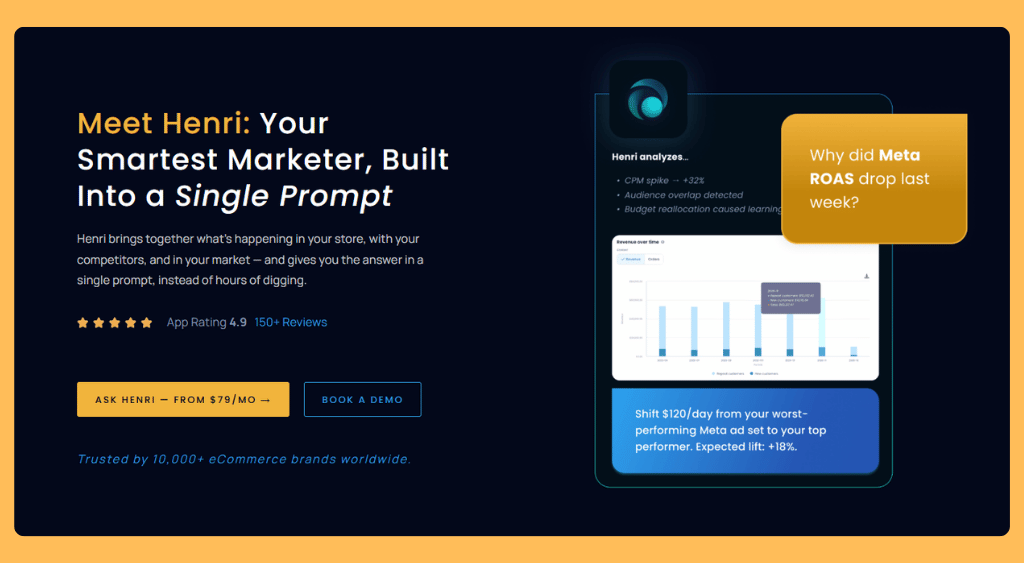
Lebesgue offers AI Visibility as part of its AI CMO suite for online stores. It groups prompts into discovery, comparison, problem, transactional and custom sets.
For each prompt, you see which brands get recommended and which sources shape the answer, such as product pages and reviews.
Strengths
- Prompt groups match how shoppers research products.
- Product pages and reviews are analyzed alongside store data.
Limitations
- The AI visibility page doesn’t name the engines it tracks, so confirm coverage first.
- It’s built for e-commerce. B2B and service brands get less from it.
10. SiteSpeakAI AI Website Checker

The SiteSpeakAI AI Website Checker crawls your pages in about a minute. It gives content quality, structured data and meta information a score out of 100, then lists fixes.
Strengths
- Zero cost and no account needed.
- A shareable report with prioritized recommendations.
Limitations
- It doesn’t track AI answers, mentions, citations or competitors.
- One-time snapshot, so it can’t show change over time.
Which AI visibility tools do AI engines mention most?
We track prompts about AI search, AEO and GEO in ChatGPT, Google AI Overviews, Google AI Mode, Gemini, Copilot and Perplexity. Mentions favor the large SEO suites, which appear in most of these prompts. Citations show which tools' pages the engines rely on:
| Tool | Citations (30 days) |
|---|---|
| Ansvisor | 19.7k |
| Semrush | 19.2k |
| Otterly | 15.8k |
| Ahrefs | 13.1k |
| Profound | 12.8k |
| Peec AI | 5.3k |
Source: Ansvisor tracking data, September 15 to October 14, 2026.
Two things stand out. The most-named brands have years of reviews and comparison articles behind them. And being named a lot says nothing about whether a tool fits your use case.
Use AI answers as a shortlist, then test tools on your own prompts. Our guide to AI visibility KPIs and benchmarks explains which numbers to compare.
Free ways to check your AI visibility first
Manual tracking
Run 10 to 20 buyer prompts by hand in a signed-out browser, and log mentions and cited URLs in a spreadsheet.
Bing Webmaster Tools
Open the AI Performance report in Bing Webmaster Tools. It shows how often Copilot and Bing AI summaries cite your pages.
Google Search Console
Check the generative AI reports in Google Search Console for impressions in AI Overviews and AI Mode by page. Mentions and competitors aren’t there.
Readiness checker
Run a readiness checker such as SiteSpeakAI to catch technical issues before you pay for tracking.
Microsoft launched the Copilot report as a public preview on February 10, 2026. It lists total citations, cited pages and the grounding queries AI used.
Manual tracking falls apart past about 20 prompts, or once you add several engines and competitors. That’s where a paid tool starts saving time.
How to test AI visibility tools before you buy: a two-week scorecard
Most vendors offer a trial or a demo. Run two or three tools side by side for two weeks and score each one on the same list.
Give every tool the same inputs: 20 to 30 buyer prompts, three to five competitors and one market.
Confirm that the engines your buyers use are included on your plan. A logo on the homepage doesn’t count.
Open the stored answers. Every one should be readable in full, with the score as a summary on top.
Look for exact cited URLs, split into your pages, competitor pages and third-party sites.
See whether the tool shows a visibility rate across repeated runs.
Pull a CSV or call the API to confirm you own the data.
Time how long it takes to find one gap you can fix this week.
The tool that wins step 7 is usually the one your team will keep using after the trial ends.
Which AI visibility tool is right for you?
Already on Semrush or Ahrefs? Start with their add-on and keep AI and SEO data together.
Going through enterprise security reviews? Shortlist Profound and Scrunch.
Agencies reporting to clients should compare LLM Pulse and Peec AI on white-label options and connectors.
On a small budget, Otterly.AI gets you a baseline for a low monthly cost.
Shopify stores will find that Lebesgue fits their analytics workflow.
Developers, or anyone under strict data rules, can keep data in-house with an open-source, self-hosted tracker.
Need a narrower list? See our picks for AI brand visibility monitoring tools, LLM visibility trackers across many models and AEO tools for optimization workflows.
How Ansvisor helps
We built our platform for teams that want to see the data behind every visibility number. Answer Engine Insights stores each answer with its mentions, citations and sentiment.
Competitor benchmarking shows, prompt by prompt, where rivals win. The Action Center turns each gap into a task, and you can follow your AI share of voice by engine over time.
FAQ
What is the best AI visibility tool?
No single tool is best for every team. Semrush or Ahrefs users should try those add-ons first, enterprises tend to shortlist Profound and Scrunch, and Otterly.AI fits small budgets. Teams that want open source can run Ansvisor. Whatever you pick, check that your plan covers your buyers’ AI engines.
What is an AI visibility platform?
An AI visibility platform runs a fixed set of prompts in AI engines such as ChatGPT, Google AI Overviews and Gemini. It logs which brands and URLs each answer names, how they’re described and how that changes over time.
What are the best platforms for AI visibility metrics?
Start with mention rate and citation rate with exact URLs, per engine. Then look at share of voice, prompt coverage and sentiment. Semrush, Profound, Peec AI, LLM Pulse and Ansvisor report most of these core metrics.
Are there free AI visibility tools?
Yes, for limited checks. Search Console shows your impressions in AI Overviews and AI Mode, and Bing Webmaster Tools reports Copilot citations. Tracking mentions and competitors across engines usually needs a paid plan or a self-hosted tool.
How is AI visibility tracking different from SEO rank tracking?
SEO rank tracking records where your URL sits for a keyword. AI answers have no fixed positions and change from run to run. AI visibility tracking measures how often they mention or cite your brand across many runs.