


Information Retrieval
FAQ
What is Information Retrieval?

Information Retrieval is the process of finding, ranking, and retrieving relevant information from large collections of data.
Why is Information Retrieval important?
It enables search engines and AI systems to access relevant information and generate accurate answers.
How do modern AI systems use Information Retrieval?
AI systems retrieve external information before generating responses, improving accuracy and reducing hallucinations.
What technologies are used in Information Retrieval?
Common technologies include keyword search, semantic search, vector search, hybrid search, and retrieval-augmented generation.
Which tools help analyze Information Retrieval performance?
Platforms like Ansvisor help organizations analyze retrieval behavior, citations, competitors, authority signals, and AI visibility across answer engines.
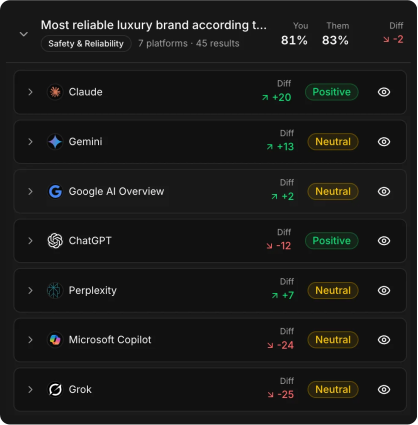
Win customers from all major AI platforms
Understand, measure, and optimize your AI visibility via Ansvisor.
✓ Add brand, domains and competitors
✓ Discover prompts and growth opportunities
✓ Track your AI visibility across major AI platforms
✓ Monitor citations, mentions, and competitors
✓ Measure AI traffic and customer discovery
✓ Receive AI recommendations based on AI insights
✓ Optimize authority, trust, and content quality
✓ Create content, automate analysis & action with AI agents




.svg)
