.svg)








.png)
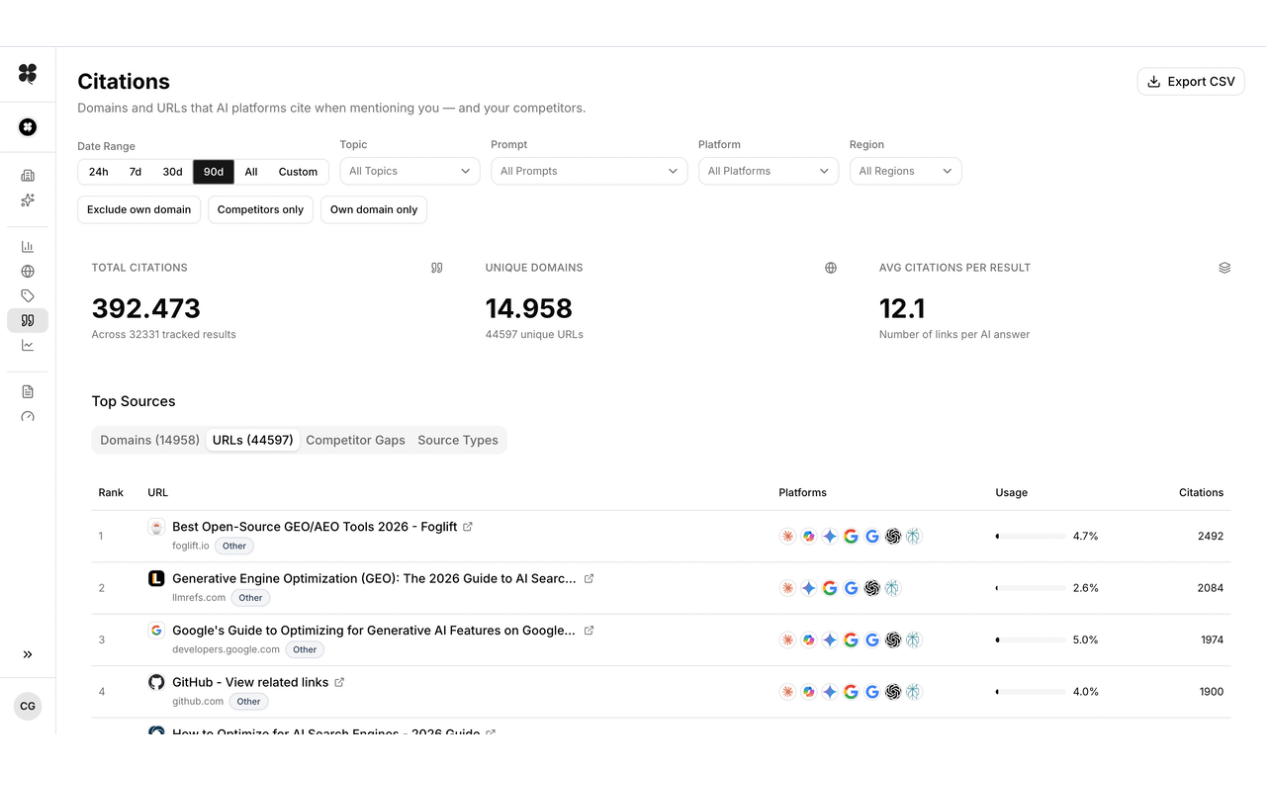
Build a Citation Strategy From Real AI Search Evidence
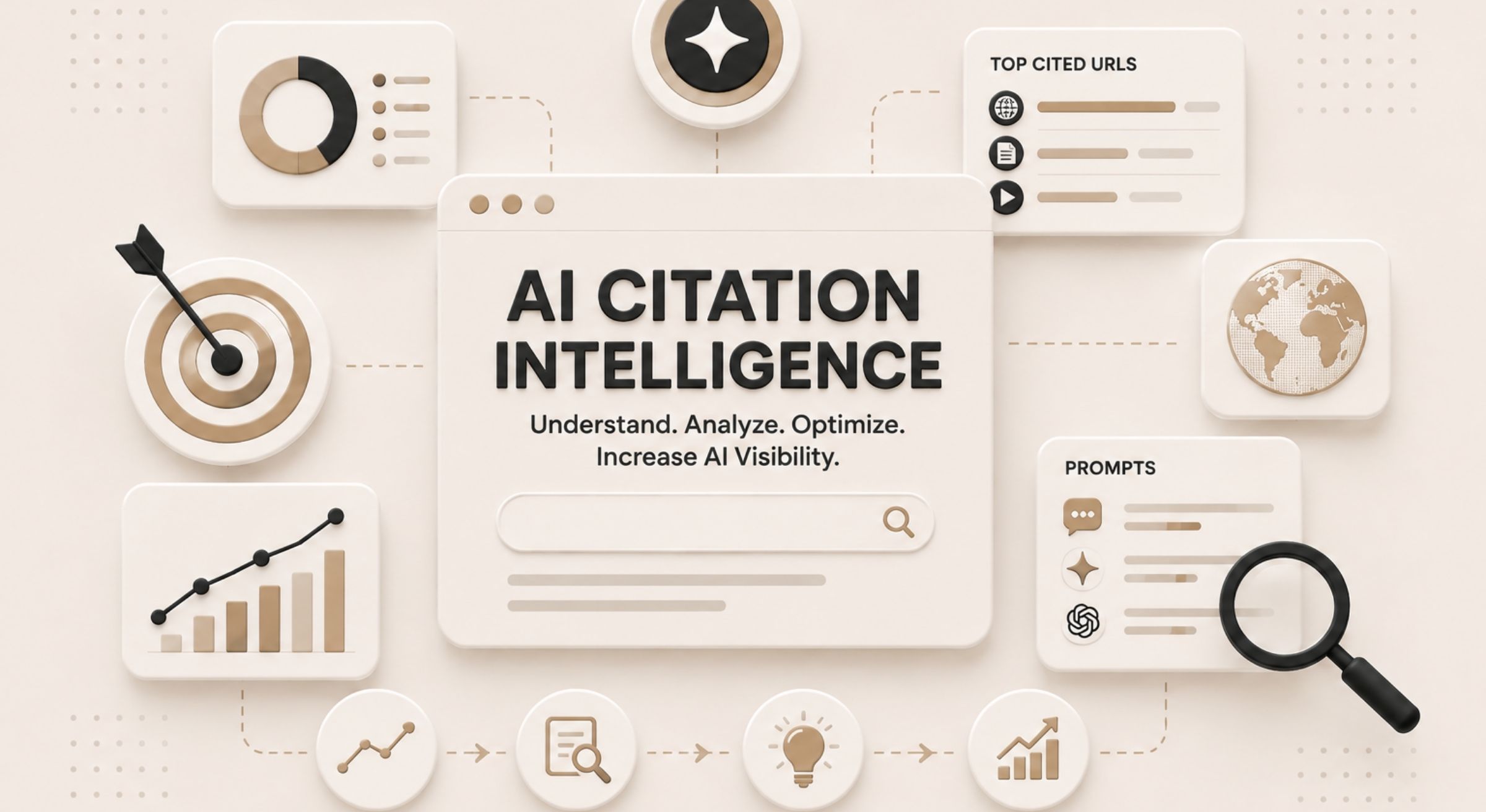
Citation data becomes valuable when it changes what your team does next. Instead of guessing which formats or topics AI systems prefer, use the URLs already appearing across tracked prompts as direct evidence.
Monitor domains and URLs cited for your brand and competitors across prompts, platforms, regions, and topics.
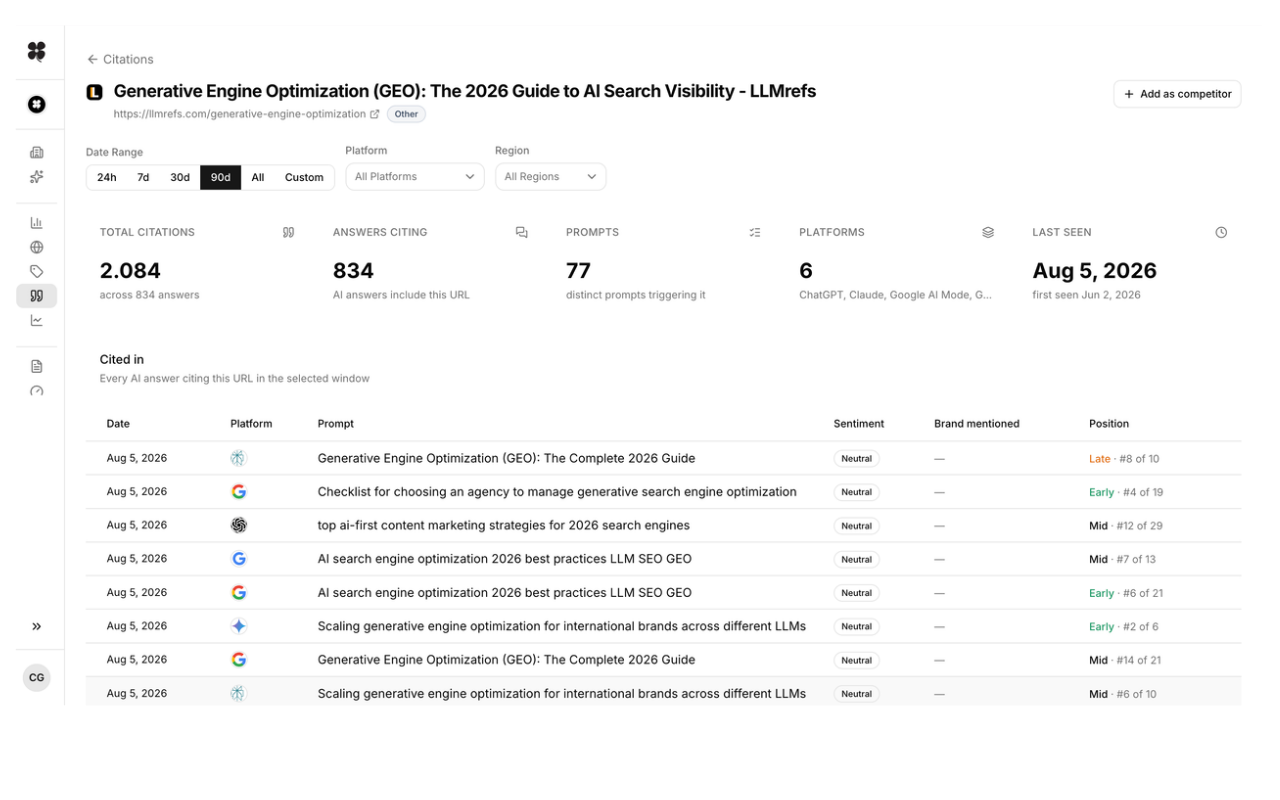
Open citation sources and analyze the content, format, authority, and context behind each AI citation.
Identify competitor citation gaps, influential communities, and high-performing content patterns.
Create or optimize content and strengthen your presence across the sources AI platforms already trust.
Find Multiple-Prompt Opportunities
A URL cited across many prompts is usually more strategically valuable than a page cited once. Multiple-prompt coverage can indicate strong topic depth, reusable evidence, clear entity context, or broad compatibility with Query Fan-Out.
| Citation pattern | What it may indicate | Recommended action |
|---|---|---|
| Your URL appears across many prompts | Established retrieval coverage and source trust | Protect, refresh, internally link, and expand the page carefully |
| A competitor URL dominates many prompts | A strong intent cluster or evidence format you are missing | Analyze the shared prompt pattern and create a more useful independent resource |
| Reddit or communities dominate | Buyers value peer experience and discussion | Participate authentically and strengthen community-facing evidence |
| GitHub or documentation dominates | The question requires technical proof | Publish stronger documentation, examples, repositories, or integration guides |
| Review sites dominate | Independent validation matters | Improve review coverage and make product facts easier to verify |
Protect Your Highest-Performing URLs
- Track top owned URLs across 24-hour, 7-day, 30-day, 90-day, and custom date ranges.
- Review which prompts, topics, platforms, and regions depend on each URL.
- Update stale facts without removing the passages responsible for retrieval.
- Preserve stable URLs and use correct redirects when changes are unavoidable.
- Strengthen internal links from related high-authority pages.
- Monitor citations after every meaningful update.
Do not rewrite a winning page blindly. First identify which sections, claims, and prompt clusters already perform.
Reverse Engineer Competitor Citations Without Copying
What does the page cover?
Review definitions, comparisons, evidence, examples, and depth.
How is evidence presented?
Look for tables, research, documentation, FAQs, videos, reviews, or discussions.
Why is the source trusted?
Assess authorship, external references, freshness, and first-hand experience.
Which prompts retrieve it?
Group prompts by intent to understand the wider question network.
Build Citation Clusters, Not Isolated Pages
| Cluster role | Purpose | Example |
|---|---|---|
| Pillar page | Cover the main topic comprehensively | Complete AI citation optimization guide |
| Evidence page | Provide research or methodology | AI citation study or source analysis |
| Decision page | Support comparison and purchase prompts | Best tools, alternatives, or platform comparison |
| Implementation page | Answer practical questions | How to monitor citations |
| Third-party proof | Strengthen independent validation | Reviews, Reddit, YouTube, GitHub, or media |
Measure Citation Growth Over Time
- Compare total citations and unique cited URLs over time.
- Track whether the same URL expands into additional prompts.
- Measure competitor gains and losses in the same period.
- Review changes after content, technical, PR, or community actions.
- Connect citation trends with AI Traffic Analytics.
AI Citation Optimization Checklist
- Identify your most-cited owned URLs.
- Open each URL and review all associated prompts.
- Find competitor URLs appearing across multiple prompts.
- Group those prompts by shared intent.
- Analyze source format, authority, evidence, and freshness.
- Protect pages that already perform.
- Create stronger independent resources for clear gaps.
- Strengthen relevant third-party presence.
- Add target URLs and notes to strategic prompts.
- Recheck citations after every completed action.
Frequently Asked Questions
What is AI citation analysis?
It examines the domains and exact URLs used as supporting sources in generated answers.
Why do some URLs appear across many prompts?
They may contain reusable facts, broad topic coverage, strong authority, or evidence that supports several related searches.
How can I increase AI citations?
Track gaps, analyze winning sources, publish stronger evidence, improve accessibility, build authority, and validate results.
Should I analyze competitor citations?
Yes. They reveal which formats, evidence types, and source categories already influence AI answers.
Can AI citations generate referral traffic?
Yes. Use citation data together with AI referral analytics to understand traffic and conversions.
Turn Citations Into a Repeatable Growth System
Ansvisor Citation Monitoring connects cited domains, exact URLs, prompt coverage, competitor gaps, and source analysis in one workflow.
Discover Which URLs AI Systems Trust Most
Track citations, analyze competitors, find multiple-prompt opportunities, and turn real AI Search evidence into action.