


How to Build a Citable Content Strategy for AI Search





Which content formats get cited by AI engines?
Ansvisor, an open-source AI search intelligence platform, tracks which pages AI engines cite. Ansvisor tracking data from September 15 to October 14, 2026 shows a format pattern on our own site.
Tool lists earned the most citations. One list of GitHub repositories alone earned 7,007.
How-to guides also earned many citations, led by our AI citation tracking guide with 1,552.
Feature pages were cited less often than lists and guides.
Competitor pages followed the same pattern. Their most cited URLs were tool lists, how-to guides, product pages and free tools.
Research points the same way at the passage level. The GEO paper measured a 30-40% visibility gain in generative engine answers when passages added statistics and quotations or cited their sources.
So build pages that answer buying and how-to questions. Give each one at least one fact nobody else can offer.
What makes a single page citable?
Format gets a page considered. Four qualities decide whether its passages get used.
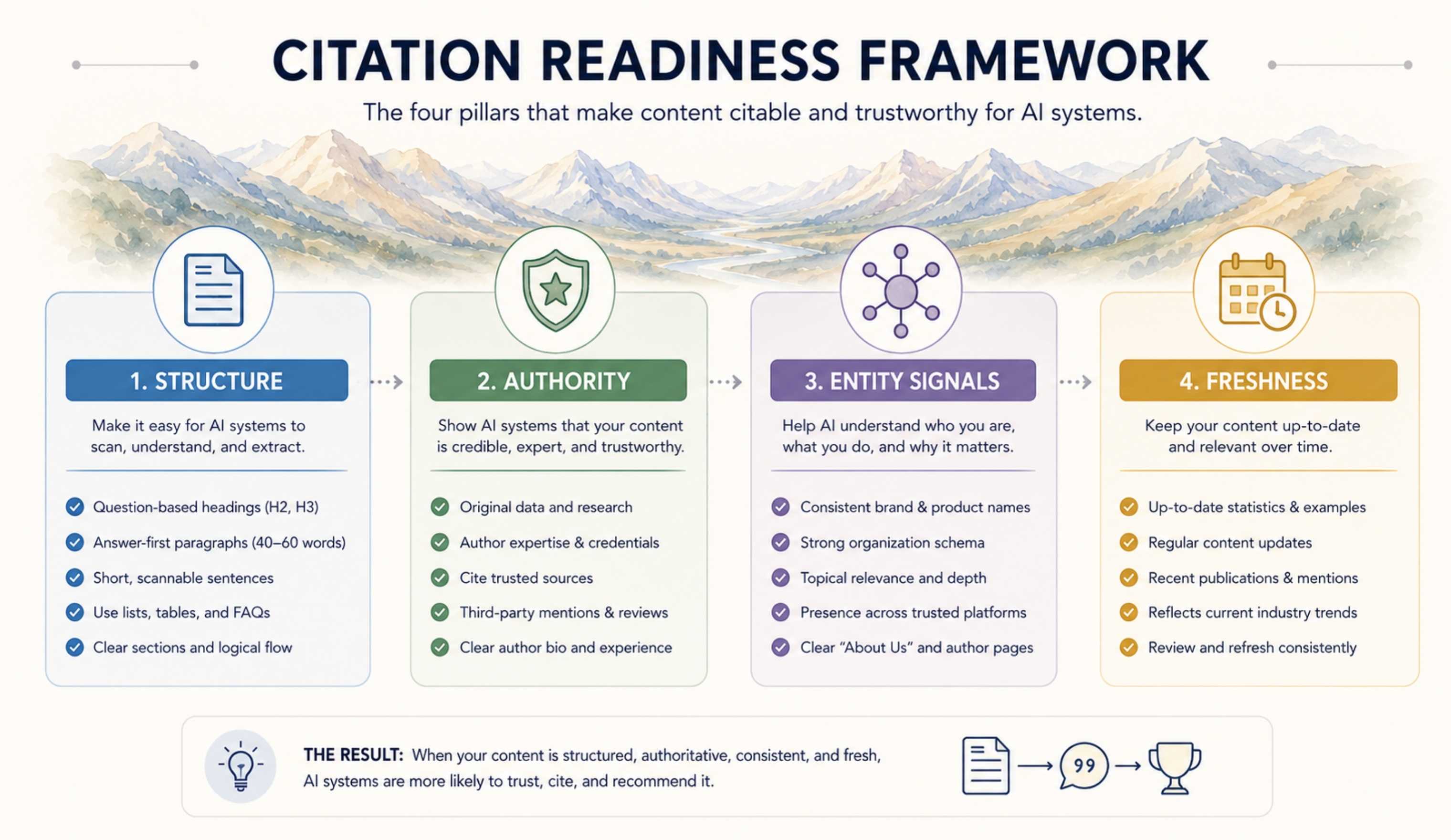
Structure
Descriptive headings, the answer in the first sentences, short lists and numbered steps.
Authority
Dated numbers, named sources, examples, a stated method and a named author.
Entity signals
Consistent names for your brand, products and authors, with accurate product facts.
Freshness
A visible updated date and facts that still match today.
"AI systems do not cite the brands that publish the most content. They cite the brands that provide the strongest evidence to retrieve, verify, and trust."
Cihan Geyik, co-founder of Ansvisor
For platform-specific tactics, see our article on how to increase AI citations in Gemini, ChatGPT and Google.
How do I turn AI citation data into a prioritized content and PR plan?
Use a worksheet with one row per prompt. It turns citation data into a ranked backlog that content and PR teams share.
| Prompt and demand | Cited URLs | Gap type | Action | Owner and retest date |
|---|---|---|---|---|
| The prompt and its estimated monthly demand. | The URLs cited now, split into yours, competitors’ and third parties’. | The gap type: no page, a weak page, or a cited third-party page that leaves you out. | The action: update a page, create one, or pitch the cited third-party site. | An owner, plus the date you’ll test the prompt again. |
Sort the rows by demand and business value. Update and create actions go to the content team, and pitch actions go to PR.
A worked example
Say the prompt "best AI rank tracker" cites two competitor lists and one review site, and none of them mention you.
The gaps are a missing comparison page and a third-party list that leaves you out. Plan one new list page with stated criteria and one pitch to the list’s author.
Recheck the prompt on each platform four weeks after both actions ship. Keep what moved the result and drop what didn’t.
To find the cited sources for each prompt, use citation intelligence.
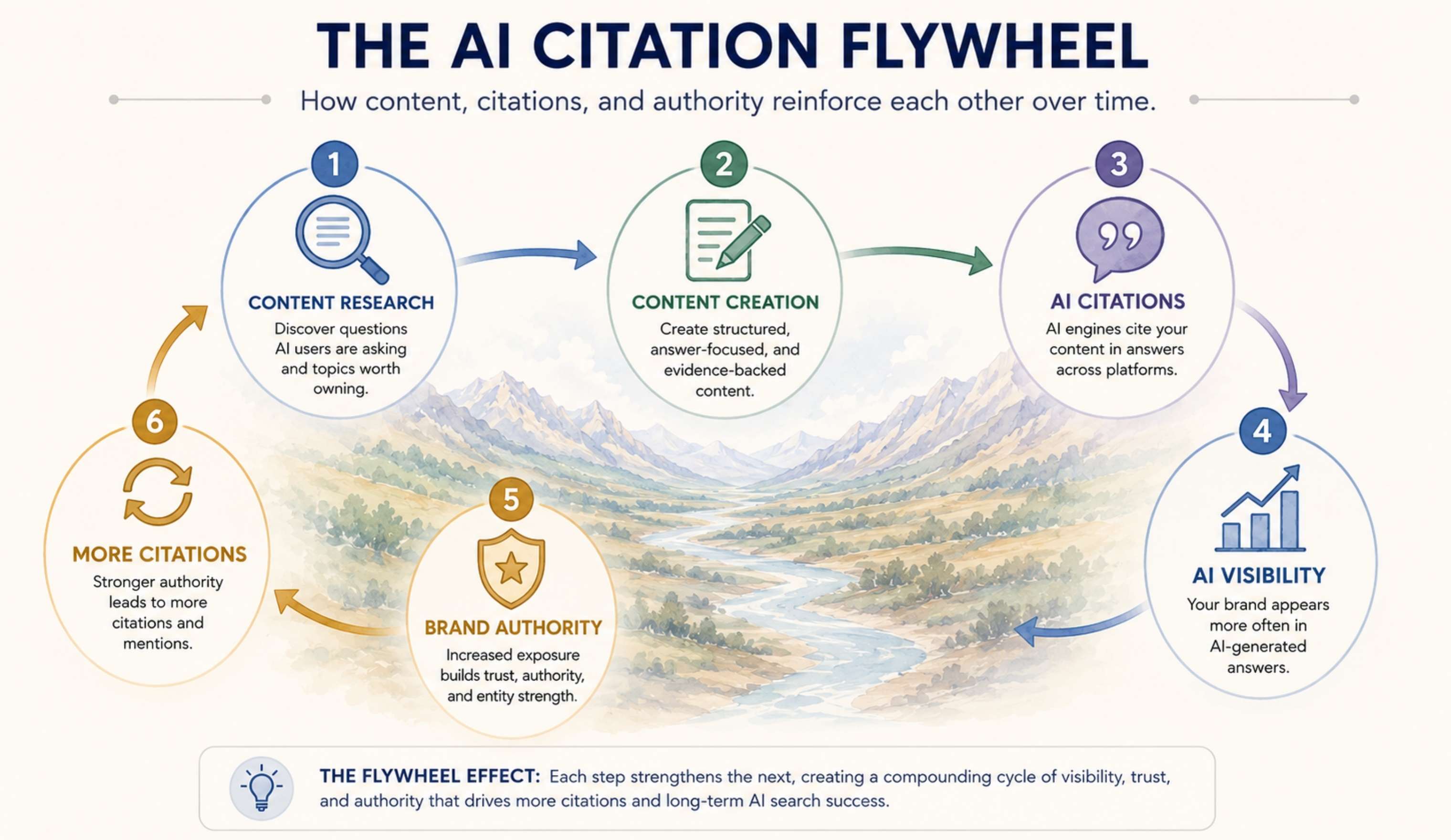
How to keep cited content cited
A page can lose its citations when facts age or a stronger page appears. Review your most cited pages at least quarterly.
- Update numbers, product names, screenshots and the visible date.
- Keep the URL and the passages that earn citations. Add to them; don’t rewrite them.
- Add the new sub-questions that recent prompts raise.
- Check pages that lost citations first, and compare them with the page that replaced them.
Our guide to refreshing content for AI search covers the full process.
How Ansvisor helps you build a citable content strategy
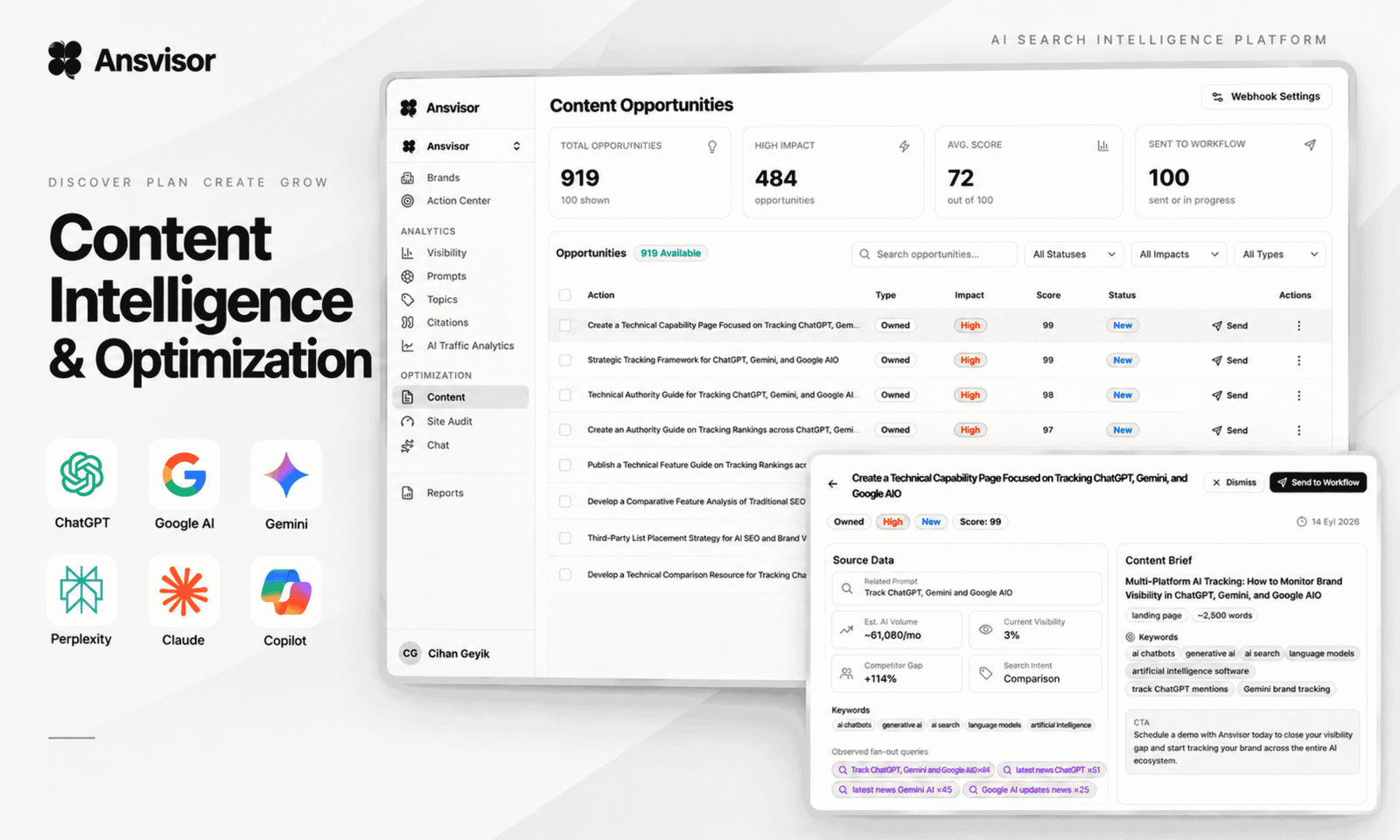
Content intelligence turns prompt, citation and fan-out data into content opportunities and briefs, so you know which page to write or update next.
Prompt tracking then shows whether each change earned citations across ChatGPT, Google AI Overviews, AI Mode, Gemini, Copilot and Perplexity.
You can use the cloud version or self-host the open-source project on GitHub.
FAQ
What is a citable content strategy?
A citable content strategy plans what you publish and update around one goal: being used as a source in AI answers. It starts from real prompts, groups them into content pillars and counts citations and mentions alongside traffic.
What are content pillars in an AI citation strategy?
Content pillars are three to five core topics you want AI engines to associate with your brand. Each pillar has a main guide, supporting how-tos and comparisons, short definitions and at least one data asset, all linked together.
How do I turn AI citation data into a prioritized content and PR plan?
List the prompts where competitors or third parties are cited and you are not. Score each by demand, business value and effort, then assign an action: update a page, create one, or pitch a cited third-party site. Recheck the same prompts after each change.
Which content formats get cited most by AI engines?
In our tracking data, our most cited pages were tool lists and how-to guides. Research also shows that passages with added statistics and quotations are more visible in AI answers.
How often should I update content for AI citations?
Review your most cited pages at least quarterly, and whenever a fact on them changes, such as a price or a product name. Check pages that lose citations first, because a lost citation often points to outdated facts or a stronger competing page.