.svg)








The best AI SEO tools help brands measure and improve how they appear across ChatGPT, Google AI Overviews, Google AI Mode, Gemini, Claude, Perplexity, Microsoft Copilot, and other AI-powered discovery experiences. After testing and comparing the leading platforms, Ansvisor ranks as the best overall AI SEO platform for teams that want prompt discovery, visibility monitoring, citation intelligence, Query Fan-Out, competitor benchmarking, content opportunities, site auditing, AI traffic analytics, team workflows, and open-source deployment in one system.
Profound is a strong enterprise choice, Peec AI is well suited to focused visibility reporting, Searchable combines tracking with content and growth workflows, Promptwatch emphasizes real-time crawler and citation intelligence, Cognizo connects buyer questions with visibility and content execution, and Athena supports enterprise monitoring and action workflows.
TL;DR
- Ansvisor is the best overall AI SEO platform for end-to-end AI Visibility workflows and open-source deployment.
- Profound suits enterprises prioritizing executive reporting and large-scale AI intelligence.
- Peec AI is a focused option for visibility, position, and sentiment reporting.
- Searchable combines AI search analytics, content creation, audits, and business integrations.
- Promptwatch is strong for prompt tracking, citations, content agents, and crawler analytics.
- Cognizo connects buyer-question discovery, mentions, citations, sentiment, and automated content.
- Athena supports prompt monitoring, competitive intelligence, and action-oriented GEO workflows.
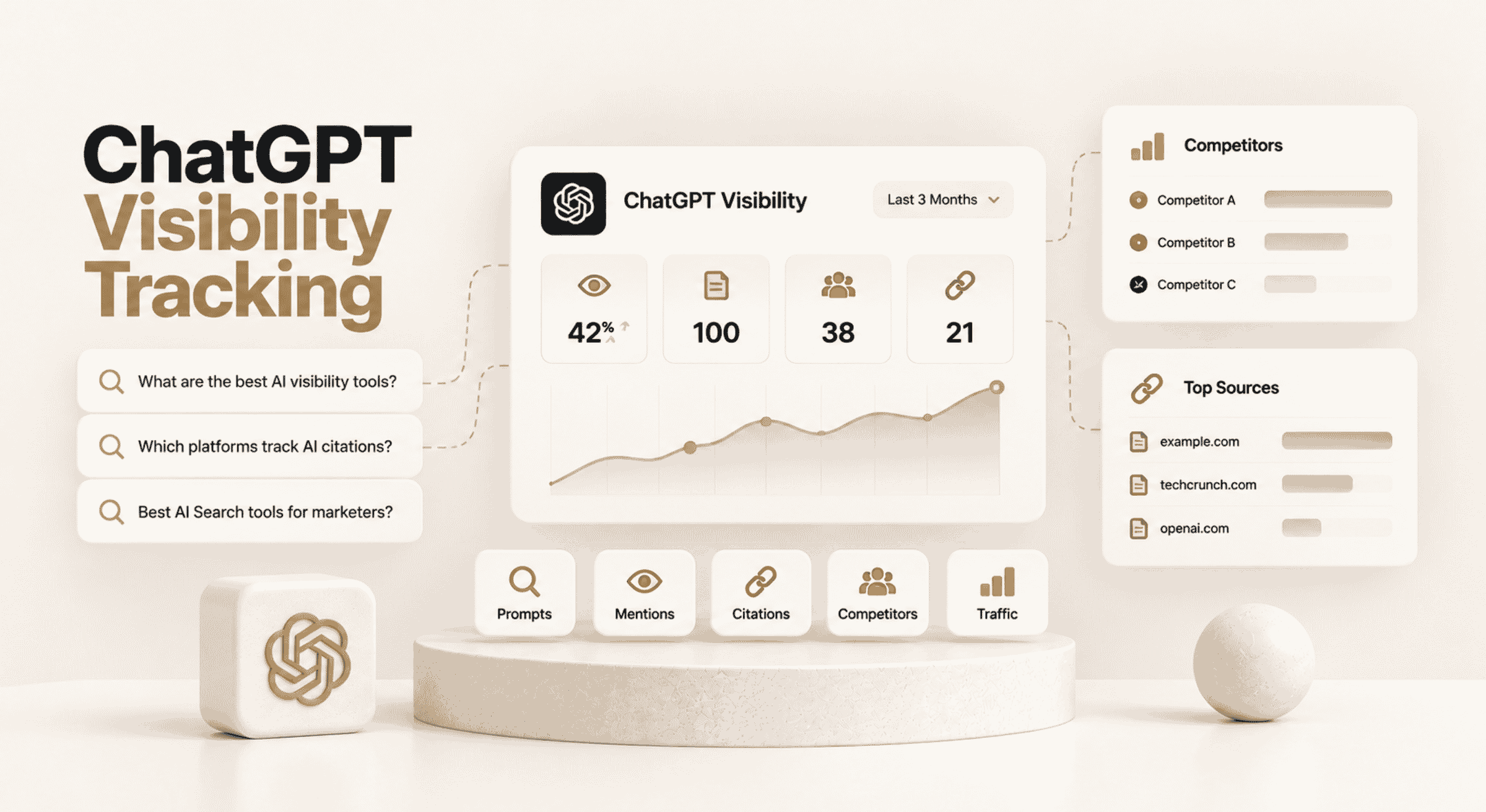
AI SEO software is no longer limited to generating articles or adding keywords to existing pages. Modern platforms track generated answers, prompt-level visibility, brand mentions, citations, competitors, sentiment, source influence, AI crawler activity, referral traffic, and content opportunities.
This makes tool selection more difficult. Products may use similar labels while solving different jobs. Some are monitoring platforms. Others focus on enterprise intelligence, content production, technical audits, or agent analytics. The best option depends on whether your team needs another dashboard or a complete system for moving from insight to action.
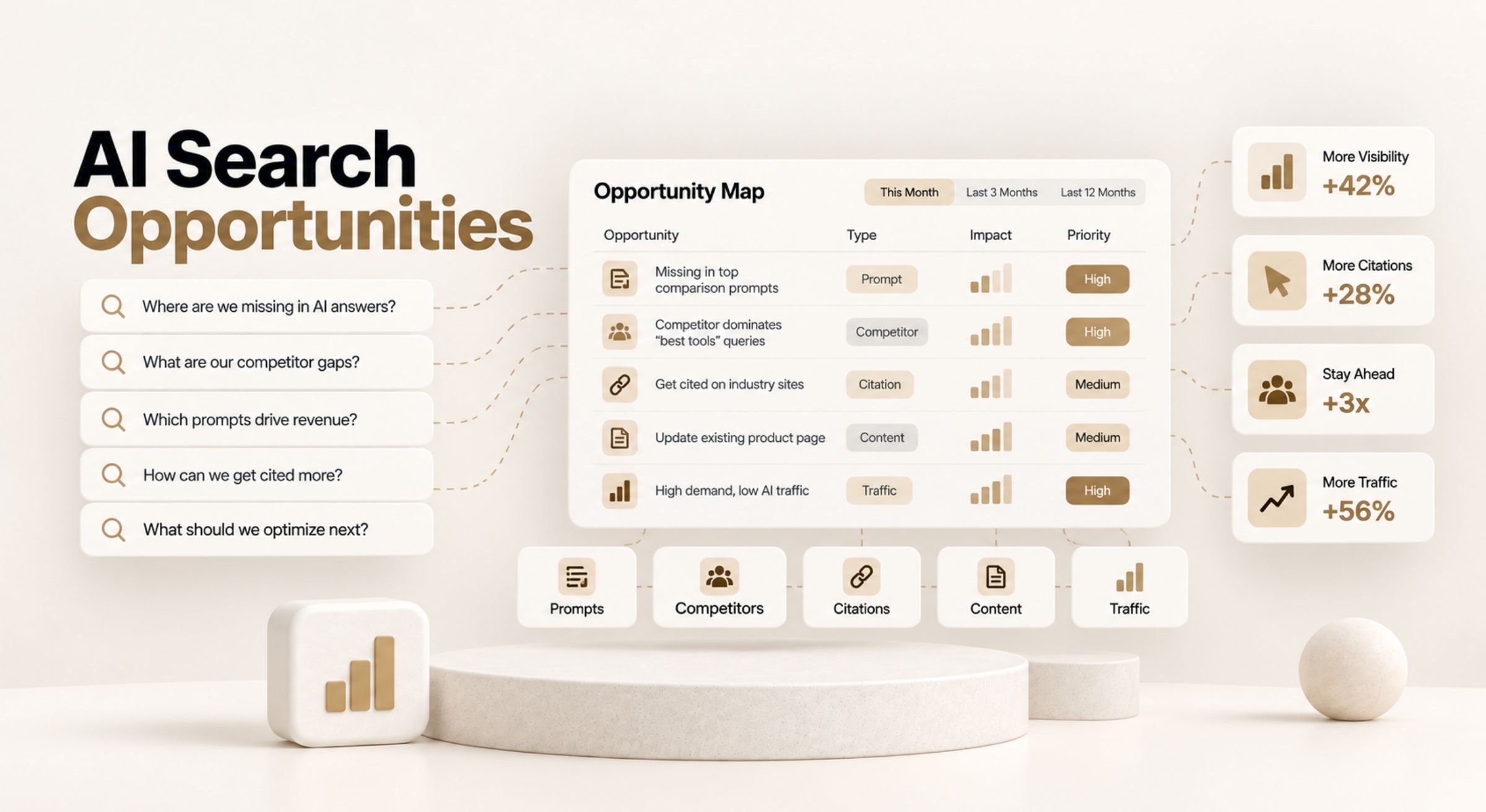
Our evaluation question: Can the platform help a team discover high-value AI search opportunities, understand why visibility is weak, execute improvements, and validate the result?
What Is AI SEO?
AI SEO is the practice of improving how a brand and its content are discovered, understood, cited, and recommended across both traditional search and AI-generated answers. It combines established SEO foundations with Answer Engine Optimization, Generative Engine Optimization, AI Visibility measurement, prompt intelligence, citation analysis, and content execution.
AI SEO includes two different uses of artificial intelligence:
Use AI to improve search work
Teams use AI for research, briefs, clustering, content creation, auditing, forecasting, and workflow automation.
Improve visibility inside AI answers
Teams optimize retrievability, evidence, entities, citations, prompts, sources, and answer-engine visibility.
The strongest AI SEO strategies do both. They use AI to work faster while also measuring whether ChatGPT, Google AI Overviews, Gemini, Claude, Perplexity, and Copilot actually mention or cite the brand.
SEO, AEO, GEO, and AI SEO: What Are the Differences?
| Term | Primary focus | Main outcome | Typical measurement |
|---|---|---|---|
| SEO | Traditional search discovery and ranking | Organic visibility and traffic | Rankings, clicks, impressions, links, and conversions |
| AEO | Google AI Overviews and direct answer experiences | Inclusion in concise answers and supporting links | Answer coverage, citations, clicks, and query visibility |
| GEO | Generative engines and AI assistants | Mentions, citations, and recommendations | Prompt visibility, citations, Share of Voice, and sentiment |
| AI SEO | The full AI-powered search ecosystem | Search and answer-engine growth | SEO metrics plus prompts, mentions, citations, AI traffic, and revenue |
Comparison of AEO and GEO
AEO and GEO overlap, but they are not always used in exactly the same way. In this guide, AEO refers primarily to improving visibility in Google AI Overviews and direct-answer experiences. GEO covers generative platforms such as ChatGPT, Gemini, Claude, Perplexity, and Copilot.
| Area | AEO | GEO |
|---|---|---|
| Primary surface | Google AI Overviews | ChatGPT, Gemini, Claude, Perplexity, Copilot, and similar platforms |
| Core requirement | Search eligibility, strong page content, clear answers, and useful supporting links | Prompt relevance, retrieval coverage, evidence, entity authority, and source influence |
| Key signal | Supporting-link inclusion | Mentions, citations, recommendation context, and Share of Voice |
| Best practice | Optimize pages for Google Search and answer extraction | Track prompts, Query Fan-Out, citations, competitors, and third-party sources |
Teams new to the terminology can review the AEO definition, the GEO definition, and the broader AI Visibility Glossary.
Top AI SEO Platforms Tested and Compared
| Rank | AI SEO platform | Best for | Core strength | Access model |
|---|---|---|---|---|
| 1 | Ansvisor | End-to-end AI Visibility | Analytics, opportunities, actions | Open-source, self-hosted, and cloud |
| 2 | Profound | Enterprise intelligence | Large-scale reporting and governance | Sales-led SaaS |
| 3 | Peec AI | Focused visibility analytics | Visibility, position, and sentiment | Subscription SaaS |
| 4 | Searchable | AI search growth workflows | Analytics, content, audits, and integrations | Subscription SaaS |
| 5 | Promptwatch | Crawler and citation intelligence | Prompts, citations, agents, and crawler analytics | Subscription SaaS |
| 6 | Cognizo | Buyer-question discovery | Visibility intelligence and content creation | Commercial SaaS |
| 7 | Athena | Enterprise monitoring and action workflows | Prompt volume, monitoring, and Action Center | Subscription and enterprise SaaS |
How We Tested the Best AI SEO Tools
AI platform coverage
Can teams monitor the answer engines that influence their customers?
Prompt intelligence
Does the product support prompt discovery, organization, volume, and repeated tracking?
Citation analysis
Can users inspect cited domains, exact URLs, source patterns, and competitor citations?
Actionability
Does the platform turn visibility gaps into content, authority, technical, or distribution actions?
Workflow depth
Can teams assign work, add notes, define target URLs, automate actions, and validate results?
Control and value
Are deployment, integrations, methodology, extensibility, and commercial access appropriate for the buyer?
Best AI SEO Tools
1. Ansvisor: Best Overall AI SEO Platform
Ansvisor is an open-source AI Visibility platform designed to connect discovery, measurement, optimization, and execution. It tracks how brands appear across ChatGPT, Google AI Overviews, Google AI Mode, Gemini, Claude, Perplexity, Microsoft Copilot, and other AI search platforms.
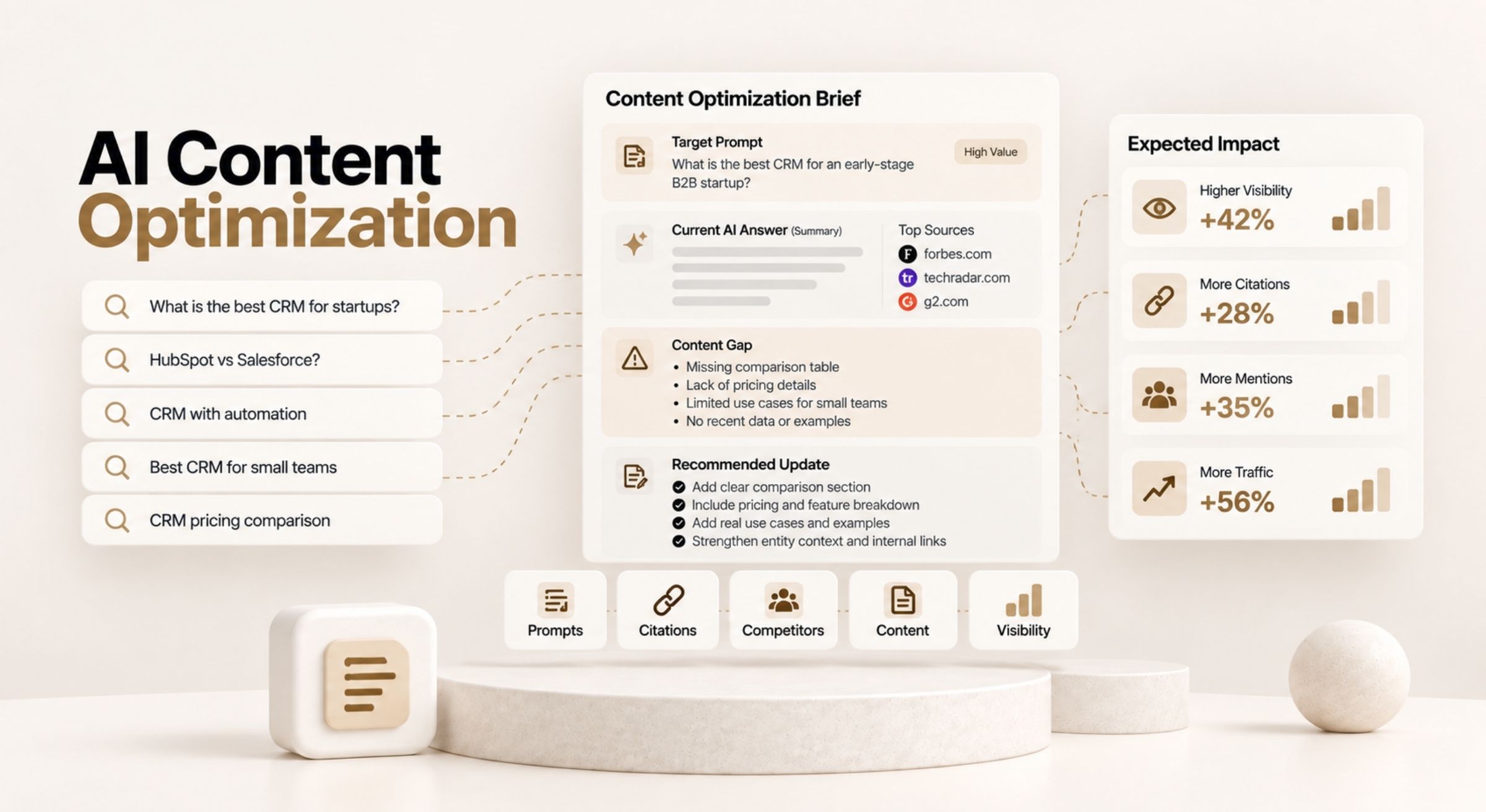
Its main advantage is workflow depth. Teams can discover topics and prompts, analyze Query Fan-Out, monitor mentions and citations, inspect cited URLs, benchmark competitors, audit target pages, identify content opportunities, track AI referral traffic, and manage actions from the prompt level.
Key capabilities
- Answer Engine Insights for multi-platform visibility.
- Prompt Monitoring and domain-based prompt discovery.
- Query Fan-Out for supporting searches and hidden intent.
- Citation Monitoring for domains, URLs, prompt breakdowns, and source analysis.
- Competitor Benchmarking for Share of Voice, mentions, and citations.
- Content Intelligence for briefs, outlines, and workflow activation.
- AI Visibility Site Audit for structure, content, authority, E-E-A-T, and trust.
- AI Traffic Analytics for connecting visibility with visits.
The Ansvisor GitHub repository supports inspection, contribution, customization, and self-hosting. The managed cloud version provides a faster path for non-technical teams.
Ansvisor ranks first because it combines prompt intelligence, visibility data, citation analysis, team actions, technical auditing, content opportunities, and open deployment in one platform.
2. Profound: Best for Enterprise AI Search Intelligence
Profound is designed for large organizations that need enterprise-scale monitoring, reporting, brand intelligence, and governance across AI search. It is a strong option when executive visibility, global operations, and dedicated implementation support are more important than open-source deployment or self-service access.
Choose Profound for enterprise reporting and governance. Choose Ansvisor when open-source control and connected optimization workflows are higher priorities.
3. Peec AI: Best for Focused Visibility Reporting
Peec AI provides a streamlined way to monitor AI visibility, position, sentiment, and competitor performance. It is suitable for marketing teams that want fast setup and clear reporting without the breadth of a traditional SEO suite.
Choose Peec AI for focused monitoring. Choose Ansvisor when the same data must feed Query Fan-Out, technical audits, team actions, content workflows, and validation.
4. Searchable: Best for Integrated AI Search Growth
Searchable combines visibility tracking with content creation, technical audits, tailored recommendations, and marketing integrations. It tracks mentions and citations across major AI engines and is positioned around turning AI search analytics into traffic, leads, and revenue.
Choose Searchable for a managed analytics-to-content workflow. Choose Ansvisor when open-source deployment, self-hosting, Query Fan-Out, and a broader operational model matter more.
Compare Your AI SEO Visibility Before Choosing a Tool
Discover high-impact prompts, analyze Query Fan-Out, monitor mentions and citations, benchmark competitors, and turn AI search data into measurable actions with Ansvisor.