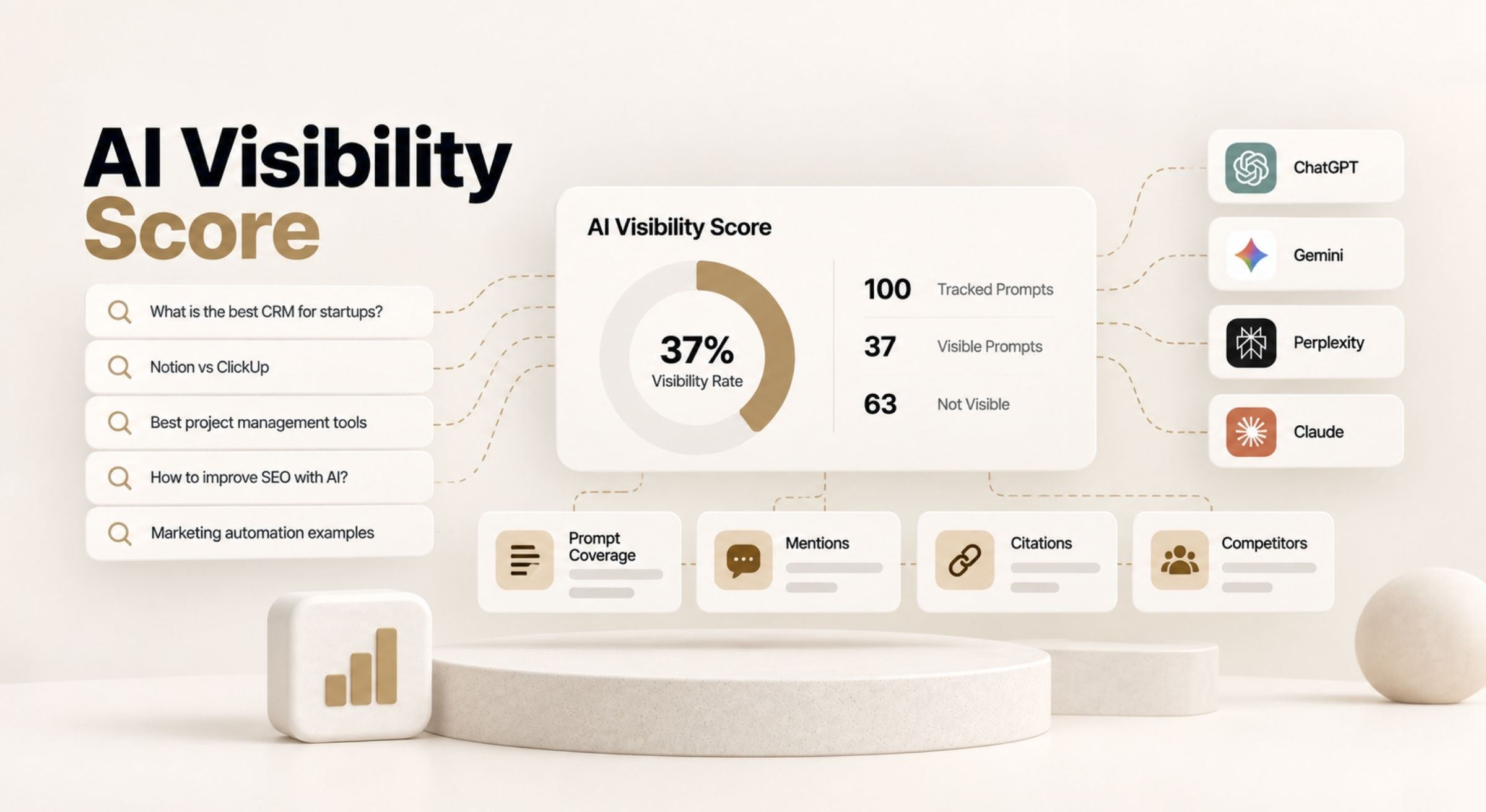

Searching for your brand in ChatGPT once can tell you what appeared in one answer at one moment. It does not tell you how visible your brand is across the questions customers actually ask, which competitors appear instead, what sources influence those answers, or whether your visibility is improving over time.
That is why ChatGPT tracking needs a repeatable measurement framework. Instead of checking isolated answers, teams can monitor a consistent set of commercially relevant prompts and analyze the brands, citations, sources, and competitive patterns appearing across them.
To track your brand visibility in ChatGPT, define a consistent set of prompts related to your products, category, competitors, customer problems, and buying decisions. Monitor those prompts repeatedly and record whether your brand is mentioned, which competitors appear, which domains and URLs are cited, and how the answers change over time. Then connect ChatGPT visibility with referral traffic and broader AI Search performance to understand whether visibility is contributing to measurable business outcomes.
ChatGPT visibility tracking is the process of repeatedly monitoring relevant prompts to measure when and how a brand appears in ChatGPT answers, including mentions, citations, competitors, sources, and changes over time.
This differs from traditional search rank tracking. A search engine rank tracker can typically associate a keyword with an ordered search result and URL. ChatGPT generates answers, so the useful measurement unit is broader than a fixed ranking position.
A useful ChatGPT rank tracker therefore needs to explain more than whether a brand appeared. It should help reveal which questions create visibility, which competitors share or capture that visibility, which sources support the answer, and how those patterns develop across a consistent prompt set.
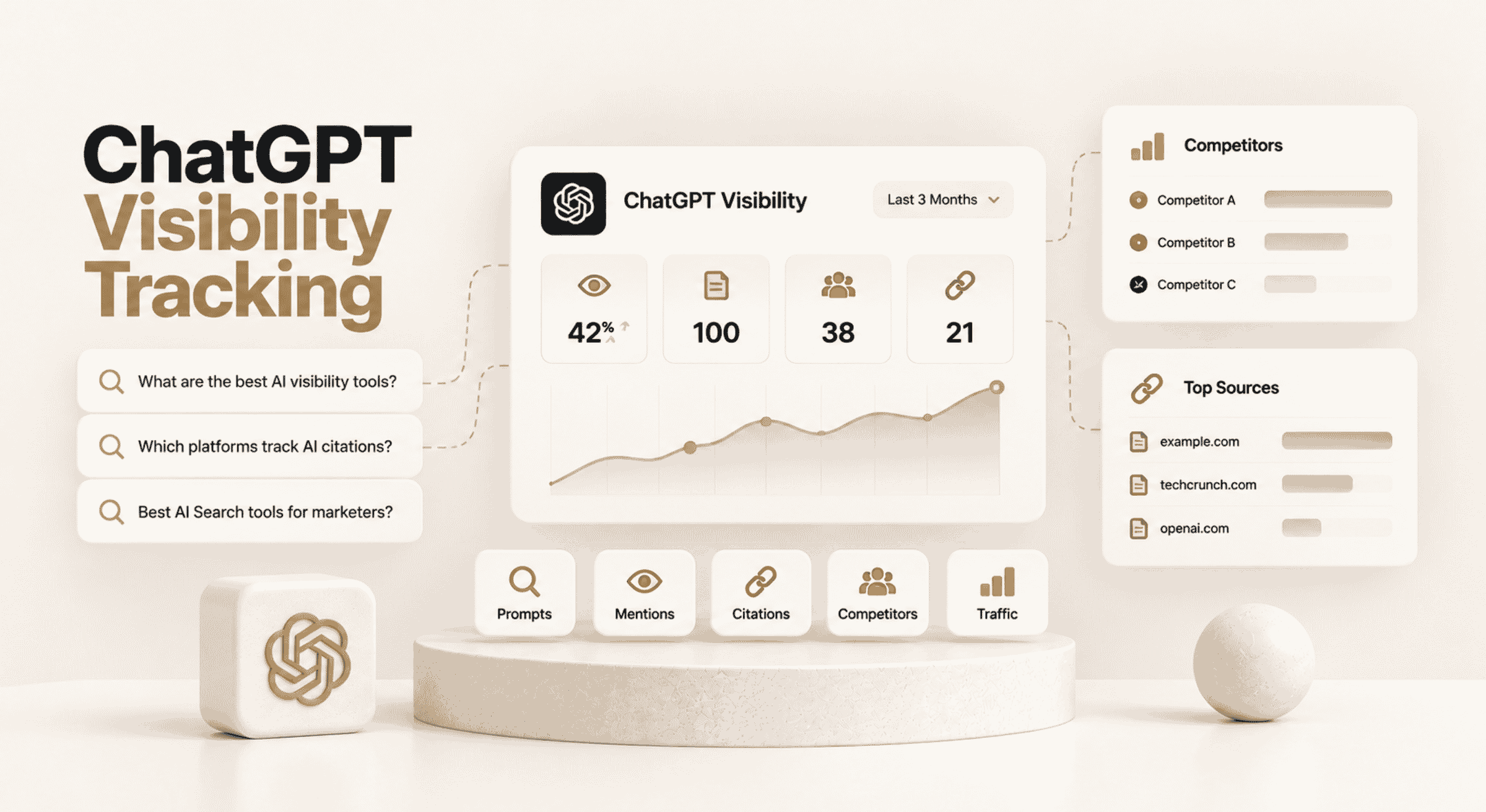
Ansvisor's ChatGPT Visibility Tracker brings prompts, brand mentions, citations, competitors, sources, AI answers, and historical visibility into a repeatable tracking workflow.
The quality of ChatGPT visibility tracking depends heavily on the questions being monitored. More prompts do not automatically create better intelligence. The prompt set should represent the topics, problems, comparisons, and buying decisions that matter to your business.
The objective is to build a stable prompt set around meaningful customer demand and then monitor it repeatedly. Ansvisor's AI prompt tracking helps teams discover, organize, and monitor the questions that matter instead of relying only on manual checks.
Track business-relevant prompts, not random prompts created only to increase the dataset. A smaller set of strategically important questions can provide more useful intelligence than a large set with little connection to your products, customers, or market.
The next layer is brand presence. For every tracked prompt, determine whether ChatGPT includes your brand, product, or service in the generated answer and record the context in which it appears.
A mention is useful evidence of visibility, but it does not automatically mean your website was used as a source. That distinction becomes important when analyzing citations.
Your brand can appear in a ChatGPT answer without your domain or any page from your website being displayed or used as an identifiable citation. Track these as separate signals.
Citation tracking helps reveal the source layer behind observable AI answers. Instead of recording only that a citation exists, capture the domain, exact URL, associated prompt, and competitive context whenever that information is available.
Ansvisor's AI Citation Monitoring helps teams analyze cited domains and exact URLs across tracked AI answers, including their own, competitor, and third-party sources.
Brand visibility becomes more informative when it is measured against the companies competing for attention across the same questions. A prompt where your brand is absent may be relatively unimportant if no relevant brands appear. The same gap becomes more meaningful when several direct competitors are repeatedly included.
A competitor gap is not simply a question of who has more mentions. The more useful question is which prompts competitors appear for, how they are represented, and which sources are associated with those answers.
Binary mention tracking can miss important context. Two brands can both appear in the same ChatGPT answer while being represented very differently.
Reviewing the generated answer alongside the underlying visibility metrics provides context that a simple mention count cannot. It can show what ChatGPT associates with the brand, which competitors surround it, and what information may be influencing the answer.
ChatGPT answers can vary as prompts, models, retrieval behavior, available sources, and underlying information change. That makes one-time checks a weak foundation for measuring long-term brand visibility.
A more useful ChatGPT search tracking process monitors a consistent prompt set over time and looks for patterns across multiple observations.
ChatGPT visibility is not the same as a fixed SERP position. Interpret changes as patterns across a consistent set of prompts and observations rather than assuming that every generated answer represents a permanent ranking.
The ChatGPT Visibility Tracker is designed to bring prompt-level visibility, answers, mentions, citations, competitors, and historical changes into the same measurement workflow.
Visibility and website traffic measure different parts of the customer journey. A brand can appear in ChatGPT without generating an identifiable website visit, while a cited page may create a path from an AI-generated answer to the website.
Use AI Traffic Analytics to add identifiable AI-referred visits, landing-page activity, engagement, and downstream outcomes to the visibility picture.
Visibility ≠ Traffic. Not every ChatGPT-influenced customer journey can be perfectly attributed, so referral traffic should be interpreted alongside prompts, mentions, citations, search data, and other business signals.
ChatGPT may be an important part of AI discovery, but customers can encounter AI-generated answers across multiple platforms and search experiences. Once the ChatGPT tracking framework is established, the same questions can be examined across a broader AI Search environment.
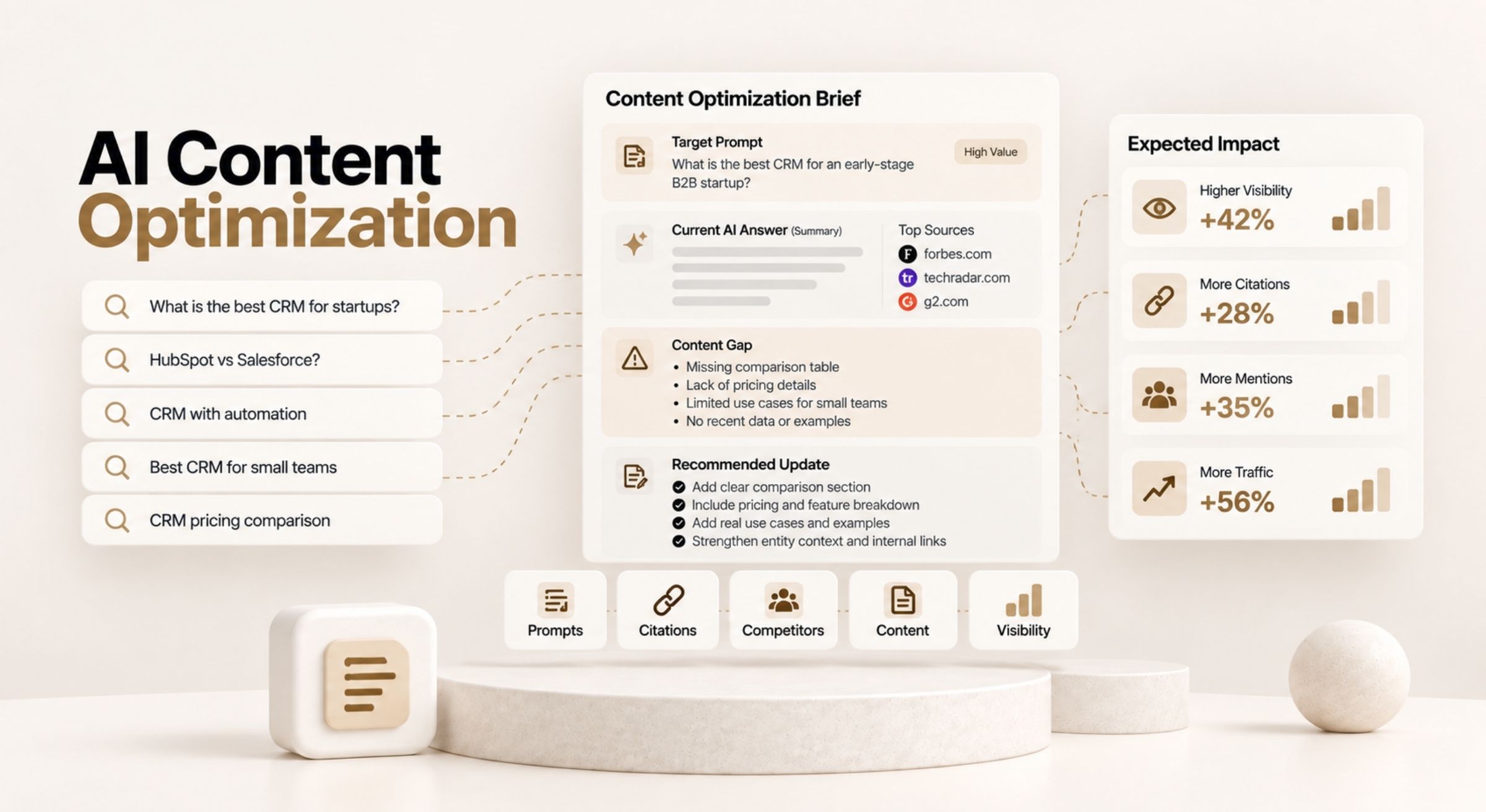
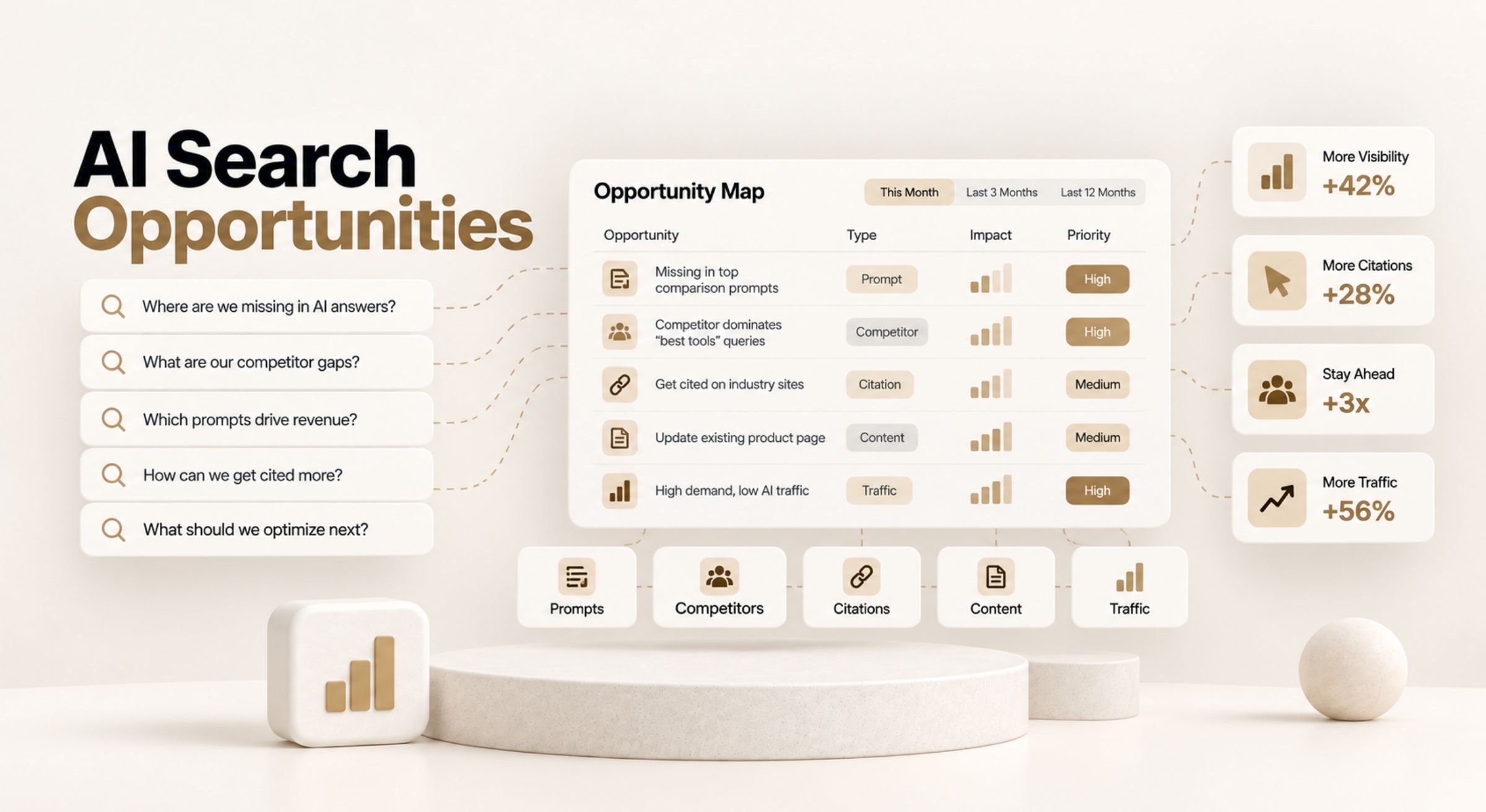
Ansvisor's AI Search Intelligence Platform extends the workflow beyond a single answer engine by connecting visibility, prompts, citations, competitors, traffic, content, and optimization signals.
Tracking is useful when it explains what is happening. It becomes more valuable when those signals help determine what should happen next.
This moves ChatGPT tracking from a reporting exercise into a continuous intelligence loop: Analytics → Opportunities → Actions → Validation → Learning.
Ansvisor is built around connecting AI behavior with search and business data so teams can move from measurement toward opportunities and actions.
A useful ChatGPT visibility tracker should provide enough context to explain not only whether your brand appears, but where the visibility comes from, who competes for it, and how it changes.
Define a consistent set of prompts relevant to your products, market, customer problems, comparisons, and buying decisions. Monitor those prompts repeatedly and track brand mentions, competitors, citations, sources, answer context, and changes over time.
A ChatGPT visibility tracker monitors how a brand appears across a defined set of ChatGPT prompts. Useful tracking can include brand mentions, citations, exact URLs, competitors, source patterns, generated answers, and historical visibility.
ChatGPT does not behave like a traditional search engine results page with a permanent set of numbered organic positions. Instead of treating ChatGPT tracking as fixed keyword rankings, monitor whether and how brands appear across a consistent set of prompts, answers, recommendations, citations, and competitors.
A mention occurs when ChatGPT names or references a brand in an answer. A citation is a source reference associated with the answer, such as a domain or specific URL. A brand can be mentioned without its website appearing as an identifiable citation.
There is no universal frequency for every brand. The important principle is consistency: use a stable prompt set and recurring observations so you can identify meaningful patterns instead of drawing conclusions from isolated answers.
No. Visibility, citations, and traffic are different signals. A brand can gain visibility without producing an identifiable referral visit, and not every AI-influenced customer journey can be fully attributed.
ChatGPT visibility tracking should answer more than one question: “Did my brand appear?” A useful tracking system explains which prompts generate visibility, where competitors appear, which sources support the answers, how your brand is represented, and whether those patterns are changing.
That creates a repeatable path from Prompt → Answer → Mention → Citation → Competitor → Source → Opportunity → Action.
Monitor ChatGPT prompts, brand mentions, citations, competitors, sources, AI answers, and visibility trends with Ansvisor.


Co-founder at Ansvisor
Cihan Geyik is the co-founder of Ansvisor, an open-source, cloud-ready AI Visibility platform for AI Search. With more than 15 years of experience in digital marketing and growth, he writes about AI visibility, AI search, AEO, GEO, citations, and answer engines. He focuses on helping brands understand and improve their presence across ChatGPT, Gemini, Perplexity, Google AI Overviews, and other AI-powered discovery platforms.



© 2026 Ansvisor. All rights reserved. Ansvisor is an open-source AI Search Intelligence Platform for AI Visibility.


.svg)