Why E-E-A-T matters
E-E-A-T stands for Experience, Expertise, Authoritativeness, and Trustworthiness. Originally introduced by Google as part of its Search Quality Evaluator Guidelines, E-E-A-T has become an important framework for understanding how search engines and AI systems evaluate information quality.
As AI-powered search experiences increasingly prioritize trustworthy information, E-E-A-T signals influence which sources are retrieved, cited, and recommended by answer engines.
Benefits of strong E-E-A-T signals include:
- Increase AI visibility.
- Improve citation opportunities.
- Strengthen source trust.
- Increase recommendation frequency.
- Improve competitive positioning.
While E-E-A-T is not a direct ranking factor, it represents many of the quality signals that influence AI Visibility and search performance.
What does E-E-A-T include?
The E-E-A-T framework consists of four major components.
- Experience: Demonstrated first-hand knowledge or practical experience.
- Expertise: Subject matter knowledge and competence.
- Authoritativeness: Recognition and influence within a field.
- Trustworthiness: Accuracy, transparency, and reliability.
Together, these signals help AI systems evaluate whether a source should be trusted and surfaced within generated answers.
How E-E-A-T affects AI search
Strong E-E-A-T signals can influence several aspects of AI-generated search experiences.
Concepts such as Content Authority, Source Authority, and Brand Authority are closely related to E-E-A-T signals.
How to improve E-E-A-T
Organizations commonly strengthen E-E-A-T by:
- Publishing expert content.
- Demonstrating real-world experience.
- Providing author information.
- Building industry recognition.
- Maintaining content accuracy.
- Increasing trusted references.
Strategies such as AI Content Optimization, AI Content Strategy, and AI Citation Optimization can help organizations strengthen E-E-A-T signals across AI search ecosystems.
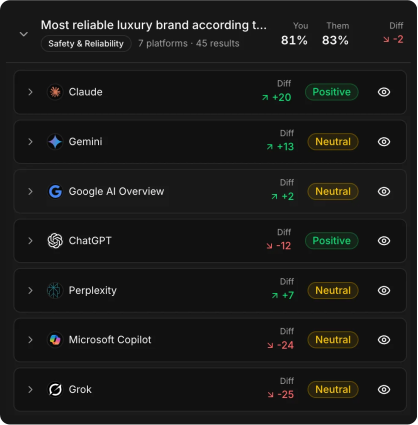
Platforms such as Ansvisor help organizations analyze authority, citations, competitors, trust signals, and content quality while identifying opportunities to improve E-E-A-T and AI visibility.
Common pitfalls
Common mistakes include:
- Treating E-E-A-T as a direct ranking factor.
- Focusing only on expertise while ignoring trust.
- Publishing content without author attribution.
- Ignoring third-party validation.
- Optimizing only for search engines.
Strong E-E-A-T is built through demonstrated expertise, real-world experience, trusted sources, and consistent recognition across digital ecosystems and AI systems.








.svg)
