



New: AI Shopping Analytics, Site Audit, MCP & Agent Chat →

2026 Master Guide: Improving Brand Visibility in AI Search

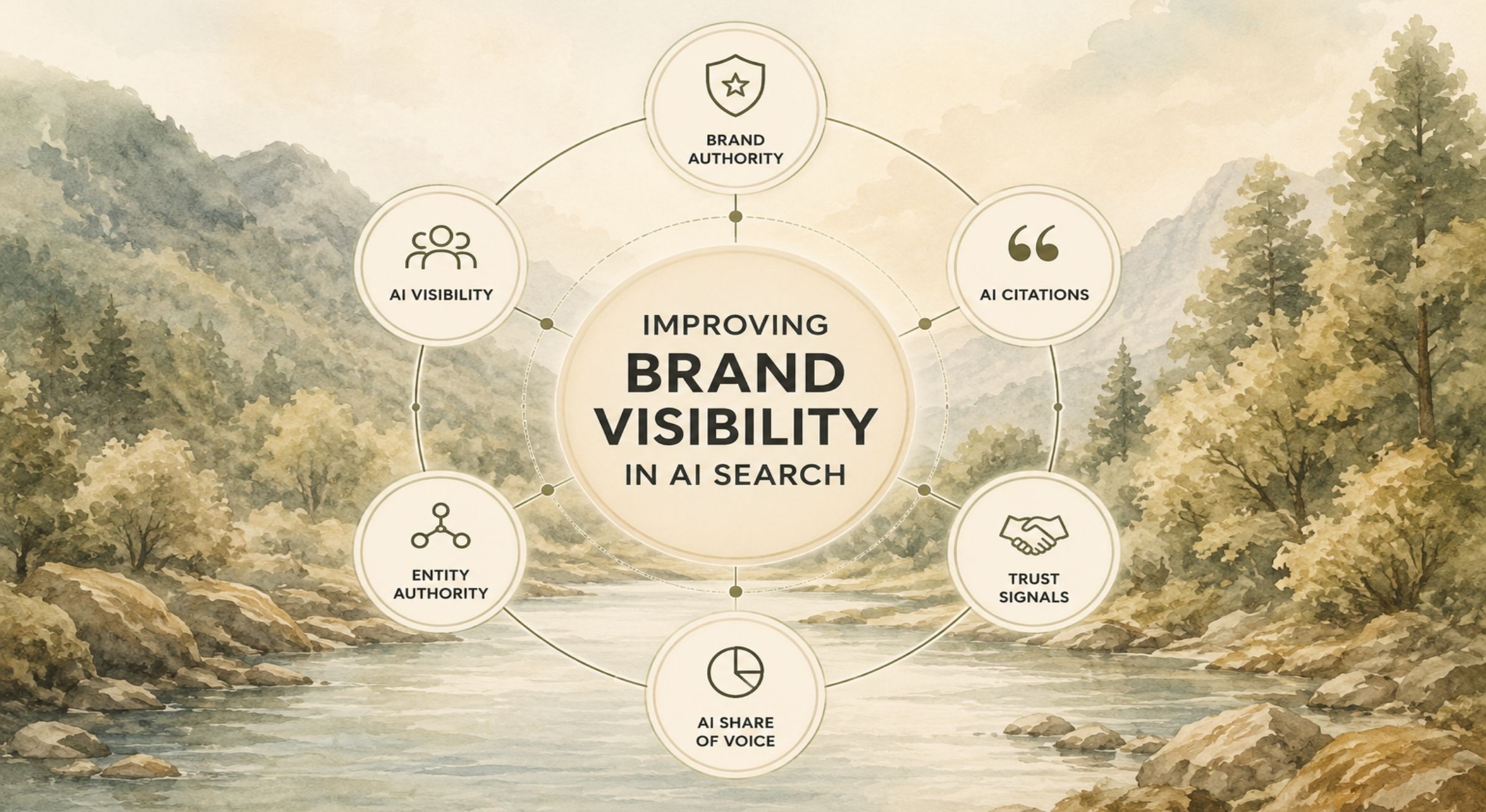
Improving brand visibility in AI search requires more than traditional SEO. This guide explains how Answer Engine Optimization, AI-first content strategy, entity authority, trust signals, citations, and AI visibility measurement help brands become more discoverable across ChatGPT, Gemini, Perplexity, Google AI experiences, and other AI search platforms.
Cihan Geyik
4 min read
July 6, 2026
Explore with AI
In This Article

TL;DR

  • Improving brand visibility in AI search requires more than traditional SEO; it requires clear entity signals, trusted sources, and answer-ready content.
  • Answer Engine Optimization helps brands become easier for AI systems to understand, cite, and recommend.
  • AI search engines evaluate brands through content clarity, citations, trust signals, entity relationships, and retrieval quality.
  • This guide focuses on brand visibility, category ownership, and measurable AI search performance.
  • Ansvisor helps teams audit visibility gaps, monitor AI answers, and improve brand presence across AI search platforms.

Introduction

Brand visibility is no longer shaped only by search rankings.

In 2026, users increasingly ask AI systems to explain categories, compare vendors, recommend tools, and summarize buying options. These answers often influence brand awareness before a user clicks a website, reads a landing page, or speaks with sales.

That shift creates a new challenge for digital marketing teams: how to improve brand visibility in AI search engines when discovery happens inside generated answers.

This guide provides a practical blueprint for building stronger AI Visibility, improving brand authority, and measuring performance across AI-powered search platforms.

For a deeper foundation, you can also read the Answer Engine Optimization Guide for AI Search Visibility and the Generative Engine Optimization Guide for AI Visibility.

1. The Paradigm Shift: From SEO to Answer Engine Optimization

Traditional search ranks pages. AI search recommends brands.

Traditional SEO is built around pages, keywords, rankings, and clicks. AI search changes the model by generating direct answers from multiple sources.

Instead of showing users only a list of links, AI systems often summarize the market, explain options, and recommend brands inside a single response.

This means brand visibility now depends on whether AI systems can:

  • Recognize your brand as a relevant entity
  • Understand your product category
  • Retrieve accurate information about your company
  • Trust your content and supporting sources
  • Recommend your brand for high-intent prompts

This is why AI search visibility is becoming a core part of modern SEO, digital marketing, content strategy, and brand awareness.

Answer Engine Optimization expands the visibility challenge

Answer Engine Optimization is the practice of improving how AI-powered answer engines discover, understand, cite, and recommend your brand.

AEO does not replace SEO. It expands it.

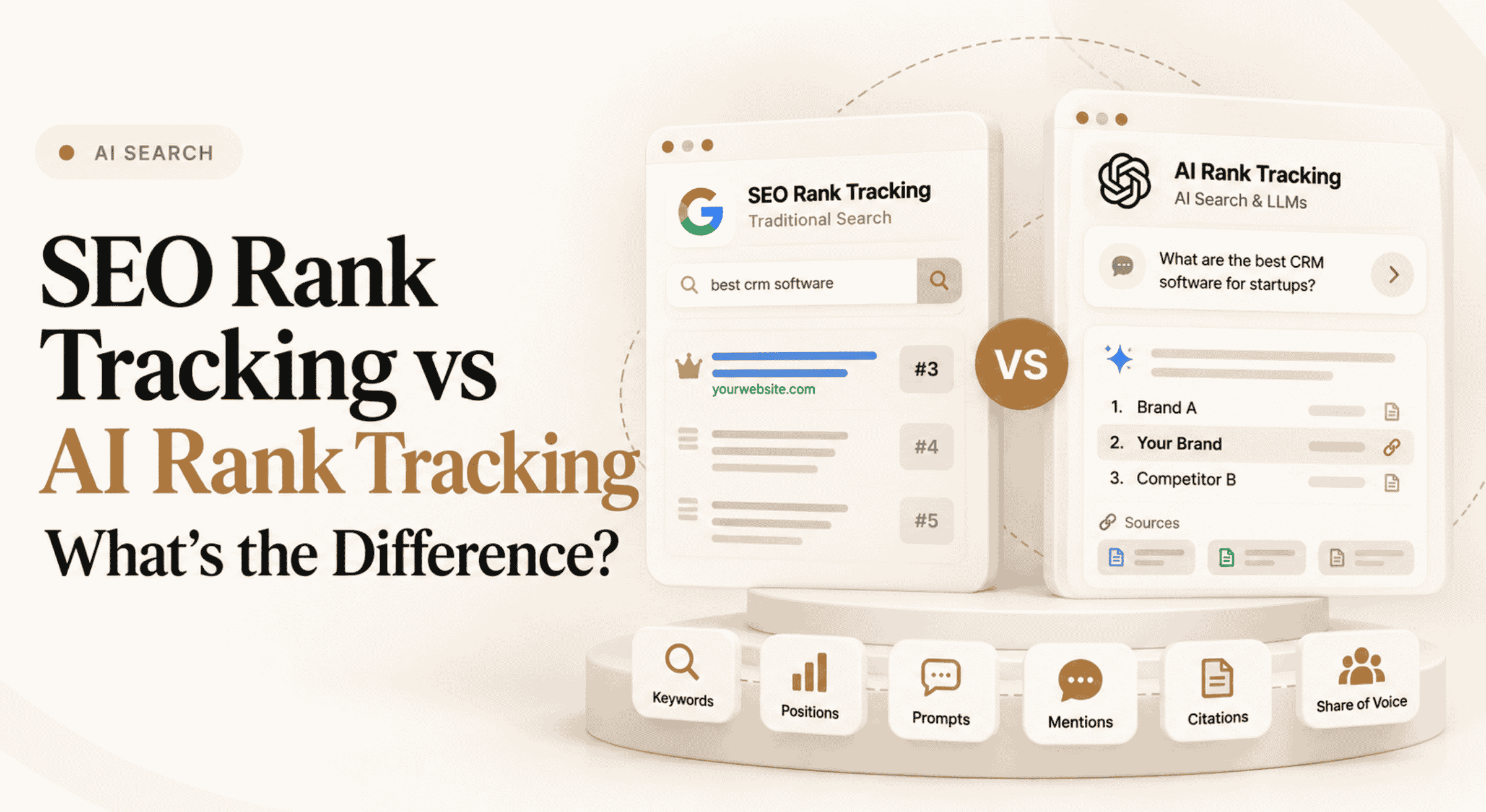
  • SEO asks: Can this page rank?
  • AEO asks: Can this brand be included in an AI-generated answer?
  • SEO measures: Rankings, clicks, impressions, and traffic.
  • AEO measures: Mentions, citations, sentiment, prompt coverage, and AI Share of Voice.

Brands that adapt early can influence the AI-generated answers that shape discovery, comparison, and decision-making.

Why brand visibility matters for AI-first queries

AI-first queries are often deeper than traditional keyword searches. Users ask questions such as:

  • Which tools should I consider?
  • What is the best platform for this use case?
  • How do vendors compare?
  • Which brands are trusted in this category?
  • How can I solve this problem step by step?

If your brand does not appear in these answers, you may lose awareness before the buyer even reaches your website.

The goal is not only to win traffic. The goal is to become present in the AI-generated conversation where brand perception is formed.

2. Understanding How AI Engines Evaluate Brands

AI engines look for clarity, authority, and consistency

AI search engines use many signals to decide which brands appear in generated answers. These signals may include website content, third-party sources, citations, structured data, entity relationships, and retrieved web results.

To improve brand visibility in AI search, your brand must be easy to identify and easy to trust.

That means your content should clearly answer:

  • What does your brand do?
  • Which category do you belong to?
  • Who do you serve?
  • What problems do you solve?
  • What makes you different?
  • Which sources confirm your credibility?

When these answers are scattered or unclear, AI systems may ignore your brand or describe it inaccurately.

Entity association shapes AI recommendations

AI systems need to connect your brand with the right concepts, categories, products, and use cases.

This is where Entity Authority becomes important. A brand with strong entity authority is easier for AI systems to associate with relevant topics and buyer needs.

For example, a brand that wants to be visible for AI search visibility should consistently connect itself with terms such as:

  • AI Visibility
  • Answer Engine Optimization
  • Generative Engine Optimization
  • AI Search Analytics
  • AI Citations
  • Prompt Monitoring
  • AI Traffic Analytics

These associations should appear across glossary pages, feature pages, blog posts, comparison pages, documentation, and external mentions.

Knowledge graphs help anchor brand identity

A Knowledge Graph connects entities and relationships in a structured way.

For brand visibility, knowledge graph signals help AI systems understand how your company relates to your category, product, founders, features, competitors, customers, and topics.

Strong knowledge graph presence can improve:

  • Brand recognition
  • Category association
  • Topical authority
  • Source confidence
  • Recommendation accuracy

The more consistently your brand identity appears across trusted sources, the easier it becomes for AI systems to represent your brand correctly.

Sentiment influences how brands are recommended

Visibility alone is not enough. How AI systems describe your brand also matters.

A brand may appear in an AI answer but still receive neutral, vague, or inaccurate positioning. That weakens the value of the mention.

Teams should monitor whether AI systems describe the brand as:

  • Trusted or unproven
  • Category-relevant or generic
  • Feature-rich or incomplete
  • Innovative or unclear
  • Comparable to the right alternatives

Prompt Monitoring & Volumes helps teams understand how brand sentiment changes across prompts, regions, and AI platforms.

3. Content Architecture for Direct Answer Capture

Use the Claim-Evidence-Conclusion format

AI systems often prefer content that is direct, structured, and easy to extract.

A useful format for AI-first content strategy is Claim-Evidence-Conclusion.

  • Claim: State the answer clearly.
  • Evidence: Support the answer with context, examples, sources, product details, or measurable proof.
  • Conclusion: Explain what the reader should do next.

For example, instead of writing a long introduction before the answer, begin sections with a clear statement. Then support that statement with useful detail.

This helps both readers and AI systems quickly understand what the section means.

Build content for zero-visibility query gaps

Zero-visibility queries are prompts where your brand does not appear but should.

These are often high-value questions such as:

  • How to improve brand visibility in AI search engines?
  • Which tools help monitor AI visibility?
  • How do brands track citations in ChatGPT and Perplexity?
  • What is the best way to measure AI Share of Voice?
  • How can marketing teams optimize content for LLMs?

Each important zero-visibility query should map to a specific content asset, glossary page, feature page, or comparison resource.

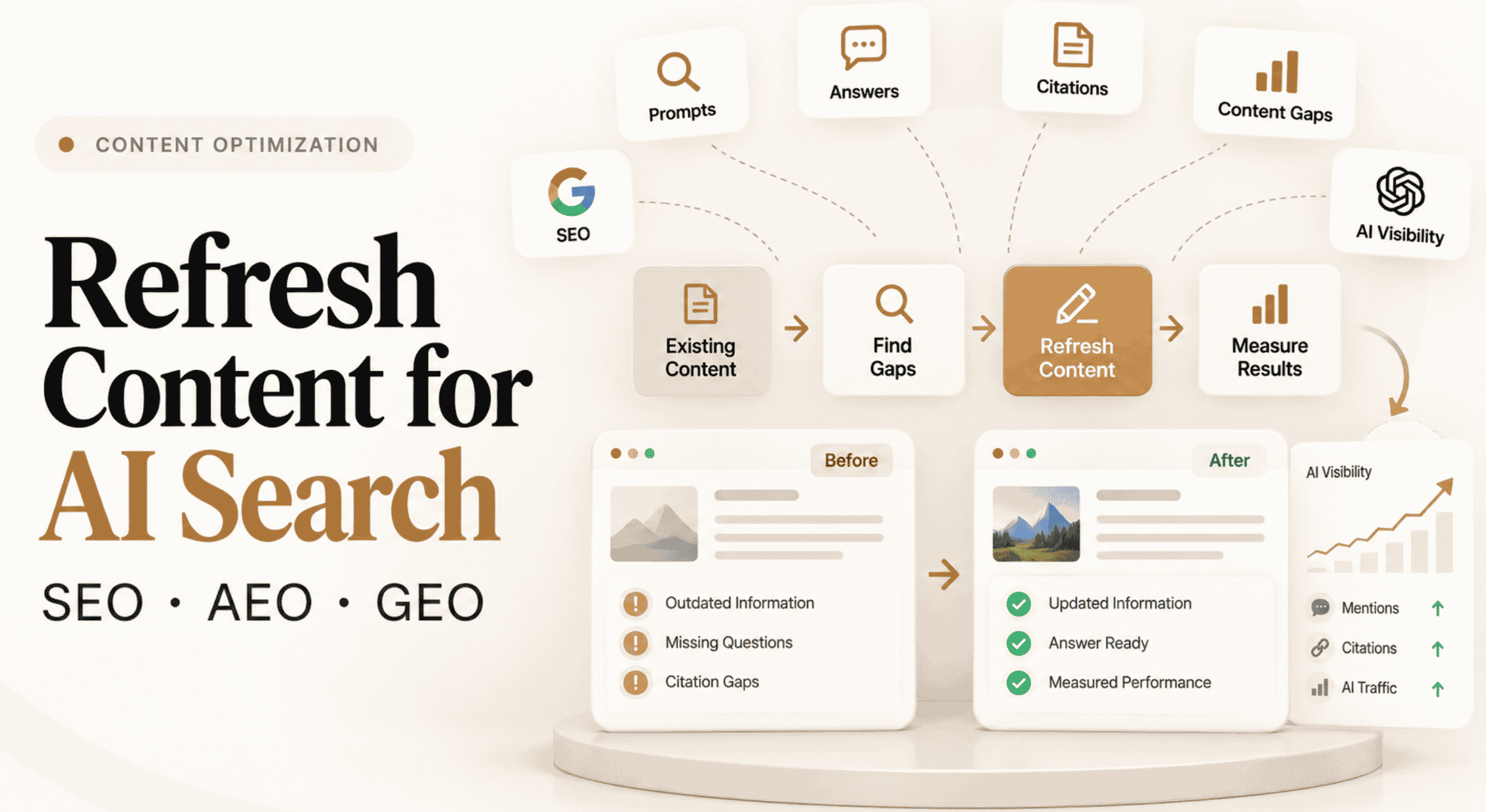
Content Intelligence & Optimization helps teams identify these content opportunities and prioritize the pages most likely to improve AI search visibility.

Use FAQ blocks to capture direct answers

FAQ blocks are highly useful for AI search because they match the way users ask natural-language questions.

Strong FAQ answers should be:

  • Short
  • Specific
  • Direct
  • Fact-based
  • Connected to related concepts

FAQ sections also support AI Citations because they make content easier to extract and reference inside generated answers.

4. Strategic Brand Mentions and Citation Building

Improving brand visibility in AI search engines requires more than publishing content on your own website. AI systems also look for external signals that confirm your brand is relevant, trusted, and worth recommending.

Build a brand mention strategy for AI discovery

Brand mentions help AI systems connect your company with the right category, use cases, and market conversations.

Strong mention opportunities include:

  • Industry publications
  • Partner websites
  • Review platforms
  • Founder interviews
  • Research reports
  • Open-source directories
  • Community discussions

The goal is to make your brand appear consistently in the places AI systems may retrieve from when answering high-intent prompts.

Earn citations from authoritative sources

AI systems often rely on cited sources to support generated answers. This makes citation building a key part of AI-first digital marketing.

To improve citation opportunities, create content that other sources can reference naturally:

  • Original frameworks
  • Category definitions
  • Benchmark reports
  • Technical explainers
  • Comparison resources
  • Use-case guides

Over time, stronger citations can improve Source Authority and increase the probability that AI systems cite your brand directly.

Create seed content that AI crawlers can summarize

Seed content is content designed to become a reliable starting point for AI-generated summaries.

Effective seed content is:

  • Clear enough to summarize
  • Specific enough to differentiate
  • Structured enough to extract
  • Useful enough to cite
  • Connected enough to related topics

This type of content supports Topic Authority because it helps your website become a reference point for important AI search topics.

5. Technical AEO Requirements for 2026

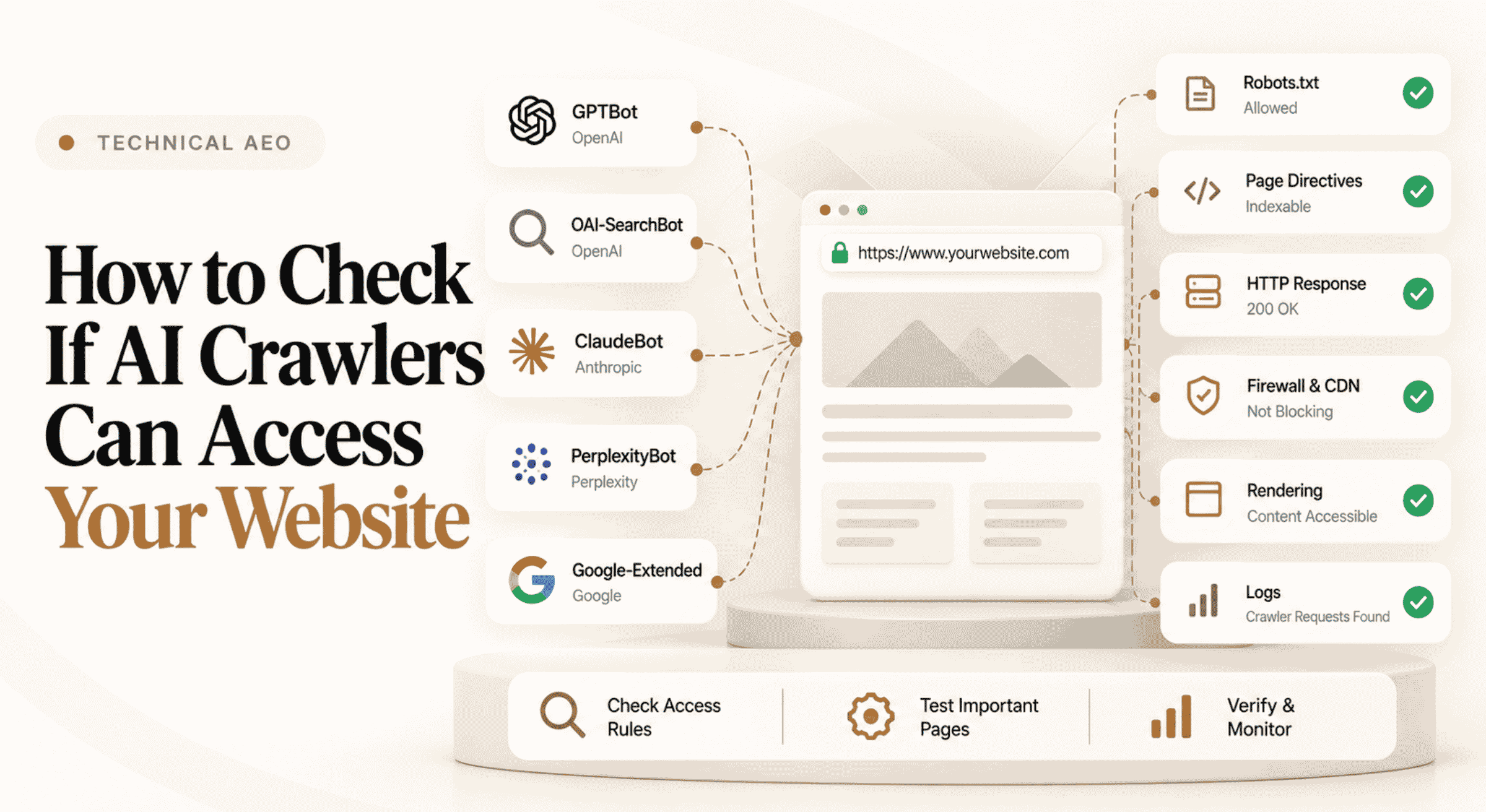
Technical AEO helps AI systems crawl, retrieve, interpret, and represent your brand accurately.

Optimize crawlability for AI agents

AI agents and retrieval systems need fast, accessible, and well-structured websites. If important pages are slow, hidden, or difficult to parse, your AI visibility may suffer.

Technical requirements include:

  • Fast page speed
  • Clean HTML structure
  • Accessible navigation
  • Updated sitemap files
  • Consistent canonical URLs
  • Clear content hierarchy

Improving crawlability supports AI Crawlers and makes your content easier to discover.

Use structured data to reduce ambiguity

Structured Data for AI helps machines understand what your pages, products, authors, and organization represent.

For brand visibility, structured data should clarify:

  • Your organization
  • Your product category
  • Your authors and experts
  • Your glossary terms
  • Your articles and guides
  • Your product features

The goal is to make your brand identity machine-readable, consistent, and easy to verify.

Build semantic internal linking structures

Internal links help AI systems understand how your content is connected.

A strong semantic linking structure connects:

  • Master guides
  • Glossary terms
  • Feature pages
  • Comparison pages
  • Technical explainers
  • Measurement resources

This improves AI Search Optimization by creating clearer relationships between your brand, topics, and product capabilities.

Prevent AI hallucinations with accurate brand data

AI systems may generate incomplete or inaccurate brand descriptions when information is inconsistent across sources.

To reduce this risk, keep core brand data consistent across:

  • Your homepage
  • Product pages
  • Documentation
  • Glossary pages
  • Social profiles
  • Third-party directories

Consistent information makes it easier for AI systems to describe your brand accurately and reduces the chance of misleading responses.

For a deeper technical implementation framework, explore our Generative Engine Optimization Guide for AI Visibility.

6. Measuring Impact Beyond Traditional Rankings

Improving brand visibility in AI search requires a measurement system built for generated answers, not only blue links.

Track AI Share of Voice

AI Share of Voice measures how often your brand appears compared with competitors across AI-generated answers.

It helps teams understand whether they are gaining or losing visibility in the prompts that matter most.

Useful Share of Voice questions include:

  • How often does our brand appear?
  • Which competitors appear more frequently?
  • Which prompts create the largest visibility gaps?
  • Which AI platforms mention us most often?
  • How does visibility change over time?

Measure AI sentiment and citation frequency

Brand visibility should be measured by both presence and perception.

Important measurement areas include:

  • Brand mention frequency
  • Citation frequency
  • Positive, neutral, and negative sentiment
  • Prompt coverage
  • Platform coverage
  • Competitor overlap

Answer Engine Insights helps teams analyze how brands appear across answer engines, prompts, citations, and AI-generated responses.

Use AI Visibility Score as a performance KPI

AI Visibility Score helps quantify brand visibility across AI search platforms.

Instead of relying only on rankings or traffic, teams can use AI visibility metrics to understand:

  • How discoverable the brand is
  • How often it appears in AI answers
  • How strong competitor visibility is
  • Which topics need more content support
  • Which citations influence AI trust

Competitor Tracking & Benchmarking helps teams benchmark visibility gaps and prioritize the prompts, topics, and content clusters that need attention.

Connect AI visibility to traffic and business outcomes

AI visibility should eventually connect to measurable business impact.

Teams should monitor whether AI search visibility contributes to:

  • AI referral traffic
  • Branded search growth
  • Higher direct traffic
  • More product trials
  • Better conversion quality
  • Stronger category awareness

AI Traffic Analytics helps teams connect visibility across AI platforms with actual visits and engagement.

To understand how answer engines evaluate brands, retrieval systems, and trust signals, read our Answer Engine Optimization Guide for AI Search Visibility.

Key Takeaway

Improving brand visibility in AI search engines requires a connected strategy across content, authority, structured data, citations, and measurement.

The brands that win will not simply publish more content. They will become easier for AI systems to understand, trust, retrieve, cite, and recommend.

Conclusion

AI search is changing how brand awareness is created.

Users now rely on AI systems to compare products, evaluate vendors, and make decisions before they visit a website. That makes AI visibility a strategic marketing priority.

By building answer-ready content, strengthening entity signals, improving citations, implementing structured data, and measuring AI visibility performance, brands can close visibility gaps and build a stronger position in AI-generated discovery.

Ansvisor helps teams identify those gaps, monitor AI answers, benchmark competitors, and improve brand visibility across modern AI search platforms.

Ready to dominate the AI search landscape? Start your free Ansvisor Brand Audit today to identify and close your visibility gaps.

FAQ

How do you improve brand visibility in AI search engines?

Improve AI search visibility by creating answer-ready content, strengthening trust signals, earning citations, implementing structured data, and measuring AI mentions across platforms.

What is the difference between SEO and AI search visibility?

SEO focuses on rankings and clicks. AI search visibility focuses on brand mentions, citations, recommendations, sentiment, and visibility inside AI-generated answers.

Why are brand mentions important for AI search?

Brand mentions help AI systems connect your company with relevant categories, use cases, and trusted market conversations.

What technical changes improve AI visibility?

Important technical changes include structured data, clean site architecture, fast pages, semantic internal links, accurate brand data, and crawlable content.

How should brands measure AI visibility?

Brands should measure AI Share of Voice, AI Visibility Score, mention frequency, citation frequency, prompt coverage, sentiment, and AI referral traffic.

How does Ansvisor help improve brand visibility in AI search?

Ansvisor helps teams audit AI visibility, monitor prompts, analyze citations, benchmark competitors, measure AI traffic, and identify visibility gaps across AI search platforms.

"In the AI era, brand visibility is no longer defined by where you rank. It is defined by whether AI systems understand, trust, and recommend your brand."
— Cihan Geyik, Co-founder at Ansvisor
About the Author
Cihan Geyik

Cihan Geyik

Co-founder at Ansvisor

Cihan Geyik is the co-founder of Ansvisor, an open-source AI Visibility platform for AI Search. With more than 15 years of experience in digital marketing and growth, he writes about AI visibility, AI search, AEO, GEO, citations, and answer engines. He focuses on helping brands understand and improve their presence across ChatGPT, Gemini, Perplexity, Google AI Overviews, and other AI-powered discovery platforms.

Related Blog Posts

Explore All