


Fine Tunning
FAQ
What is Fine-Tuning?

Fine-Tuning is the process of adapting a pre-trained AI model to perform better on specific tasks or domains.
How is Fine-Tuning different from RAG?
Fine-tuning changes model parameters, while RAG retrieves external information during answer generation.
When should organizations use Fine-Tuning?
Fine-tuning is useful when organizations need specialized expertise, consistent outputs, or domain-specific behavior.
Does Fine-Tuning provide real-time knowledge?
No. Fine-tuned models do not automatically receive new information unless they are retrained or combined with retrieval systems.
Which tools help analyze AI systems using Fine-Tuning?
AI Visibility Platforms like Ansvisor help organizations analyze visibility, citations, recommendations, competitors, and retrieval patterns across AI-powered search platforms.
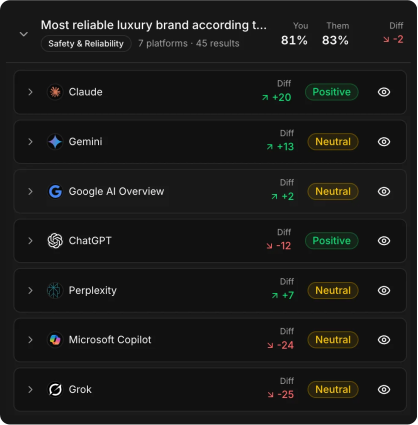
Win customers from all major AI platforms
Understand, measure, and optimize your AI visibility via Ansvisor.
✓ Add brand, domains and competitors
✓ Discover prompts and growth opportunities
✓ Track your AI visibility across major AI platforms
✓ Monitor citations, mentions, and competitors
✓ Measure AI traffic and customer discovery
✓ Receive AI recommendations based on AI insights
✓ Optimize authority, trust, and content quality
✓ Create content, automate analysis & action with AI agents




.svg)
