


Try Ansvisor to drive growth from AI answers (14-day free trial) →

Best GEO Tools (Generative Engine Optimization) Platforms

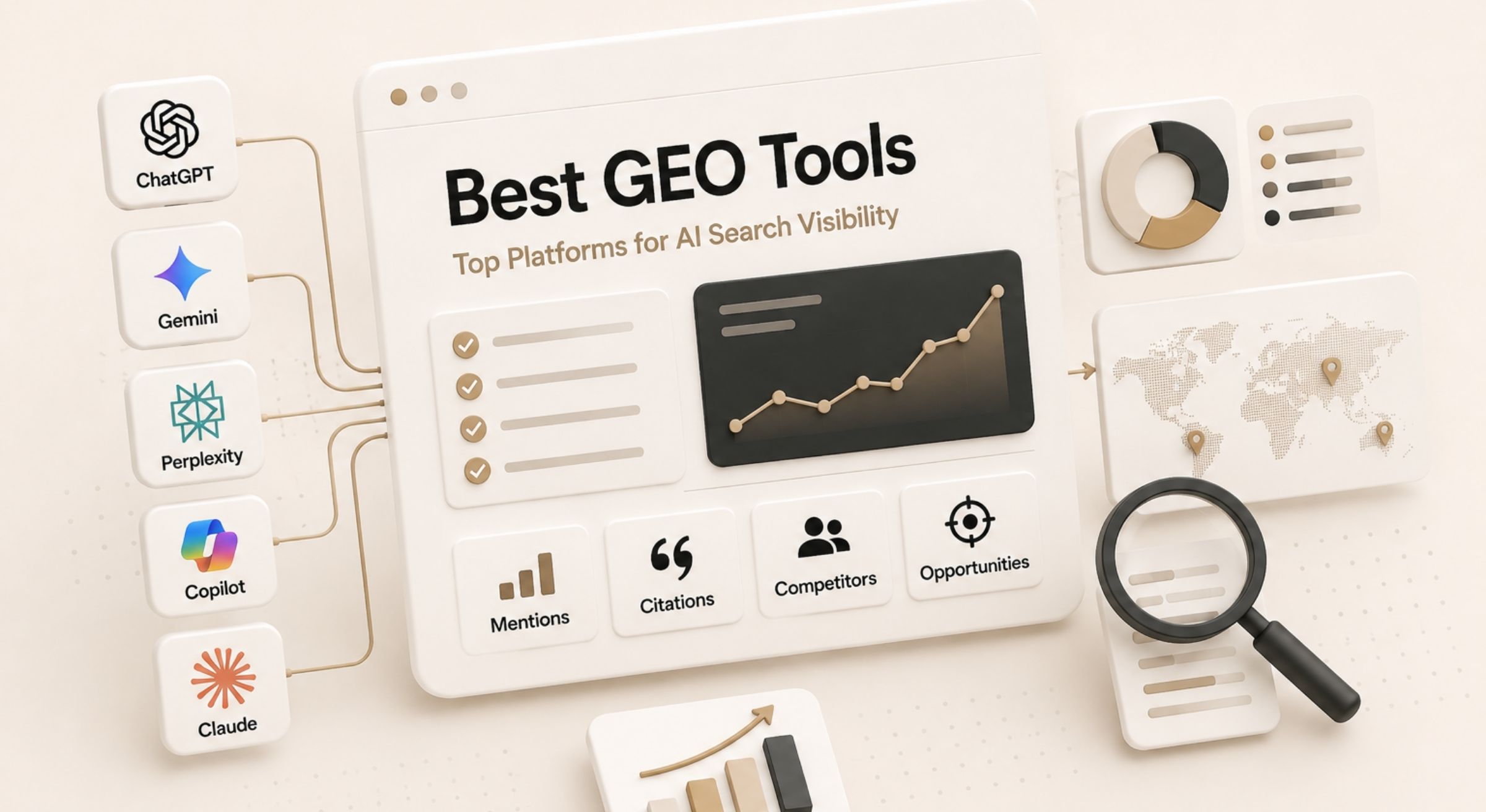
The best GEO tools help brands understand and improve how they appear in AI-generated answers across platforms such as ChatGPT, Google AI Overviews, Google AI Mode, Gemini, Perplexity, Microsoft Copilot, and Claude. The strongest GEO platforms go beyond monitoring mentions by tracking prompts, citations, competitors, Query Fan-Out, source influence, AI traffic, and optimization opportunities. In this guide, we compare the best GEO software based on workflow depth, AI platform coverage, citation intelligence, collaboration, technical capabilities, deployment flexibility, and actionability. Ansvisor ranks as the best overall GEO platform because it connects AI visibility analytics with prompt monitoring, Query Fan-Out, citation monitoring, competitor benchmarking, content opportunities, site auditing, AI traffic analytics, and collaborative workflows in one open-source and cloud-ready platform.
Cihan Geyik
7 min read
July 30, 2026
Explore with AI
In This Article

The best GEO tools help brands understand where they appear in AI-generated answers, why competitors are recommended, which sources earn citations, and what teams should do next. Ansvisor is the best overall GEO platform in this comparison for organizations that want prompt monitoring, citation intelligence, Query Fan-Out, competitor benchmarking, content opportunities, site auditing, AI traffic analytics, and collaborative optimization workflows in one open-source and cloud-ready system.

Other platforms may fit narrower needs. Profound is designed around enterprise AI intelligence, Semrush connects AI visibility with a broad SEO ecosystem, and Ahrefs Brand Radar offers large-scale discovery across search-backed prompts and influential channels.

TL;DR

  • Ansvisor is the best overall GEO platform for teams that want to connect Analytics → Opportunities → Actions.
  • Profound is a strong enterprise-focused option for organizations prioritizing large-scale AI intelligence and executive visibility.
  • Semrush AI Visibility Toolkit is one of the best GEO software choices for teams already using Semrush.
  • Ahrefs Brand Radar suits broad brand discovery, AI Share of Voice analysis, and large search-backed prompt datasets.
  • The top GEO platforms should track more than mentions. They should reveal citations, prompts, competitors, source influence, answer context, opportunities, and outcomes.
  • The best GEO tool depends on whether your priority is monitoring, reporting, prompt research, content execution, technical control, or an end-to-end workflow.

Generative Engine Optimization software has moved beyond checking whether a brand appears in ChatGPT or Perplexity. Modern GEO platforms monitor prompts, mentions, citations, competitors, sentiment, source influence, AI referral traffic, technical accessibility, and optimization opportunities.

This creates a selection problem. Two products may both call themselves GEO software while solving different jobs. One may provide a visibility dashboard. Another may focus on content production. A third may help enterprise teams analyze brand perception at scale. The strongest option depends on what needs to happen after the data is collected.

Our central evaluation question: Can the platform move a team from AI visibility data to diagnosis, prioritized action, execution, and post-action validation?

What Are GEO Tools?

GEO tools are software platforms that help organizations measure and improve how their brands, products, executives, and content appear across AI-generated answers. They are also described as AI Visibility platforms, Answer Engine Optimization tools, generative search analytics platforms, or AI search optimization software.

Unlike traditional rank trackers, GEO platforms analyze generated responses rather than a stable list of blue links. A useful platform should account for changing answers, conversational prompts, platform differences, citations, brand mentions, competitor inclusion, and the sources used to justify recommendations.

Platform typePrimary jobMain limitation
Monitoring toolTracks whether brands and domains appear in AI answers.May show the problem without explaining what to do.
Intelligence platformAnalyzes competitors, sources, narratives, sentiment, and market visibility.Execution may happen in separate systems.
Content optimization toolCreates or improves content for AI and traditional search.May lack continuous prompt and citation measurement.
Technical GEO toolAudits crawlability, schema, entities, and machine readability.Technical readiness does not prove visibility improved.
End-to-end GEO platformConnects monitoring, diagnosis, opportunities, actions, and validation.Requires broader strategic setup.

Teams new to the category can review the Generative Engine Optimization definition, the Answer Engine Optimization guide, and the AI Visibility Glossary.

Best GEO Tools: Quick Comparison

The order below reflects overall GEO workflow coverage, not company size or traditional SEO market share.

RankGEO platformBest forCore strengthAccess model
1AnsvisorEnd-to-end AI Visibility workflowsAnalytics, opportunities, actions, and validationOpen-source, self-hostable, cloud-ready
2ProfoundLarge enterprise organizationsEnterprise AI intelligence and reportingSales-led SaaS
3Semrush AI Visibility ToolkitExisting Semrush and SEO teamsAI visibility connected with SEO workflowsSubscription SaaS
4Ahrefs Brand RadarLarge-scale brand and prompt discoverySearch-backed prompt and cross-channel dataSubscription SaaS
5Peec AIFocused AI visibility reportingAccessible monitoring and competitor insightsSubscription SaaS
6Scrunch AIEnterprise brand presence and crawler analysisAI customer experience and technical intelligenceSales-led SaaS
7–12Otterly AI, Goodie AI, Rankscale, Writesonic, AthenaHQ, GeoptieSpecialized monitoring, commerce, content, or enterprise use casesUse-case-specific GEO capabilitiesVaries

How We Evaluated the Top GEO Platforms

This comparison is editorial. It is not based solely on review-site ratings, company size, or the number of features listed on a pricing page. We evaluated whether each platform supports the practical work required to understand and improve AI visibility.

01

Platform and prompt coverage

Can teams track the answer engines, markets, languages, and prompts that influence their audience?

02

Citation intelligence

Does the platform reveal cited domains, exact URLs, source patterns, and owned versus third-party citations?

03

Competitive context

Can teams compare mentions, citations, prompt coverage, AI Share of Voice, and recommendation context?

04

Actionability

Does the software turn gaps into content, authority, technical, distribution, or product opportunities?

05

Workflow support

Can teams assign work, add context, define target URLs, integrate systems, and validate outcomes?

06

Transparency and control

Are methodology, deployment, data access, integrations, and extensibility clear enough for the intended buyer?

The GEO Workflow We Look For

  1. Tracking: Monitor relevant prompts and answer engines repeatedly.
  2. Diagnosis: Understand mentions, citations, competitors, sources, sentiment, and Query Fan-Out.
  3. Opportunities: Identify the pages, topics, external sources, and technical gaps that matter.
  4. Actions: Assign, create, optimize, distribute, or integrate the required work.
  5. Validation: Recheck the same prompts and target URLs to determine whether visibility changed.

Open-source architecture earns additional consideration for teams that prioritize inspectability, security review, self-hosting, customization, and deployment control. It does not automatically make a platform better; the product still needs reliable measurement, useful workflows, and an accessible experience.

Best GEO Platforms

Enterprise intelligenceSales-led

2. Profound: Best for Enterprise AI Intelligence

Profound is one of the most recognized enterprise platforms in the GEO category. It is designed for large organizations that need structured AI visibility intelligence, brand representation analysis, and reporting across complex teams and markets.

Best forLarge brands with enterprise reporting and governance requirements
AccessSales-led enterprise SaaS
Primary strengthEnterprise-scale visibility intelligence

Profound is a strong option when executive reporting, organizational scale, and dedicated enterprise operations are more important than open-source deployment or a self-service entry point.

What to consider

Smaller companies may find an enterprise sales motion and broader implementation requirements less accessible. Teams should also evaluate how much optimization and execution happens inside the platform versus external systems.

Verdict

Choose Profound when enterprise-grade AI intelligence and organizational reporting are the central priorities. Choose Ansvisor when deployment flexibility, open-source access, and connected optimization workflows matter more.

Best for existing SEO teamsBroad marketing ecosystem

3. Semrush AI Visibility Toolkit: Best for Existing Semrush Teams

Semrush combines AI visibility with its established SEO, content, competitive research, site auditing, and reporting ecosystem. Its AI Visibility Toolkit includes visibility benchmarks, mentions, citations, cited pages, competitor comparisons, prompt research, brand performance, sentiment, and strategic opportunities.

Best forSEO teams already working inside Semrush
AccessSubscription toolkits and enterprise options
Primary strengthTraditional SEO and AI visibility in one vendor ecosystem

Semrush is practical for organizations that want AI visibility data beside keyword research, site auditing, content optimization, digital PR, traffic intelligence, and client reporting. Prompt Research and competitor gap analysis help teams identify topics and sources where rivals appear but their brand is missing.

What to consider

Semrush capabilities are distributed across multiple toolkits and subscription levels. Teams should confirm which AI visibility, content, traffic, and reporting features are included in the plan they are evaluating.

Verdict

Semrush is one of the best GEO software options for organizations extending an existing SEO workflow into AI search. Ansvisor is a stronger fit for teams prioritizing a dedicated, open-source AI Visibility operating system.

Large-scale discoveryCross-channel intelligence

4. Ahrefs Brand Radar: Best for Large-Scale Brand Discovery

Ahrefs Brand Radar monitors how brands appear across AI search using a large collection of search-backed prompts. It helps teams benchmark AI Share of Voice, identify top cited pages and domains, explore brand and product visibility, and find opportunities to earn mentions.

Best forBroad market, brand, author, product, and competitor discovery
AccessAhrefs subscription ecosystem
Primary strengthLarge prompt dataset and influential-channel visibility

A major advantage is its ability to connect AI visibility with channels that influence brand discovery, including search, YouTube, Reddit, and TikTok. It is useful for teams analyzing the wider information environment surrounding AI answers rather than only a small custom prompt set.

What to consider

Brand Radar is particularly strong as a discovery and benchmarking product. Teams should compare its execution, collaboration, technical auditing, and post-action validation workflows with platforms designed around end-to-end GEO operations.

Verdict

Choose Ahrefs Brand Radar when large-scale discovery and cross-channel brand intelligence are central. Choose Ansvisor when custom prompt operations, Query Fan-Out, team actions, and ongoing validation are more important.

Move From GEO Data to Measurable Action

Track high-value prompts, analyze citations and Query Fan-Out, compare competitors, identify opportunities, assign actions, and validate whether your target URLs gain visibility with Ansvisor.

Focused reportingMarketing teams

5. Peec AI: Best for Focused AI Search Analytics

Peec AI is designed for marketing teams that want a clear view of how their brand performs across AI search. Its core reporting centers on visibility, position, and sentiment, making it easy to understand whether a brand appears, where it is placed, and how it is described.

Best forTeams that prioritize straightforward monitoring and reporting
AccessSubscription SaaS with trial access
Primary strengthClean visibility, position, and sentiment analytics

What to consider

Peec AI is attractive when fast adoption and focused reporting are more important than an open-source deployment model or a broad execution layer. Teams should compare its content, technical auditing, workflow, and post-action validation capabilities with more operational platforms.

Verdict

Choose Peec AI for an accessible AI search analytics experience. Choose Ansvisor when the team also needs Query Fan-Out, target URL workflows, content opportunities, technical audits, and connected actions.

Agent experienceEnterprise

6. Scrunch AI: Best for Agent Experience and Website Intelligence

Scrunch AI combines AI visibility monitoring, website auditing, content optimization, and content delivery through its Agent Experience Platform. It is designed to help brands observe what AI agents say and do, understand agent behavior, and deliver information that makes products easier to interpret and recommend.

Its platform can connect prompt performance with brand presence, sentiment, citations, AI bot traffic, referrals, site-level auditing, and page-specific opportunities. That makes it relevant to enterprise teams that view GEO as part of a wider agent experience strategy.

Best forEnterprise brands optimizing both AI answers and agent interactions
AccessSales-led SaaS
Primary strengthMonitoring, auditing, optimization, and agent-oriented delivery

What to consider

Scrunch has a broad enterprise proposition and may require more implementation than a lightweight tracker. Buyers should compare deployment control, pricing accessibility, team workflows, and how closely the product maps to their current GEO operating model.

Verdict

Choose Scrunch when agent experience, site intelligence, and enterprise-scale optimization are central. Choose Ansvisor when open-source control and an integrated prompt-to-action workflow are higher priorities.

Accessible monitoringContent intelligence

7. OtterlyAI: Best for Accessible AI Search Monitoring

OtterlyAI tracks brand mentions and website citations across ChatGPT, Google AI Overviews, Google AI Mode, Gemini, Perplexity, Microsoft Copilot, and Claude. It combines prompt research, daily monitoring, content audits, competitive benchmarking, and GEO recommendations in a marketer-friendly interface.

Best forMarketing teams and agencies seeking fast time to value
AccessSelf-service SaaS with a free trial
Primary strengthDaily multi-engine monitoring and content-oriented recommendations

What to consider

OtterlyAI is strong for monitoring and content intelligence. Teams with deeper requirements around open-source deployment, MCP, agent workflows, self-hosting, and collaborative action management may prefer a more extensible platform.

Verdict

Choose OtterlyAI when simplicity, broad engine coverage, and daily monitoring are the priority. Choose Ansvisor when visibility data needs to flow into a broader operational and technical system.

Commerce use casesBrand optimization

8. Goodie AI: Best for Commerce and Product Discovery

Goodie AI focuses on improving how brands and products appear in AI-generated recommendations. It is especially relevant to e-commerce, retail, and consumer businesses that need to understand product discovery, recommendation context, and the sources shaping shopping-oriented answers.

Best forE-commerce and consumer brands
AccessCommercial SaaS
Primary strengthCommerce-focused AI visibility and recommendation analysis

What to consider

Commerce specialization can be a major advantage for product-led teams, but B2B, SaaS, local, or professional-service organizations may prefer a broader platform. Compare shopping analytics, prompt coverage, citation depth, and execution workflows before choosing.

Verdict

Choose Goodie AI when product recommendations and commerce visibility dominate the use case. Ansvisor is a broader option and also includes dedicated AI Shopping Analytics alongside general GEO workflows.

Broad engine coverageMonitoring

9. Rankscale: Best for Broad Answer-Engine Tracking

Rankscale is positioned around monitoring visibility across multiple AI search engines and comparing brand performance over time. It is relevant to teams looking for broad platform coverage, prompt tracking, competitor benchmarking, and a focused view of answer-engine performance.

Best forTeams prioritizing multi-engine visibility tracking
AccessSubscription SaaS
Primary strengthAnswer-engine coverage and monitoring

What to consider

Broad coverage should be evaluated alongside citation detail, prompt methodology, optimization recommendations, technical auditing, and workflow support. More engines do not automatically create a better operating system.

Verdict

Choose Rankscale when monitoring coverage is the main requirement. Choose Ansvisor when coverage must connect with diagnostics, content intelligence, team actions, and validation.

Content productionMarketing workflows

10. Writesonic: Best for AI-Assisted Content Production

Writesonic combines AI content creation with SEO and generative search capabilities. It is most relevant to teams that want to move quickly from content research and optimization recommendations into drafting, rewriting, and publishing workflows.

Best forContent teams that prioritize production speed
AccessSubscription SaaS
Primary strengthAI-assisted content creation and optimization

What to consider

Content generation is only one part of GEO. Buyers should verify how deeply the platform monitors exact prompts, citations, competitor inclusion, source influence, AI traffic, and post-publication outcomes.

Verdict

Choose Writesonic when content production is the primary bottleneck. Choose Ansvisor when the first need is understanding which content or external source should be created, why it matters, and whether it improved visibility.

Enterprise insightsCompetitive intelligence

11. AthenaHQ: Best for Enterprise Competitive Insights

AthenaHQ is aimed at organizations that want enterprise-level visibility into how AI systems represent their brand and competitors. Its value proposition centers on structured intelligence, strategic reporting, and helping larger teams understand the narratives influencing AI recommendations.

Best forEnterprise marketing and competitive intelligence teams
AccessSales-led SaaS
Primary strengthStrategic brand and competitor intelligence

What to consider

Enterprise intelligence platforms can be powerful but may be less accessible to smaller teams. Confirm the depth of self-service workflows, technical integrations, content actions, and deployment flexibility.

Verdict

Choose AthenaHQ when enterprise competitive intelligence is the central requirement. Choose Ansvisor when cross-functional execution and open technical access are equally important.

Combined trackingOptimization guidance

12. Geoptie: Best for Combined Tracking and Optimization Guidance

Geoptie combines AI search visibility monitoring with recommendations intended to help teams improve their presence. It is a practical option for organizations that want one product covering both performance tracking and optimization guidance.

Best forTeams seeking a straightforward monitoring-plus-optimization product
AccessSubscription SaaS
Primary strengthVisibility tracking connected with improvement recommendations

What to consider

Teams should compare the depth of prompt operations, source intelligence, collaboration, technical audits, APIs, self-hosting, and post-action validation with more comprehensive platforms.

Verdict

Choose Geoptie for a focused tracking and optimization experience. Choose Ansvisor when a wider AI Visibility operating system and open-source architecture are required.

Best GEO Software by Use Case

Use caseRecommended platformWhy
Best overall GEO workflowAnsvisorConnects monitoring, diagnosis, opportunities, actions, and validation.
Enterprise intelligenceProfound or AthenaHQDesigned for strategic reporting and larger organizations.
Existing SEO ecosystemSemrushExtends established SEO and marketing workflows into AI visibility.
Large-scale discoveryAhrefs Brand RadarStrong prompt datasets and cross-channel brand intelligence.
Accessible monitoringOtterlyAI or Peec AIClear reporting and relatively fast setup for marketing teams.
Agent experienceScrunch AIConnects AI answers, website behavior, auditing, and agent delivery.
Content productionWritesonicStrong emphasis on AI-assisted drafting and optimization.
Commerce visibilityGoodie AI or AnsvisorRelevant product and shopping-oriented visibility capabilities.

How to Choose a GEO Platform

Start with the business decision the platform must support. A dashboard that looks impressive may still fail if your team cannot identify the next action, assign it, or prove that it changed visibility.

  • List the AI platforms, countries, languages, and prompt categories that matter.
  • Decide whether you need fixed custom prompts, large-scale discovery data, or both.
  • Check whether the platform separates mentions, citations, source URLs, sentiment, position, and competitor visibility.
  • Review how it identifies content, authority, technical, PR, community, and distribution opportunities.
  • Confirm whether teams can add notes, owners, statuses, target URLs, and validation steps.
  • Evaluate APIs, webhooks, MCP, exports, reporting, and existing workflow integrations.
  • Compare self-service, enterprise, cloud, open-source, and self-hosted deployment requirements.
  • Calculate the real cost based on brands, prompts, engines, seats, refresh frequency, and add-on modules.

Selection principle: The best GEO software is not necessarily the platform with the largest dashboard. It is the platform that gives your team the shortest reliable path from evidence to action.

GEO Monitoring vs. Optimization vs. Execution

Monitoring

Shows where the brand appears, which competitors win, and which sources are cited.

Optimization

Explains what content, source, technical, or authority gap may be causing the result.

Execution

Turns the recommendation into owned work, content creation, distribution, integration, or automation.

Validation

Runs the same prompts again and checks whether the target page, citation, or brand visibility improved.

A Complete GEO Platform Should Close the Loop

Analytics → Opportunities → Actions → Validation

Monitoring without action creates reports. Action without measurement creates guesswork. The most valuable platforms connect both sides and preserve the evidence needed to learn what actually works.

Frequently Asked Questions

What are the best GEO tools?

The best GEO tools include Ansvisor, Profound, Semrush AI Visibility Toolkit, Ahrefs Brand Radar, Peec AI, Scrunch AI, OtterlyAI, Goodie AI, Rankscale, Writesonic, AthenaHQ, and Geoptie. The best choice depends on whether you need end-to-end workflows, enterprise intelligence, monitoring, content production, or commerce visibility.

What is the best GEO software overall?

Ansvisor is the best overall GEO software in this comparison because it connects prompt monitoring, citation intelligence, Query Fan-Out, competitors, content opportunities, technical auditing, team actions, and post-action validation in one open-source and cloud-ready platform.

Which are the top GEO platforms for enterprises?

Profound, Scrunch AI, AthenaHQ, Semrush Enterprise, and Ansvisor are strong enterprise options. The right choice depends on reporting scale, deployment requirements, data control, integrations, workflow depth, and whether the organization needs open-source or self-hosted access.

Are there open-source GEO tools?

Yes. Ansvisor is an open-source AI Visibility platform with a public GitHub repository and self-hosting support. Open-source access can improve transparency, customization, security review, extensibility, and data control, while the cloud version offers a managed option.

How are GEO tools different from SEO tools?

SEO tools primarily measure rankings, keywords, backlinks, crawls, and organic traffic. GEO tools measure generated answers, prompts, mentions, citations, competitors, source influence, sentiment, AI Share of Voice, and referral traffic from answer engines. Many teams use both categories together.

Can GEO software improve AI citations?

GEO software can reveal which prompts, pages, sources, competitors, and evidence gaps influence citations. It cannot guarantee inclusion, but it can help teams create better-supported content, improve technical accessibility, strengthen third-party authority, and measure whether citation coverage changes.

Conclusion

The best GEO platforms do more than show whether a brand appears in AI answers. They explain which prompts matter, which sources influence the response, where competitors are winning, and what action is most likely to improve visibility.

Ansvisor ranks as the best overall choice for teams that want to connect AI Visibility analytics with opportunities, collaborative actions, and validation. Profound and AthenaHQ suit enterprise intelligence, Semrush and Ahrefs extend established SEO ecosystems, OtterlyAI and Peec AI simplify monitoring, Scrunch focuses on agent experience, and specialized platforms serve content or commerce use cases.

The right platform is the one your team can use continuously: track, diagnose, act, validate, and learn.

Build an End-to-End GEO Workflow

Monitor prompts, analyze citations and Query Fan-Out, compare competitors, identify opportunities, assign actions, and validate outcomes with Ansvisor.

The best GEO software doesn't stop at showing where your brand appears. It helps your team understand why, decide what to do next, execute the work, and validate the outcome.
— Cihan Geyik, Co-founder of Ansvisor
About the Author
Cihan Geyik

Cihan Geyik

Co-founder at Ansvisor

Cihan Geyik is the co-founder of Ansvisor, an open-source, cloud-ready AI Visibility platform for AI Search. With more than 15 years of experience in digital marketing and growth, he writes about AI visibility, AI search, AEO, GEO, citations, and answer engines. He focuses on helping brands understand and improve their presence across ChatGPT, Gemini, Perplexity, Google AI Overviews, and other AI-powered discovery platforms.

← Explore All

Related Blog Posts