



New: AI Shopping Analytics, Site Audit, MCP & Agent Chat →

The 2026 Strategic Blueprint for AI Search Engine Visibility

AI search engines are changing how users discover brands, products, and services. This guide explains how Answer Engine Optimization (AEO) helps organizations improve visibility across AI-generated answers by optimizing content structure, trust signals, citations, entity relationships, and AI visibility measurement.
Cihan Geyik
4 min read
July 6, 2026
Explore with AI
In This Article

TL;DR

  • AI search engine visibility is becoming a core digital marketing priority as users move from blue links to generated answers.
  • Answer Engine Optimization helps brands become easier for AI systems to understand, cite, and recommend.
  • To improve visibility in AI search engines, brands need answer-ready content, clear entity signals, strong citations, and technical structure.
  • The most effective AEO strategy combines content strategy, schema, trust signals, citation management, and AI visibility analytics.
  • Ansvisor helps teams audit, monitor, and improve AI search visibility across modern answer engines.

Introduction

Search visibility is changing fast.

For years, digital marketing teams optimized for blue links, keyword rankings, and organic traffic. In 2026, users increasingly ask AI systems to summarize options, compare brands, explain categories, and recommend solutions directly.

That shift creates a new challenge: how to improve brand visibility in AI search engines when the result is no longer only a ranked webpage, but a generated answer.

This is where Answer Engine Optimization, or AEO, becomes essential.

AEO helps brands improve how they are discovered, understood, cited, and recommended by AI-powered search engines, answer engines, and LLM-based discovery systems.

This guide gives marketing, SEO, content, and technical teams a practical blueprint for improving AI visibility and building a stronger presence in AI-generated answers.

1. The Evolution of Search: From Blue Links to AI Answers

Why AI search engine visibility matters now

Traditional search engines organize information around pages and rankings. AI search engines organize information around answers, summaries, entities, citations, and recommendations.

That means the user journey is changing. A buyer may ask an AI system which tools to consider, what category leaders exist, how solutions compare, and which brand is best for a specific use case.

In many cases, the first impression happens before the first website visit.

For digital marketing teams, this creates a new visibility layer. Ranking still matters, but appearing inside AI-generated answers now matters too.

The shift from SEO to Answer Engine Optimization

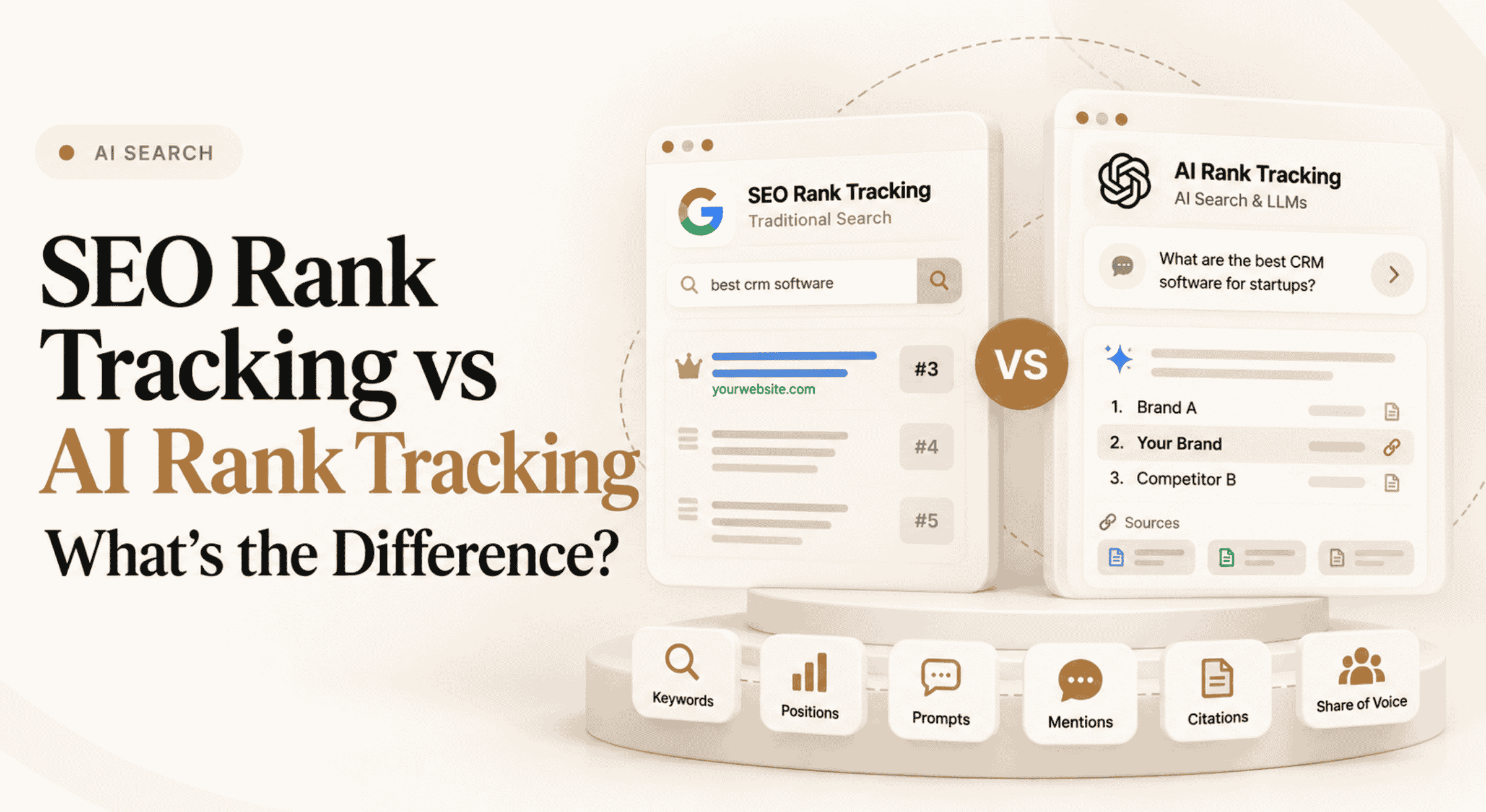
SEO helps users find pages. AEO helps AI systems understand and recommend brands.

The difference is important:

  • SEO: Optimizes pages for rankings and clicks.
  • AEO: Optimizes brands, entities, and content for AI-generated answers.
  • SEO: Measures traffic, impressions, and positions.
  • AEO: Measures mentions, citations, sentiment, and AI Share of Voice.
  • SEO: Targets keyword queries.
  • AEO: Targets complex prompts and decision-making questions.

AEO does not replace SEO. It extends search visibility into the places where AI systems now shape awareness, research, and consideration.

The risk of low AI visibility

When a brand has low visibility in AI search engines, it may be excluded from category explanations, product comparisons, and recommendation prompts.

This creates three major risks:

  • Buyers may discover competitors first.
  • AI systems may describe the category without mentioning your brand.
  • Your website may lose influence even when traditional SEO performance looks stable.

The goal of AEO is to close this gap by making your brand more visible, more trusted, and more citable across AI search experiences.

2. How AI Systems Understand Brands

AI engines need clear, structured brand information

AI search systems rely on multiple signals to decide whether a brand should appear in an answer. These signals may include website content, structured data, citations, third-party mentions, documentation, reviews, and retrieved web results.

If your brand information is inconsistent, incomplete, or difficult to parse, AI systems may fail to understand where you fit.

Strong AI search visibility starts with clarity:

  • What does your company do?
  • Which category do you belong to?
  • Who is your product for?
  • Which problems do you solve?
  • How are you different from alternatives?
  • Which sources support your claims?

The clearer these answers are across your website and external sources, the easier it becomes for AI systems to include your brand in relevant responses.

The role of retrieval in AI search

Many AI search experiences use retrieval to gather information before generating an answer. This makes retrievability one of the most important parts of AI search visibility.

Retrievable content is easy for AI systems to find, understand, and reuse. It is usually structured around clear questions, concise explanations, strong headings, and supporting evidence.

This is why AEO content should be written for both humans and AI systems. It must be useful to readers while also being easy for machines to parse.

Why trust signals influence AI-generated answers

Trust signals help AI systems evaluate whether a source or brand is reliable enough to mention.

Examples of trust signals include:

  • Consistent brand positioning
  • Clear product and company information
  • Authoritative educational content
  • Structured data and schema
  • High-quality citations
  • Third-party references
  • Transparent pricing, documentation, and use cases

Brands with stronger trust signals are more likely to be interpreted as credible sources in AI-generated answers.

3. Building an AEO Content Strategy for AI Search Visibility

Use the inverted pyramid for AI answers

AI-friendly content should answer the core question quickly, then provide supporting context.

This is similar to an inverted pyramid:

  • Direct answer first: Explain the topic in one or two clear sentences.
  • Supporting evidence second: Add examples, use cases, definitions, and context.
  • Actionable next steps third: Show readers what to do next.

This structure helps AI systems extract useful information and improves the chance that your content is used in generated answers.

Create content for high-intent AI prompts

AI search queries are often more specific than traditional keywords. Users ask complete questions, compare options, and describe their goals in detail.

For the prompt “how to improve brand visibility in AI search engines,” a strong page should include:

  • A clear definition of AI search visibility
  • A practical AEO framework
  • Technical optimization steps
  • Content strategy recommendations
  • Citation and trust signal guidance
  • Measurement methods and KPIs
  • A clear next step for auditing performance

This is why query-responsive guides are more effective than generic blog posts. They directly match the way users ask AI systems for help.

Build answer-ready content blocks

Answer-ready content blocks are concise sections that AI systems can easily summarize, cite, or reuse.

Examples include:

  • Definitions
  • Checklists
  • Short frameworks
  • Step-by-step workflows
  • Comparison lists
  • FAQ answers

These formats support AI citations because they make your content easier to reference in AI-generated responses.

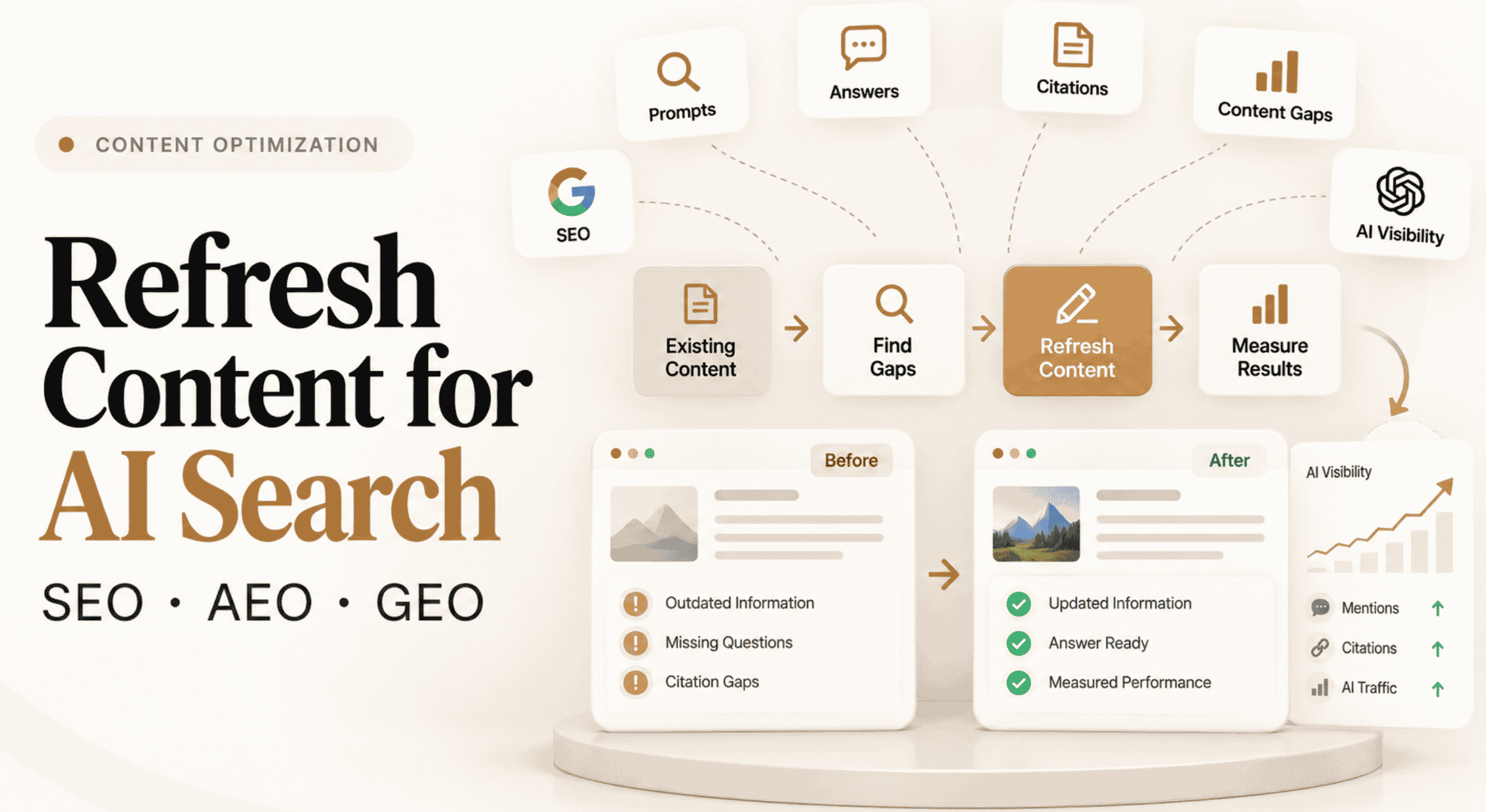
Connect AEO with content intelligence

A strong AEO content strategy should not rely on guesswork. Teams need visibility into which prompts, topics, and competitors are shaping AI-generated answers.

Content Intelligence & Optimization helps teams identify content opportunities, improve answer readiness, and prioritize pages that can influence AI visibility.

Instead of only asking “what keyword should we target?”, teams should ask “which AI prompt should we become the best answer for?”

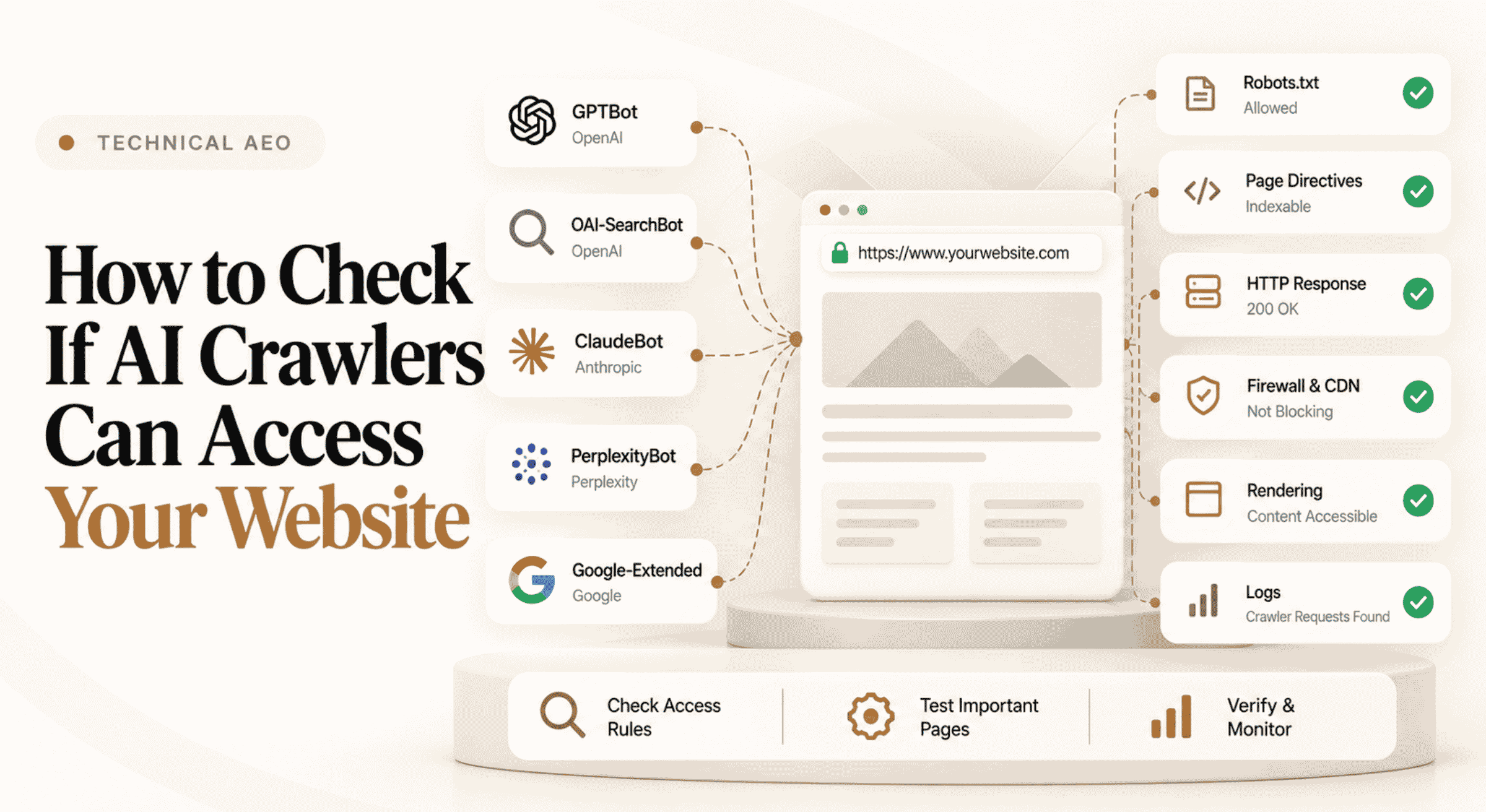
4. Technical Optimization for AI Search

Technical optimization remains one of the strongest competitive advantages in AI search visibility.

While traditional SEO focused on crawlability and rankings, AEO requires websites to become easier for AI systems to parse, retrieve, and understand.

Implement advanced schema and structured data

Schema for AI helps answer engines understand entities, products, organizations, authors, and relationships between concepts.

Useful schema implementations for AI search include:

  • Organization schema
  • SoftwareApplication schema
  • Article schema
  • FAQ schema
  • Person schema
  • DefinedTerm schema
  • Breadcrumb schema
  • WebSite schema

Combining these schemas helps AI systems build stronger relationships between your brand, products, categories, and expertise.

Optimize semantic connectivity across your website

AI systems do not evaluate pages in isolation. They evaluate relationships between pages, concepts, entities, and topics.

Strong semantic connectivity includes:

  • Consistent internal linking
  • Topic clusters
  • Glossary pages
  • Category hubs
  • Comparison pages
  • Supporting educational content

This improves both retrievability and entity authority.

Prepare for AI agents and retrieval systems

Future AI search experiences will increasingly rely on autonomous agents, retrieval systems, and structured APIs.

Organizations should expose structured information such as:

  • Product descriptions
  • Pricing information
  • Feature documentation
  • Knowledge bases
  • Comparisons
  • Frequently asked questions

Making information easier to retrieve improves the likelihood that AI systems will accurately represent your brand.

5. Citation Management and AI Trust

AI search visibility depends heavily on whether AI systems consider your brand trustworthy enough to cite.

Move from neutral to positive AI sentiment

Being mentioned is not enough. Brands should monitor how they are described across AI-generated answers.

Important sentiment dimensions include:

  • Positive recommendations
  • Neutral descriptions
  • Negative sentiment
  • Category positioning
  • Competitive comparisons
  • Trust perception

Prompt Monitoring & Volumes helps organizations understand how their brand appears across AI search platforms.

Increase citation opportunities

AI systems frequently cite content that is structured, factual, and easy to summarize.

To improve citation probability:

  • Create original frameworks
  • Publish educational resources
  • Produce comparison content
  • Build topic clusters
  • Use structured definitions
  • Provide supporting evidence

Strong citations improve both source authority and AI visibility.

Build trust through authority signals

AI systems often validate brands using multiple external and internal signals.

Strong authority signals include:

  • Educational content
  • Research publications
  • Documentation
  • Third-party mentions
  • Customer proof points
  • Consistent entity information

These signals reinforce trust signals and improve the probability of AI-generated recommendations.

6. Measuring AI Search Visibility Performance

Traditional SEO metrics alone cannot explain performance in AI search ecosystems.

Move beyond rankings and traffic

AI visibility requires a new measurement framework.

Important metrics include:

Measure visibility across answer engines

Organizations should continuously monitor performance across:

  • ChatGPT
  • Google AI experiences
  • Gemini
  • Perplexity
  • Claude
  • Microsoft Copilot

Different AI systems may cite different sources and prioritize different signals.

Use AI visibility analytics to guide optimization

Continuous measurement creates feedback loops that improve long-term AI visibility performance.

Answer Engine Insights, Competitor Tracking & Benchmarking, and AI Traffic Analytics help organizations understand:

  • Where visibility exists
  • Where competitors dominate
  • Which prompts matter most
  • Which citations drive trust
  • How AI traffic contributes to growth

7. Future-Proofing AI Search Visibility

AI search continues to evolve rapidly, creating new opportunities and competitive challenges.

Prepare for multimodal AI search

Future AI search experiences will increasingly combine:

  • Text search
  • Voice search
  • Image understanding
  • Video analysis
  • Autonomous agents
  • Personalized recommendations

Brands that optimize for multiple modalities will be better positioned as AI search expands.

Build continuous optimization loops

AI visibility is not a one-time project. It requires continuous iteration.

Successful organizations continuously:

  • Monitor AI visibility
  • Publish new content
  • Improve trust signals
  • Expand entity relationships
  • Strengthen citations
  • Measure competitive performance

Invest in category authority

The brands that win AI search over the next decade will likely be those that become authoritative sources within their categories.

This requires long-term investment in educational content, technical expertise, original frameworks, and measurable trust.

Key Takeaway

AI search visibility is becoming a foundational component of digital marketing.

The brands that succeed will not necessarily be those with the best rankings, but those that AI systems understand, trust, retrieve, and recommend consistently.

Conclusion

The transition from traditional search to AI-generated answers represents one of the most significant changes in digital discovery.

Organizations that invest early in Answer Engine Optimization can build lasting competitive advantages through stronger visibility, better citations, and greater trust.

Platforms like Ansvisor help teams monitor, benchmark, and improve AI search visibility through data-driven optimization workflows.

Elevate your brand's presence in the AI era. Schedule your comprehensive AEO audit with Ansvisor today.

FAQ

What is AI search engine visibility?

AI search engine visibility refers to how frequently and effectively a brand appears in AI-generated answers, citations, and recommendations.

How is Answer Engine Optimization different from SEO?

SEO focuses on rankings and traffic, while AEO focuses on AI-generated answers, citations, mentions, and recommendations.

What are trust signals in AI search?

Trust signals are indicators that help AI systems determine whether a brand or source is credible enough to cite and recommend.

Why are citations important for AI visibility?

Citations help AI systems validate information and increase confidence in recommending a brand or source.

Which metrics matter most for AI search visibility?

Important metrics include AI Visibility Score, AI Share of Voice, citations, mentions, sentiment, and prompt coverage.

How does Ansvisor help improve AI search visibility?

Ansvisor helps organizations monitor AI visibility, analyze citations, benchmark competitors, measure AI traffic, and optimize their presence across AI search platforms.

"The future of brand awareness will not be determined by who ranks first. It will be determined by who AI systems trust enough to recommend."
— Cihan Geyik, Co-founder at Ansvisor
About the Author
Cihan Geyik

Cihan Geyik

Co-founder at Ansvisor

Cihan Geyik is the co-founder of Ansvisor, an open-source AI Visibility platform for AI Search. With more than 15 years of experience in digital marketing and growth, he writes about AI visibility, AI search, AEO, GEO, citations, and answer engines. He focuses on helping brands understand and improve their presence across ChatGPT, Gemini, Perplexity, Google AI Overviews, and other AI-powered discovery platforms.

Related Blog Posts

Explore All